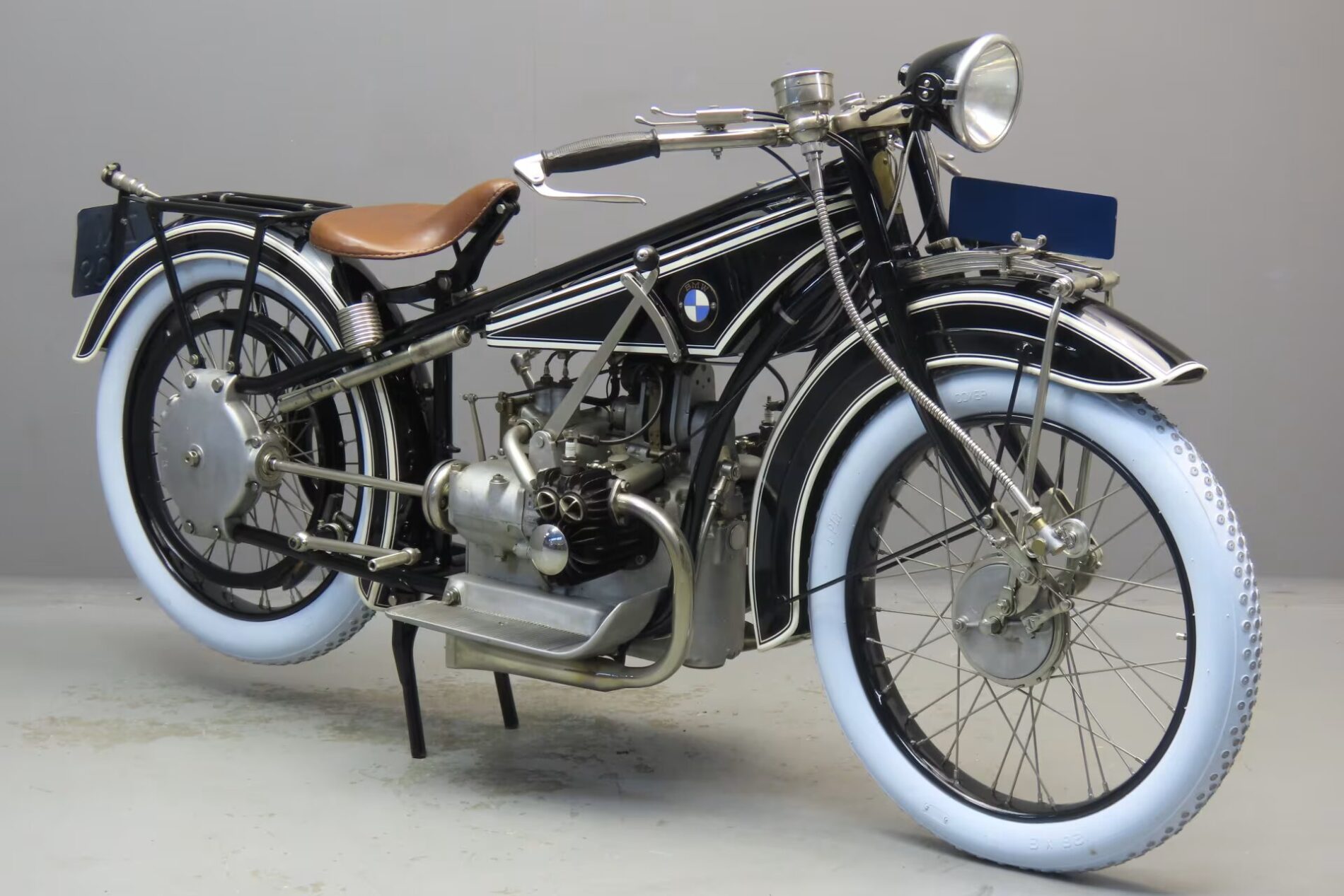
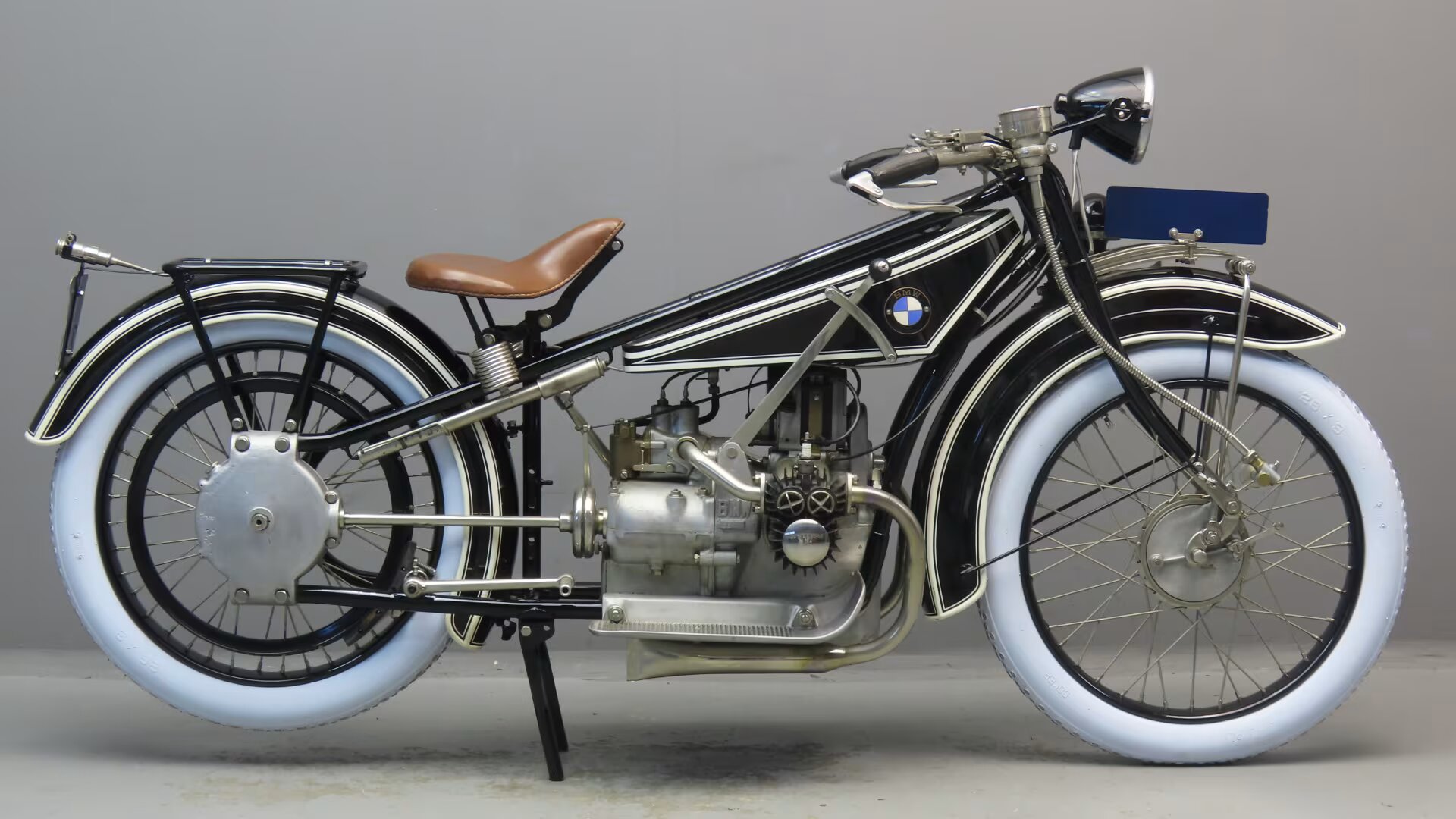
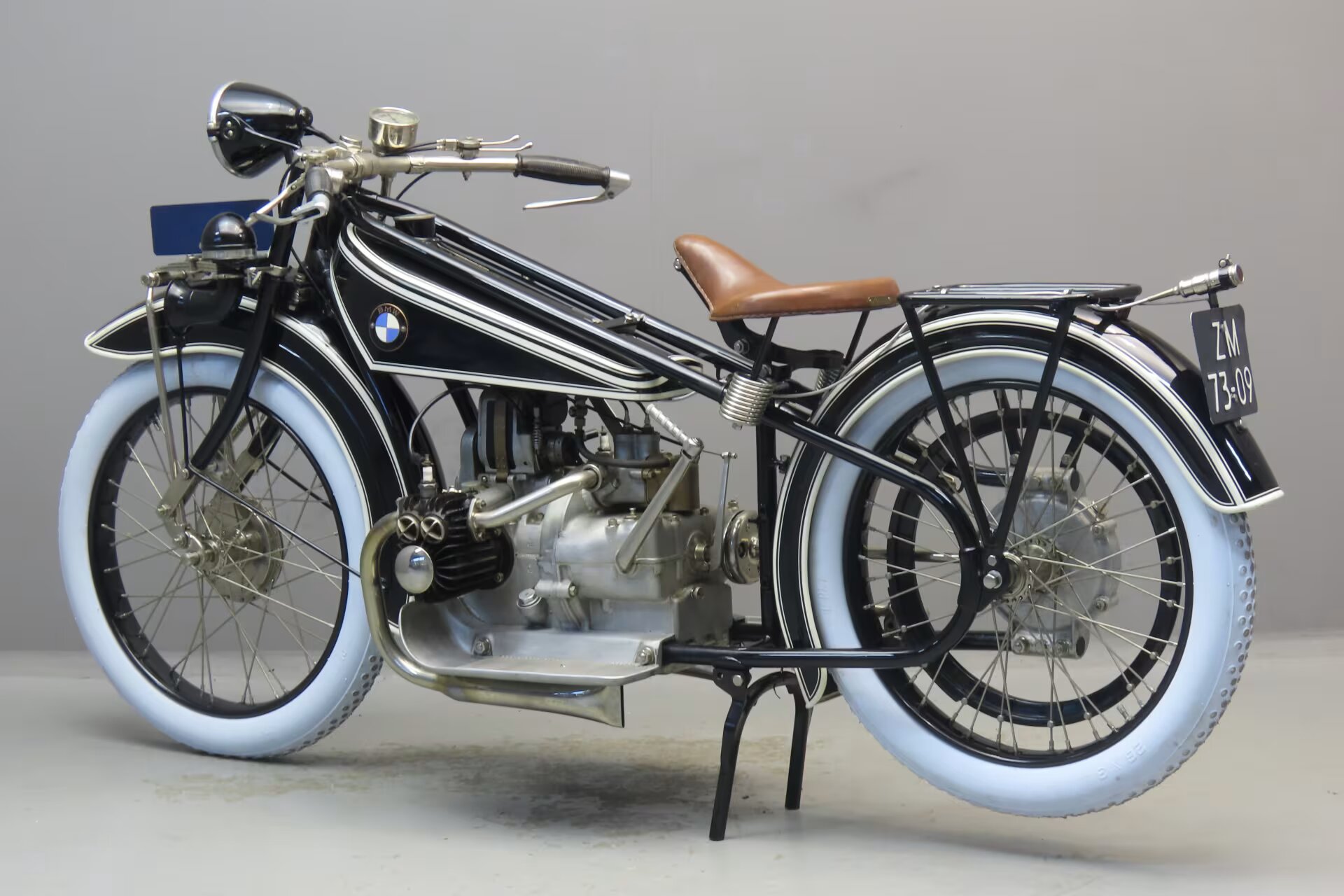
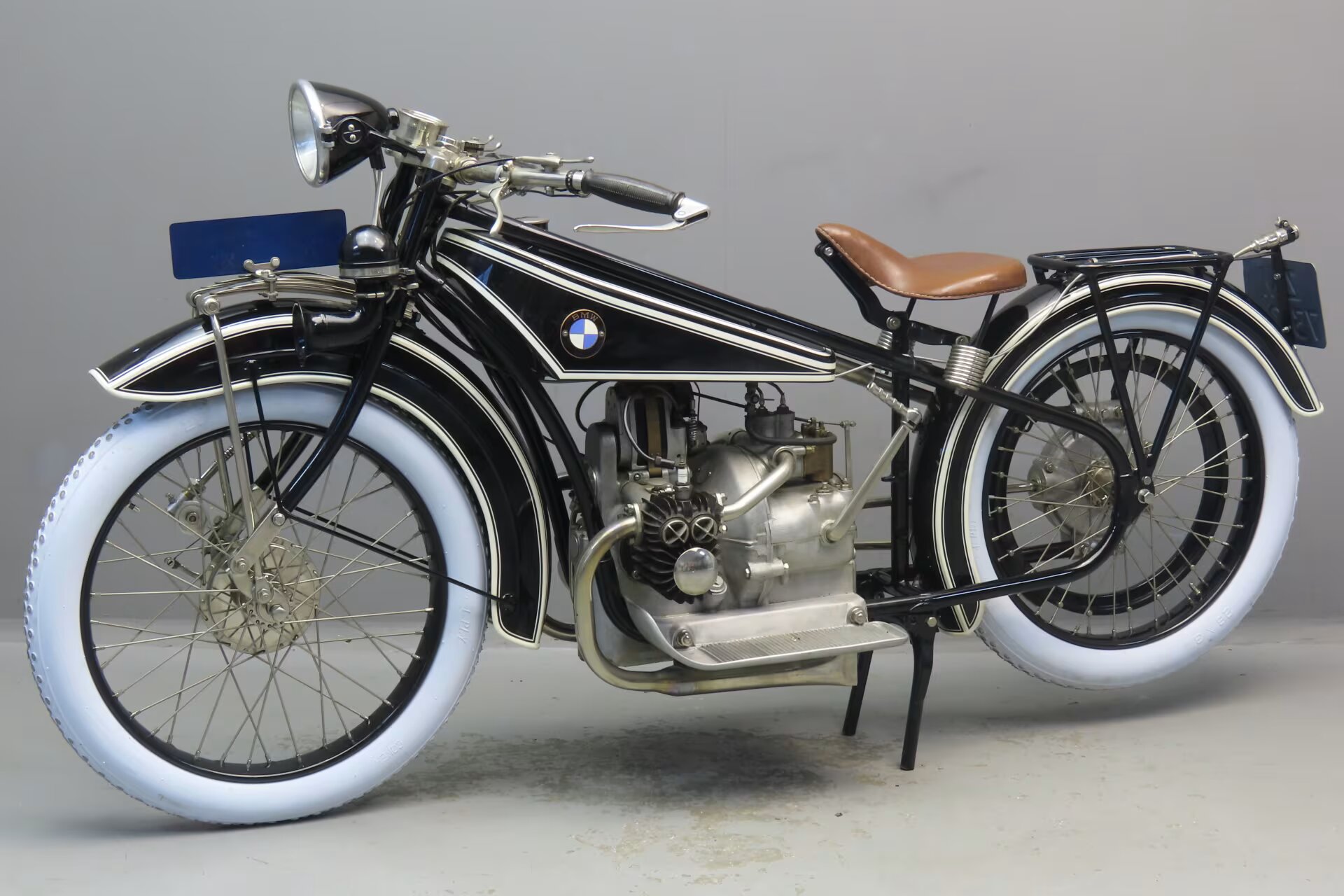
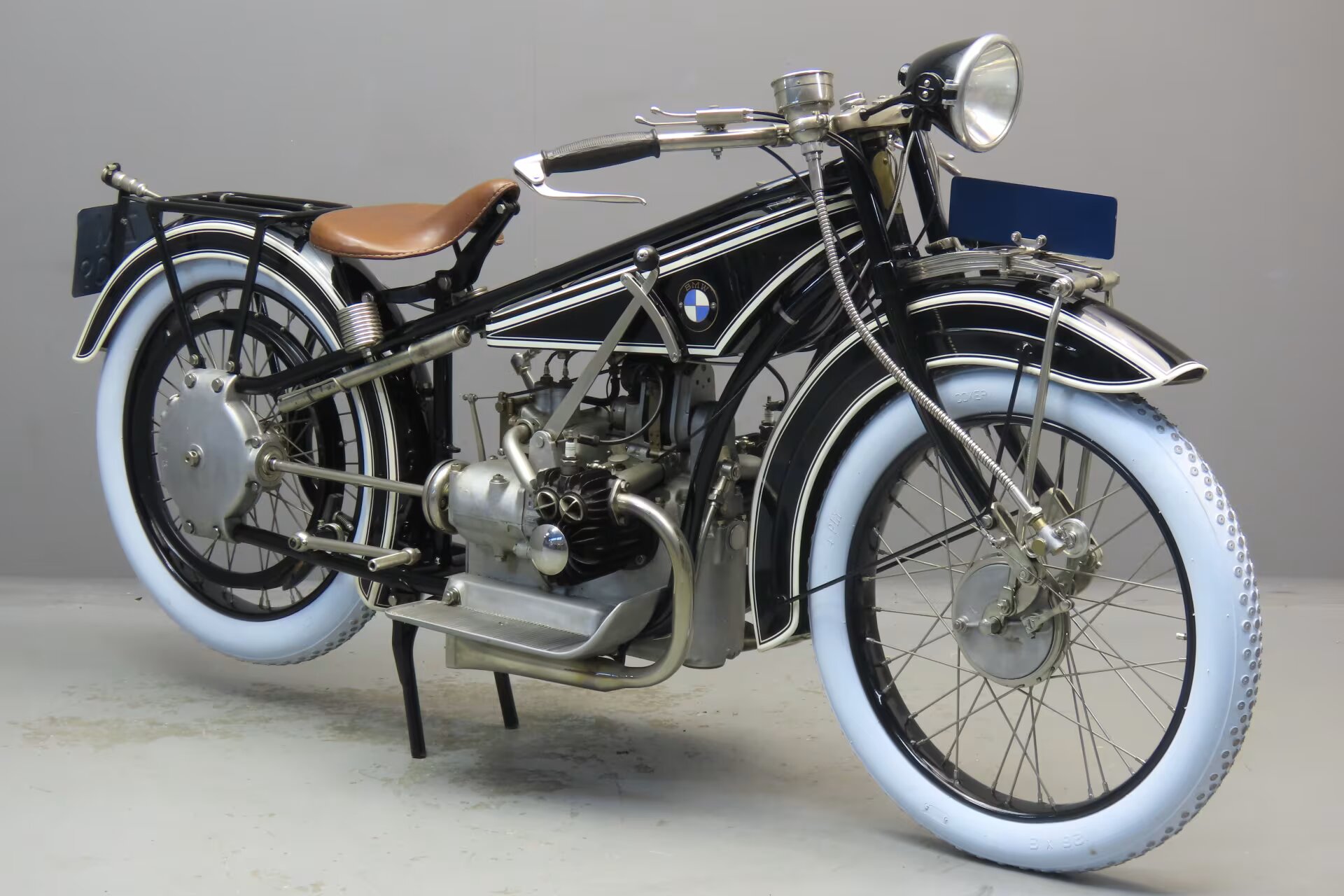
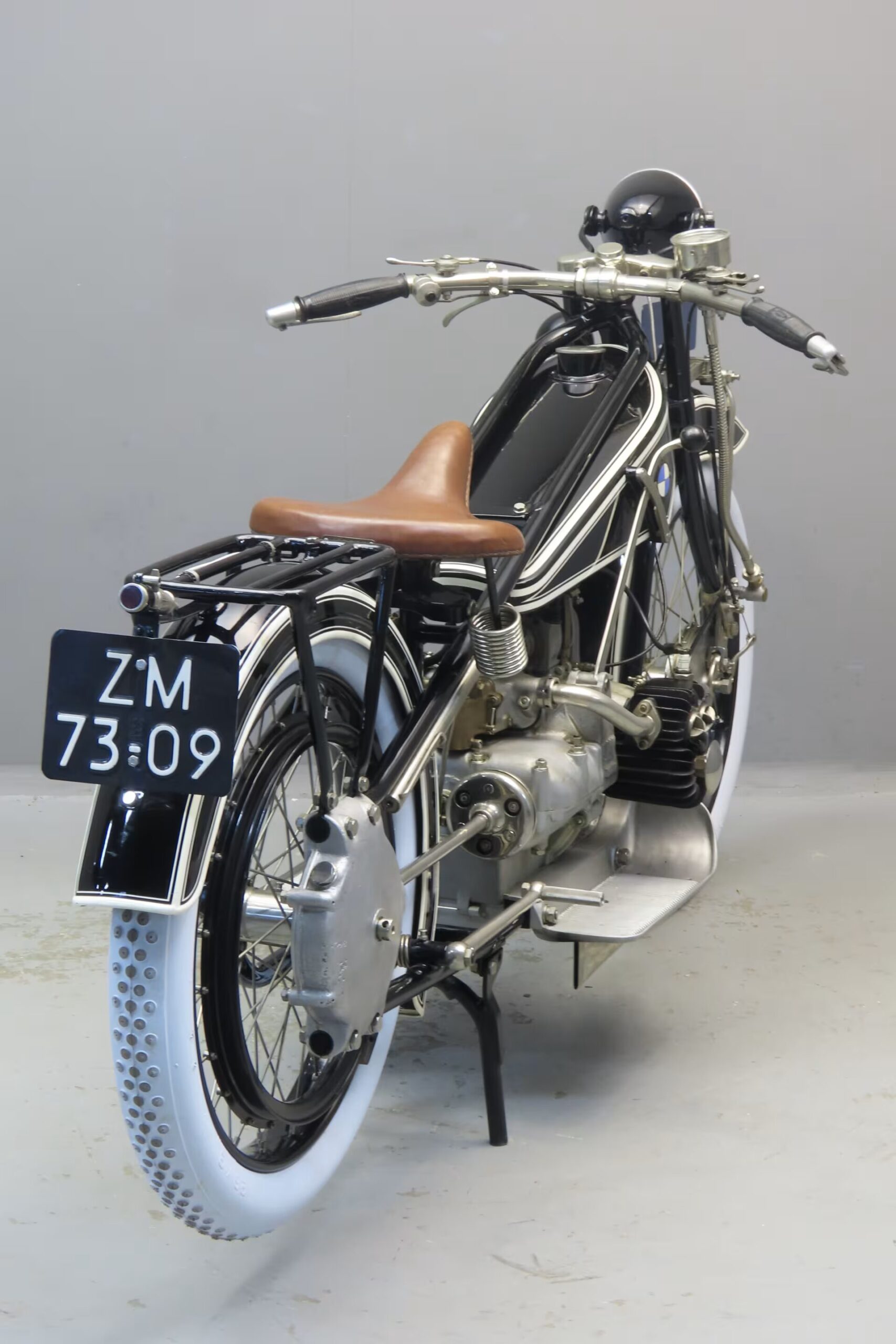
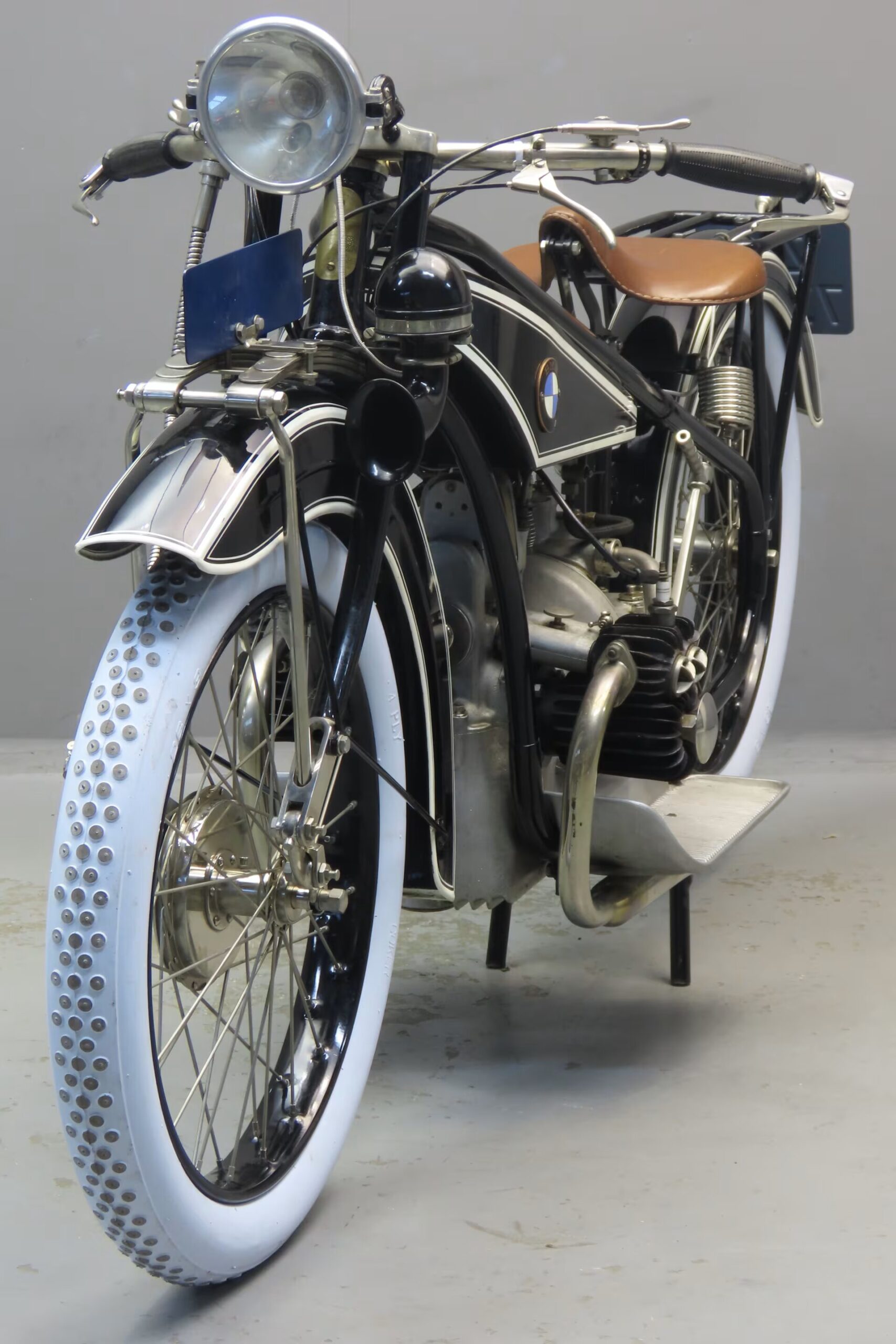
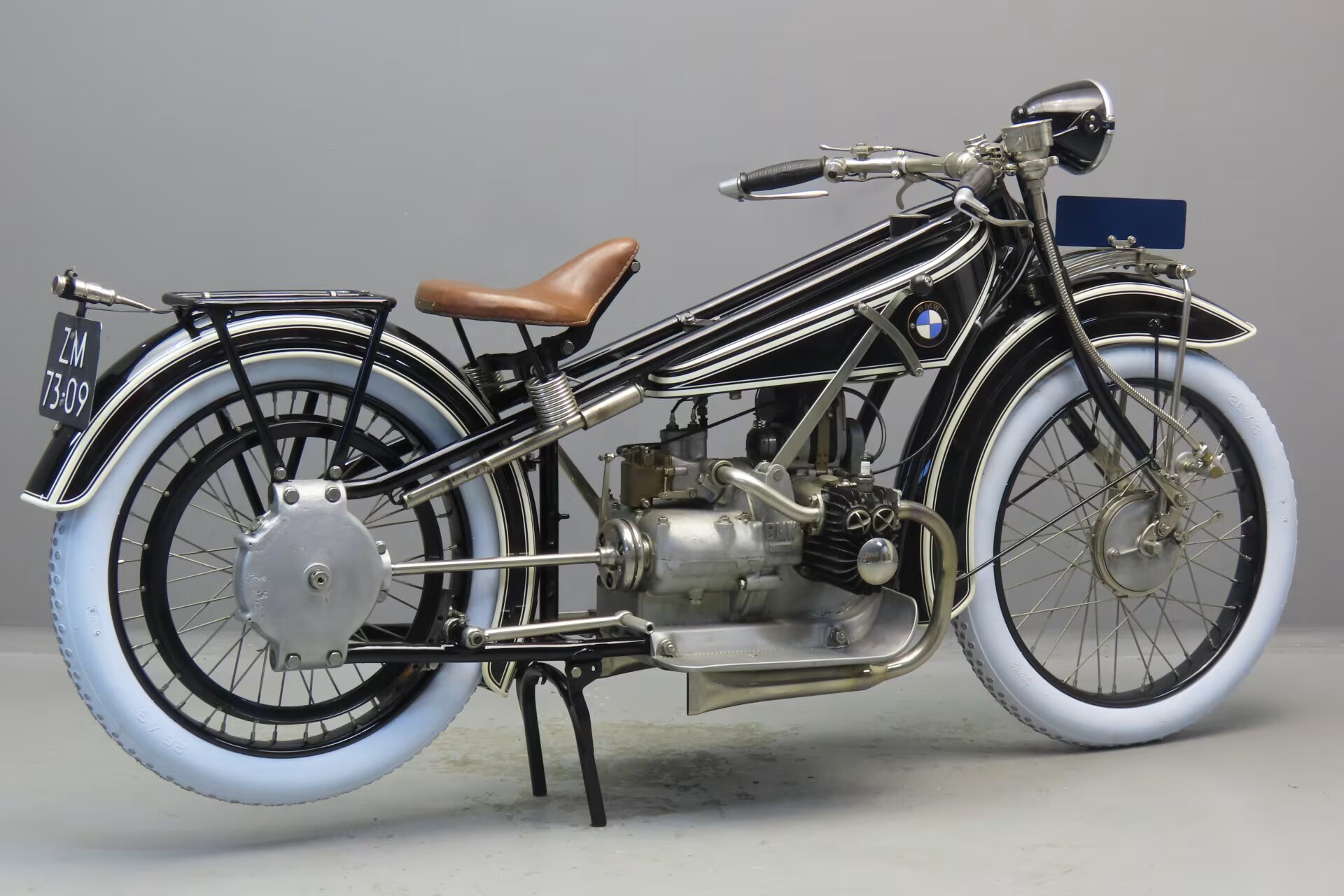
The BMW R32 was the motorcycle that would define BMW motorcycles for decades to come. Designed by Max Friz the R32 pioneered the boxer two cylinder engine and shaft drive layout that was to characterize BMW motorcycles.
Fast Facts
- The BMW R32 was the pioneering motorcycle that forged the image of a BMW motorcycle being fitted with a boxer twin engine and shaft drive.
- Created during the austerity years in Germany during the 1920’s the R32 was made to be boringly reliable, and to require modest maintenance.
- The R32 was also made lightweight and easy for a new rider to manage.
- A rather pretty BMW R32 is coming up for sale by Mecum Auctions at their Las Vegas Motorcycles auction to be held on Saturday, January 31st, 2026.
At the end of the First World War aircraft engine maker BMW found themselves forbidden to continue their aircraft engine business. The Treaty of Versailles banned Germany from making aircraft, and so BMW were under that ban.
It was a time when the company was either going to go out of business or it was going to redefine itself and get into a new business. This process was going to require wisdom and strategic thinking.
In that post World War I period Germany was moving into an ever deepening financial crisis and so BMW did not try to be an automobile maker – cars were for the monied elite. But on the other hand motorcycles offered affordable transport for ordinary working people – you could get a family onto a motorcycle with a side-car – and so motorcycles presented the opportunity to manufacture items that people could and would buy.
So the next step was to get the right engineer to design a suitable motorcycle for the sales environment that post World War I Germany presented with.
That engineer was a man named Max Friz who had joined BMW after leaving Daimler. He understood that what was needed was a truly reliable workhorse motorcycle that required minimal maintenance (maintenance costs money and in 1920’s Germany that was not in abundant supply).
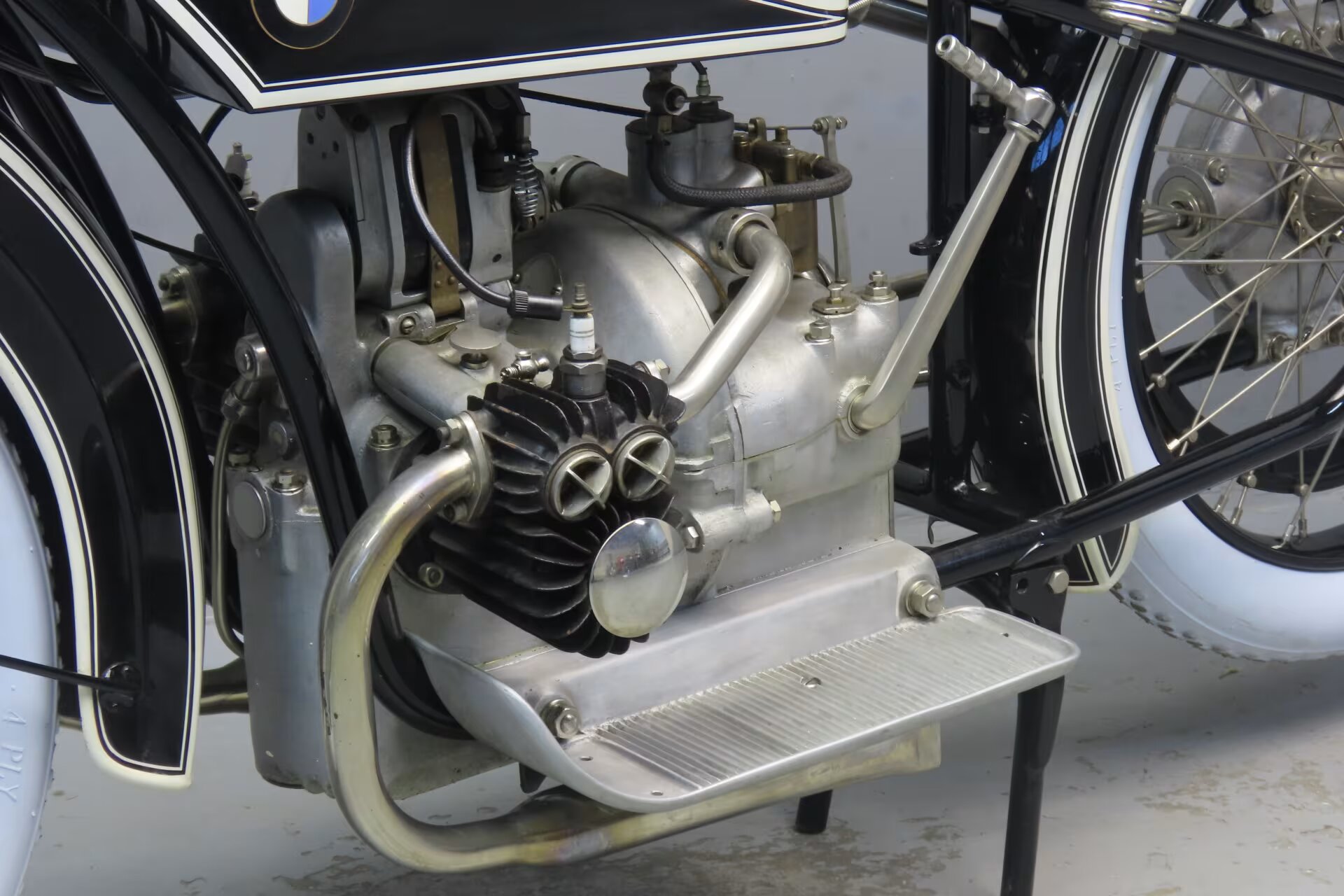
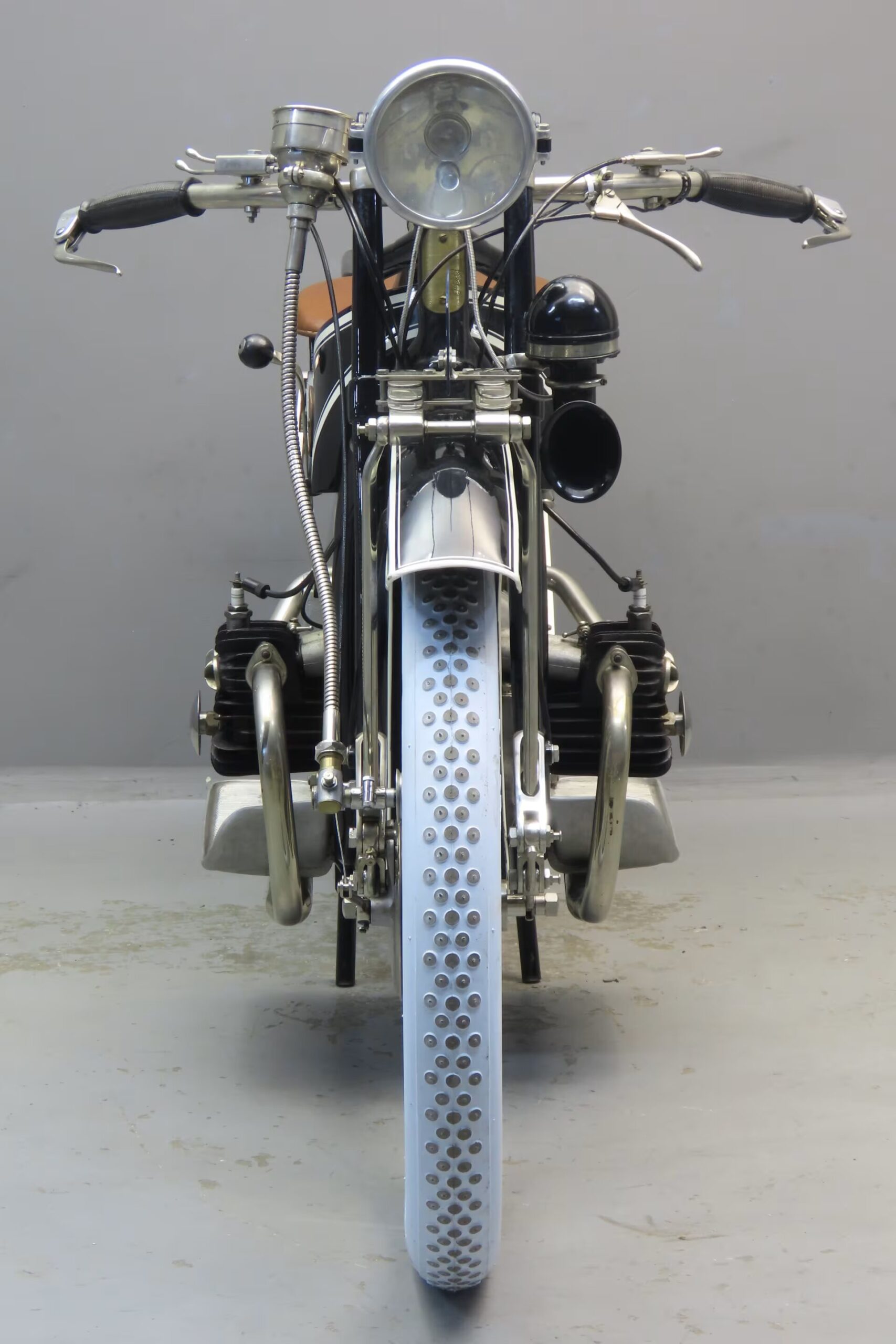
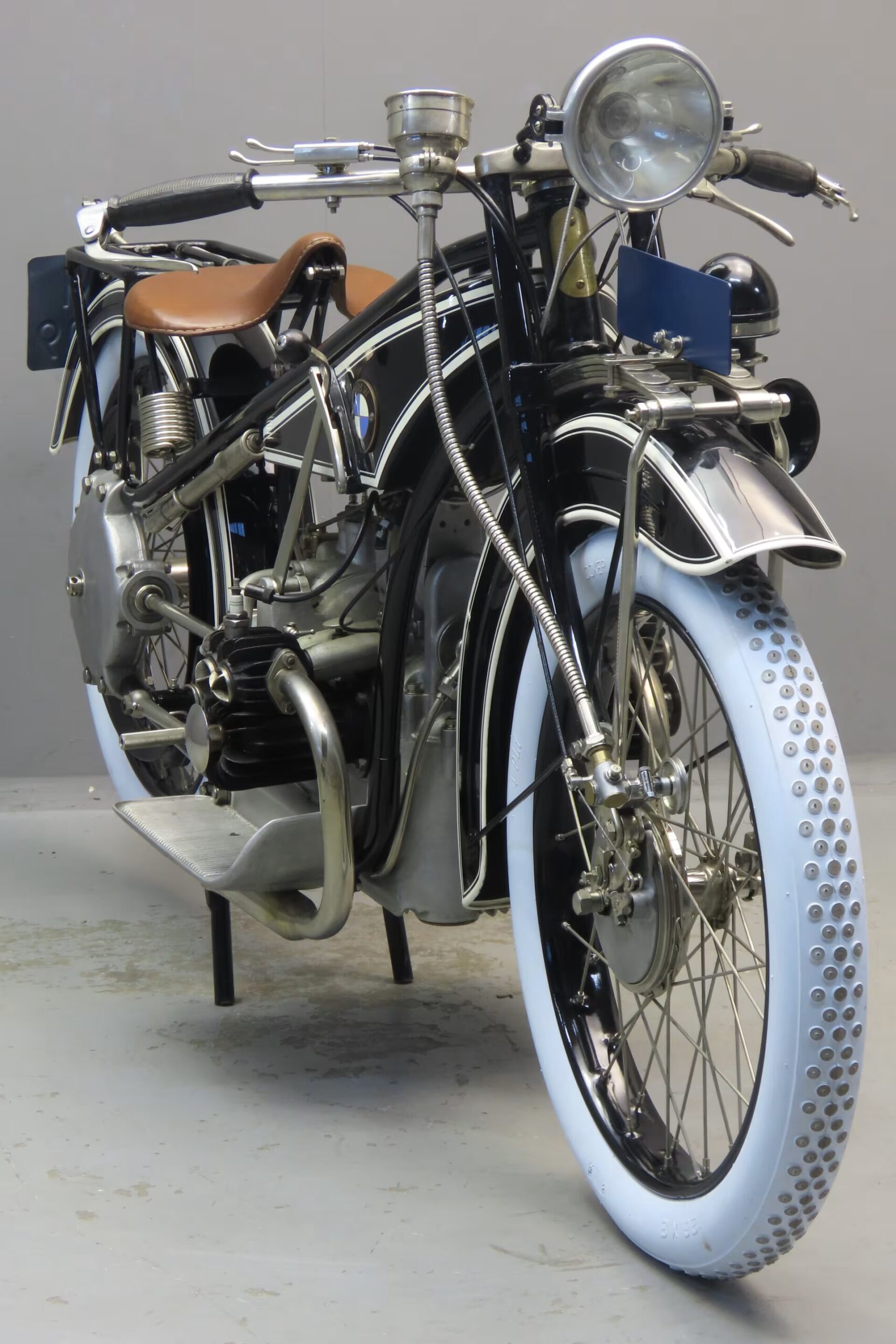
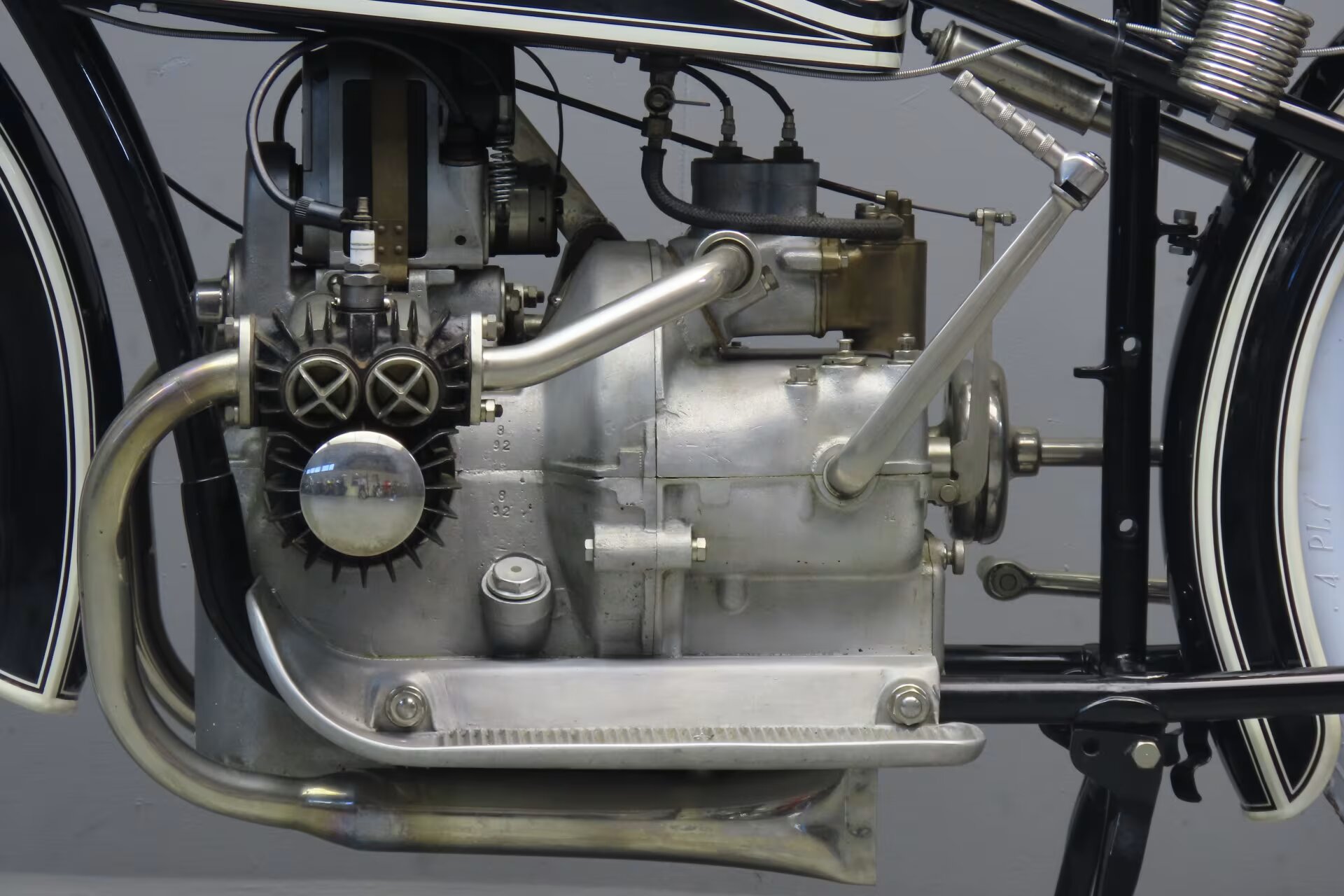
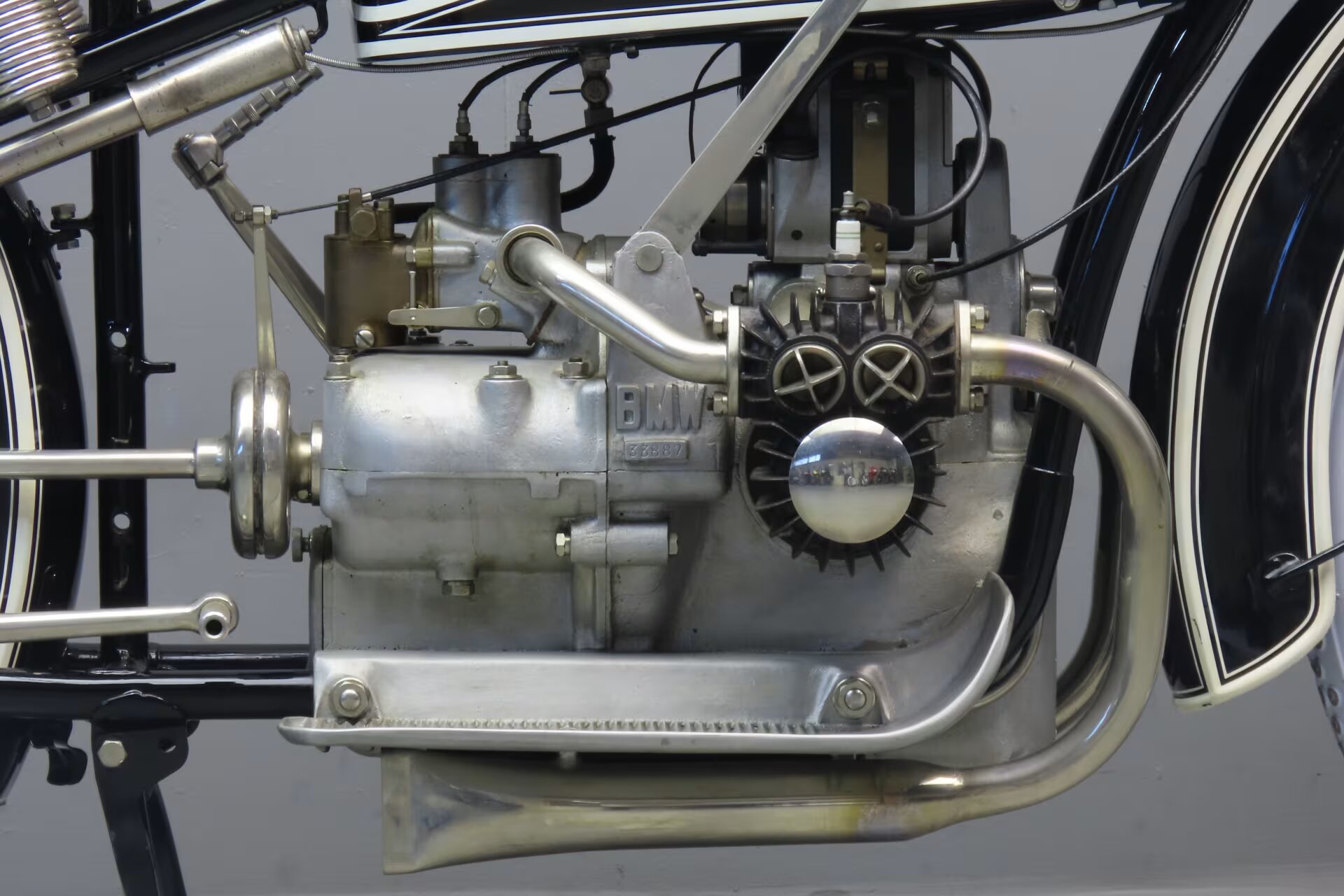
The motorcycle Max Friz created was the BMW R32 and it was to become the pioneer that defined BMW motorcycles for decades to come. Whenever we think of a BMW motorcycle even nowadays we think of a horizontally opposed boxer twin cylinder with the cylinders projecting from each side of the bike directly in the cooling air flow.
Prior to the R32 motorcycle makers using a boxer twin cylinder engine had tended to set them in the frame with the front cylinder facing forward in the direct air-flow and the other cylinder at the rear out of the air-flow and so subject to overheating. The British Douglas motorcycles are an example of this. It was a layout that made sense if using a chain drive.
But Max Friz decided not to use a chain drive but instead to go for something requiring much less maintenance, something that was far more resistant to being clogged or damaged by dirt, dust or grit, he chose to use a shaft drive.
Max Friz did his design concept work in December 1922 and in four weeks he had used his sharp pencil to create the full-scale drawings of this new motorcycle.
The four stroke 494cc (30.1 cu. in.) boxer engine was mounted on top of the three speed grease filled gearbox in a unit. The cylinders were cast in one piece with their cylinder heads and the valves were pushrod actuated.
Compression ratio was 5.0:1 with 68mm bore and 68mm stroke. This was an engine created to run on the most mediocre gasoline, as was needed in that period.
The single carburetor was a special BMW design of 22mm diameter, and the ignition provided by a Bosch high voltage magneto.
This engine generated a modest 8.5hp @ 3,200rpm (6.3kW) which it sent to the gearbox via a single dry-plate clutch.
While this might sound a tad anemic to modern motorcycle aficionados its worth remembering that many of the people buying and riding these motorcycles were effectively learner riders: this would often be the first internal combustion vehicle that they would own or have the opportunity to ride.
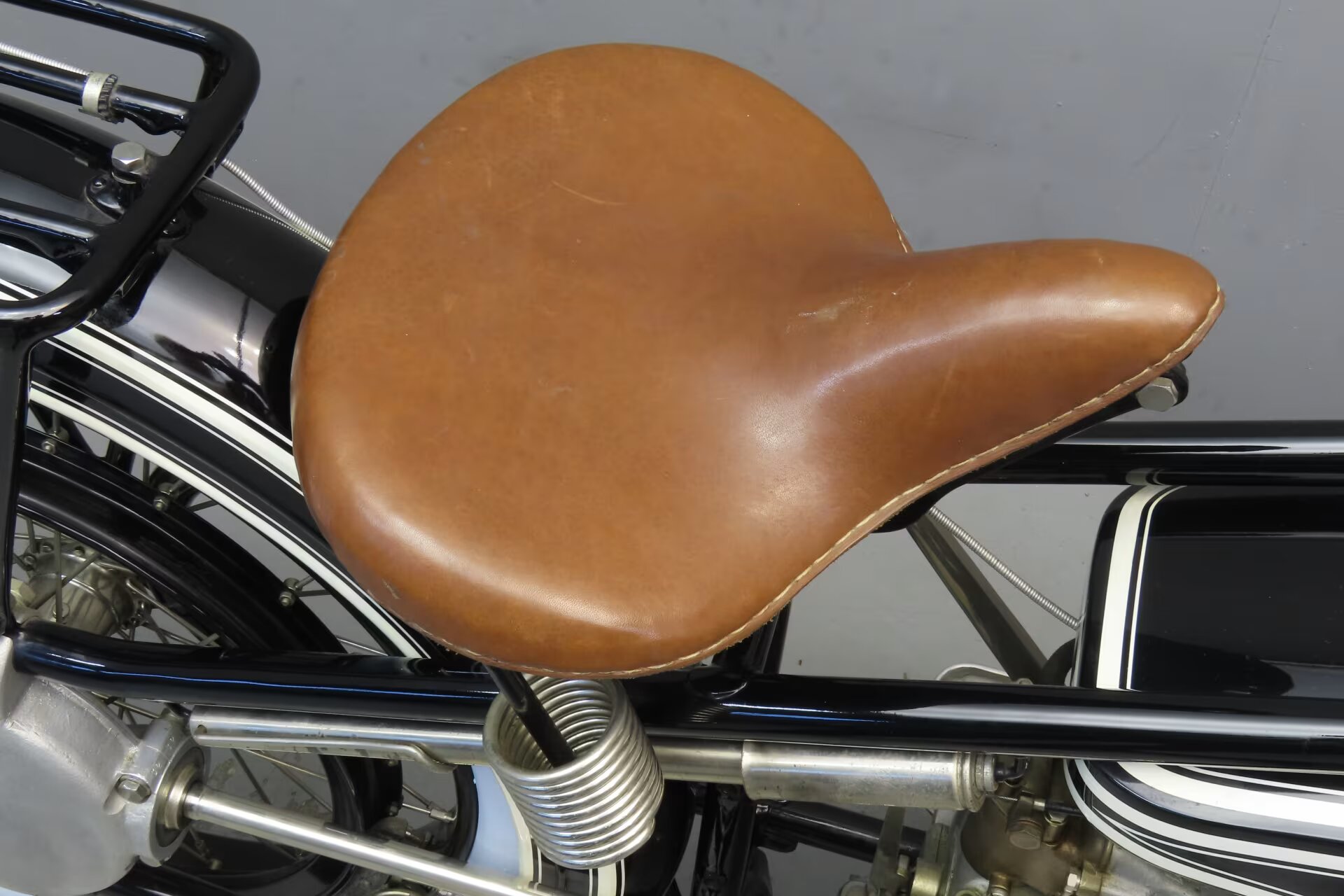
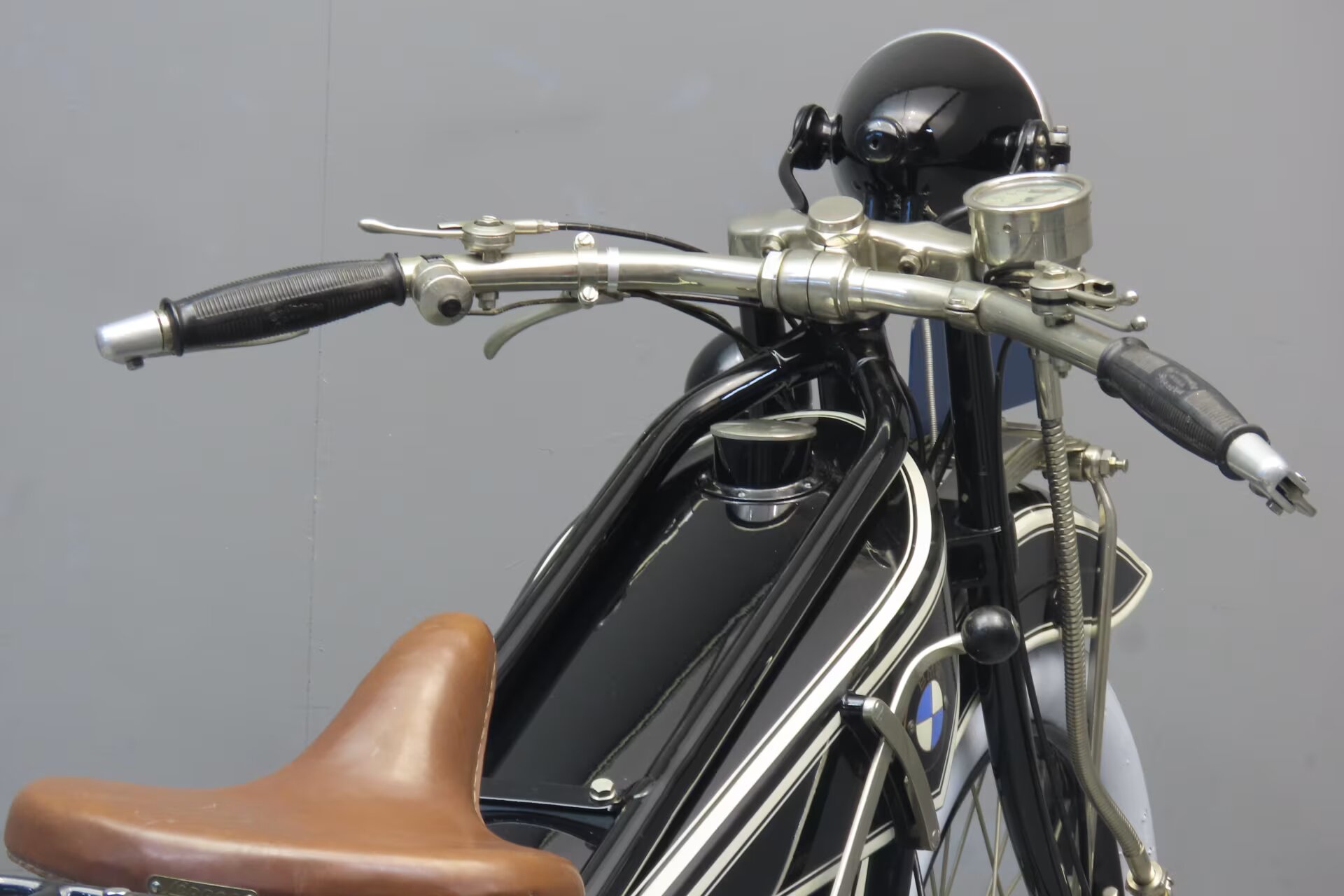
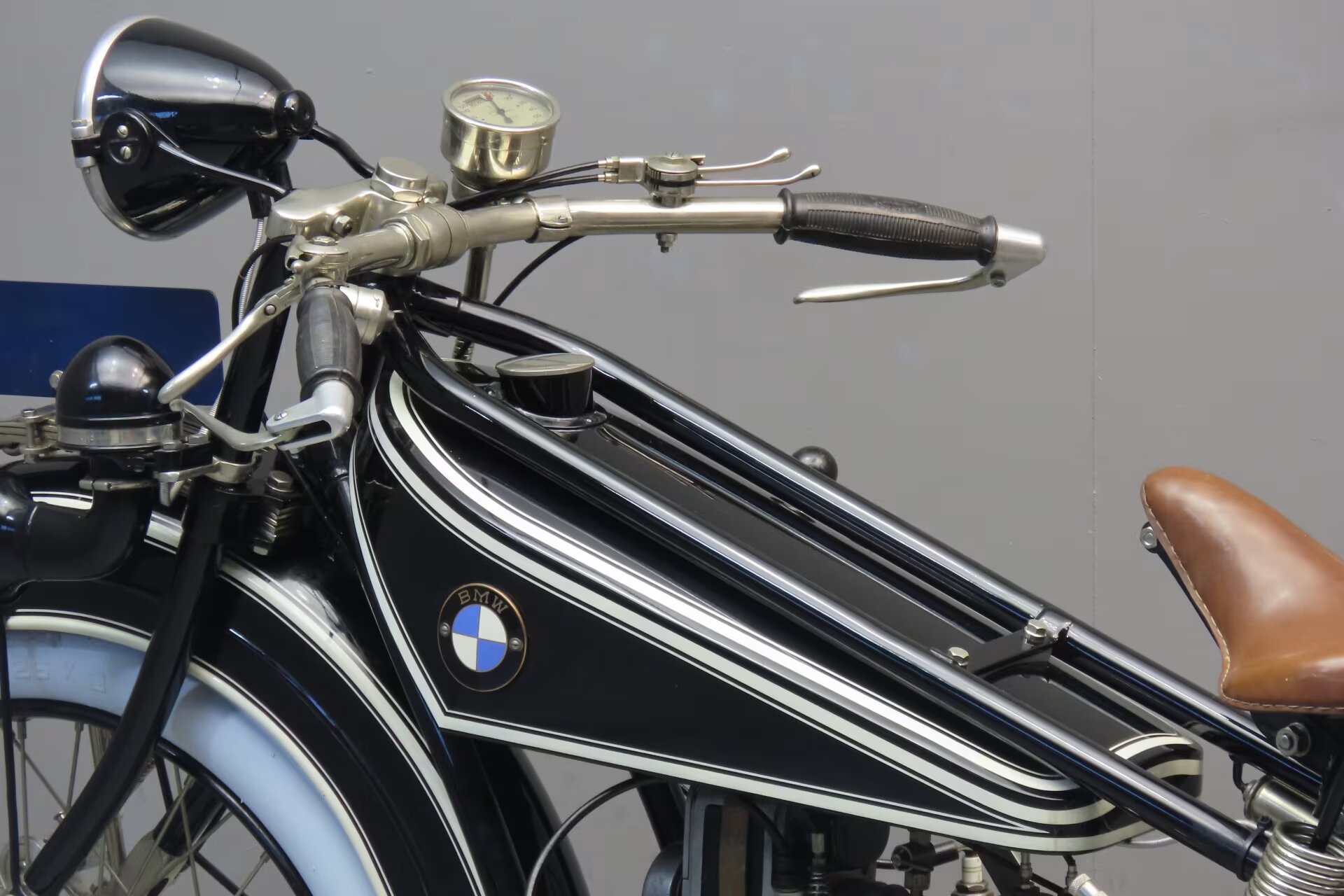
The chassis of this new bike was made around a closed twin loop tubular steel frame with a twin cantilever leaf spring for the front fork. The rear of the bike chassis was rigid which kept the shaft drive in fixed alignment between the transmission and the rear wheel. Drive to the rear wheel was via a grease filled housing with bevel gear.
Brakes were slightly more sophisticated than the proverbial house brick attached to a length of string. Early models only had a rear brake but this was upgraded to include a front brake. That front brake was a 150mm drum brake, and at the rear was a block brake (i.e. brake block that rubs against a disc on the wheel to cause bike stopping friction).
Wheels were 26×3.5 inch front and rear with the ability to use high or low pressure tires. The rear wheel could be removed without disturbing the transmission: a rather useful feature given the state of the roads these bikes might be used on and the need for puncture repairs to be done by the roadside.
Fuel tank capacity was 14 liters (3,6 US gallons).
Wet weight was 122kg (268lb), making this a lightweight motorcycle and easy for a new rider to manage.
The BMW R32 was positively miserly in terms of fuel consumption delivering around 78 miles to the US gallon (3 liters per 100 km).
The bike was in production from its debut at the Berlin Motor Show in 1923 until 1926, and 3,090 were produced.
One of these pioneering motorcycles is coming up for sale by Mecum Auctions at their Las Vegas Motorcycles auction. The sale is set to be held on Saturday, January 31st 2026.
You will find the sale page for this motorcycle if you click here.
Picture Credits: All pictures courtesy Mecum Auctions.
Jon Branch is the founder and senior editor of Revivaler and has written a significant number of articles for various publications including official Buying Guides for eBay, classic car articles for Hagerty, magazine articles for both the Australian Shooters Journal and the Australian Shooter, and he’s a long time contributor to Silodrome.
Jon has done radio, television, magazine and newspaper interviews on various issues, and has traveled extensively, having lived in Britain, Australia, China and Hong Kong. His travels have taken him to Indonesia, Israel, Italy, Japan and a number of other countries. He has studied the Japanese sword arts and has a long history of involvement in the shooting sports, which has included authoring submissions to government on various firearms related issues and assisting in the design and establishment of shooting ranges.