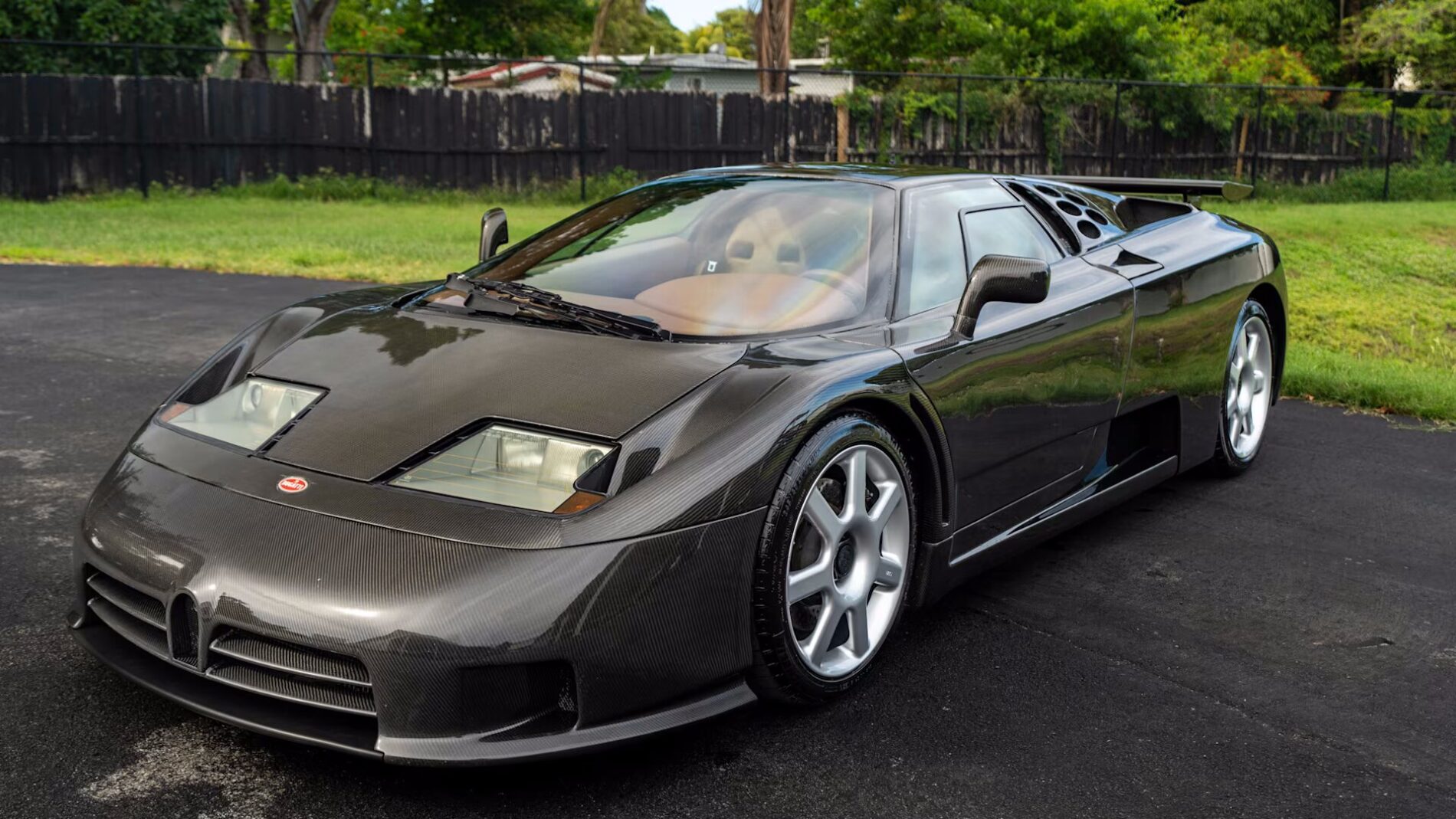
The Bugatti EB110 was the first Bugatti automobile to be created when the marque was re-established by Romano Artioli in 1987. The car is at the peak of technical sophistication of the end of the twentieth century: a luxury Grand Touring supercar, and historic icon.
Fast Facts
- The Bugatti EB110 was created as a result of the vision of entrepreneur Romano Artioli.
- The EB110 was envisioned to be a sophisticated technologically advanced luxury supercar: and Artioli’s team achieved that vision beautifully.
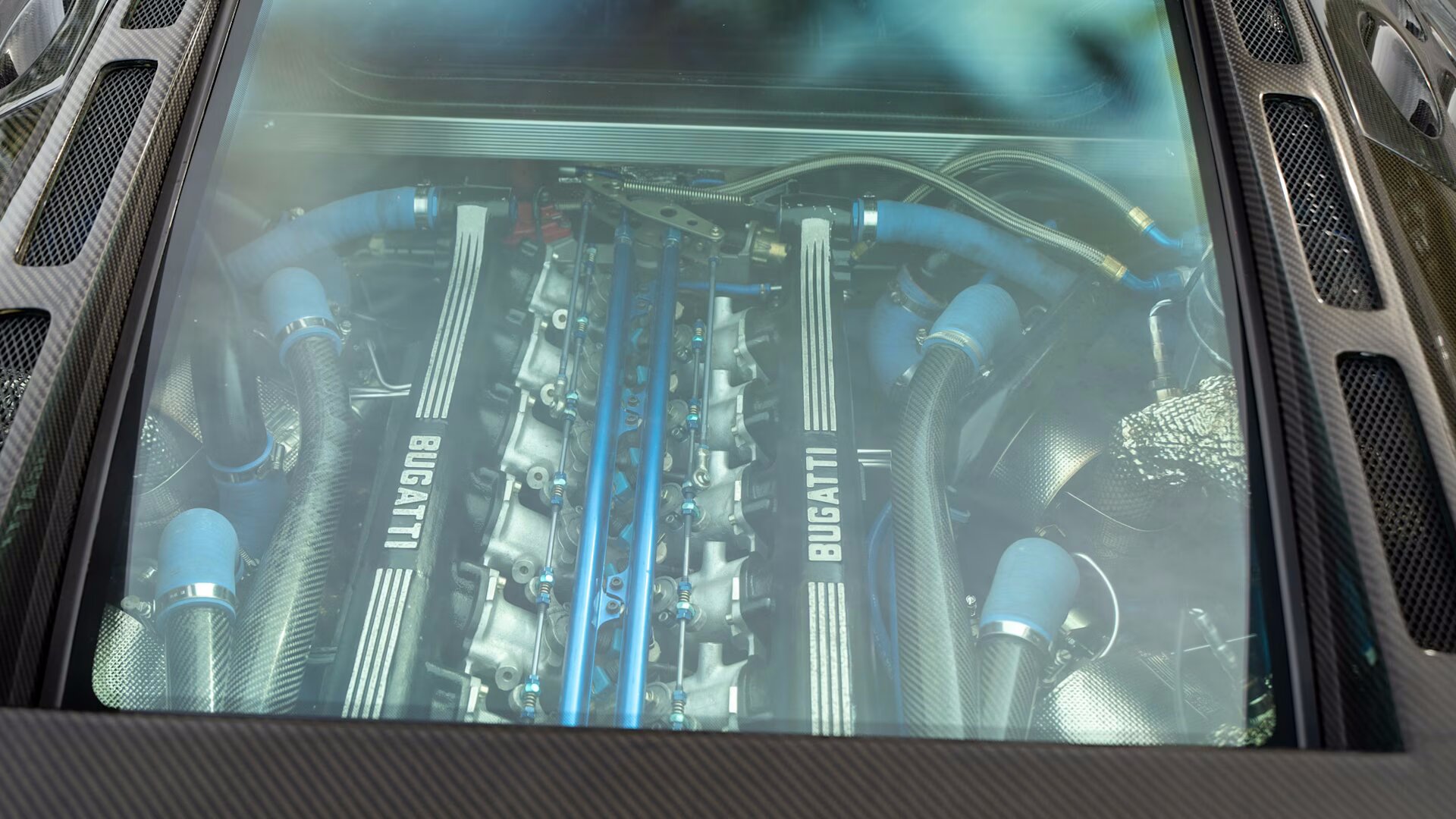
- The EB110 was powered by a 3.5 liter, quad turbocharger, V12 engine which featured five valves per cylinder.
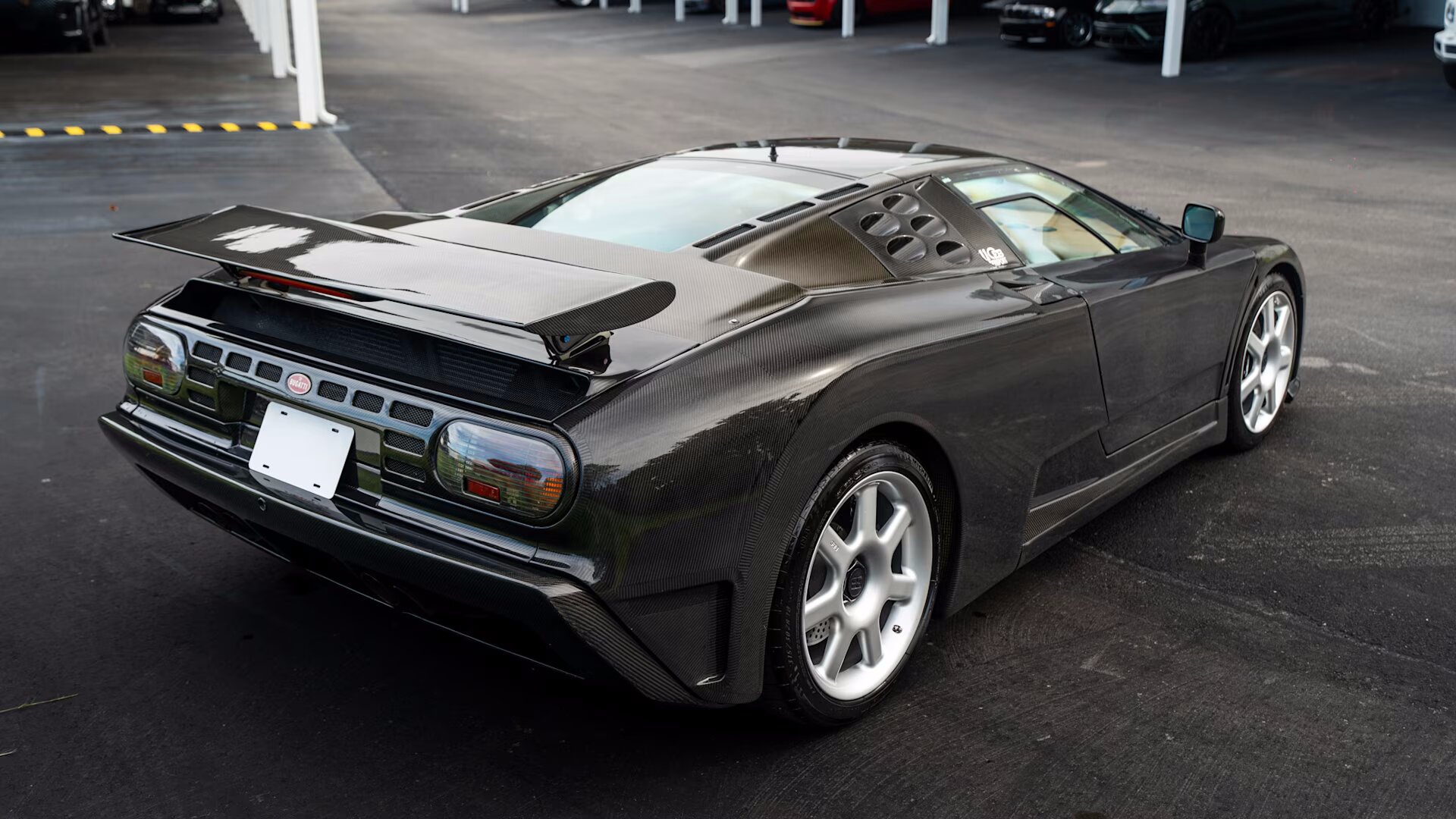
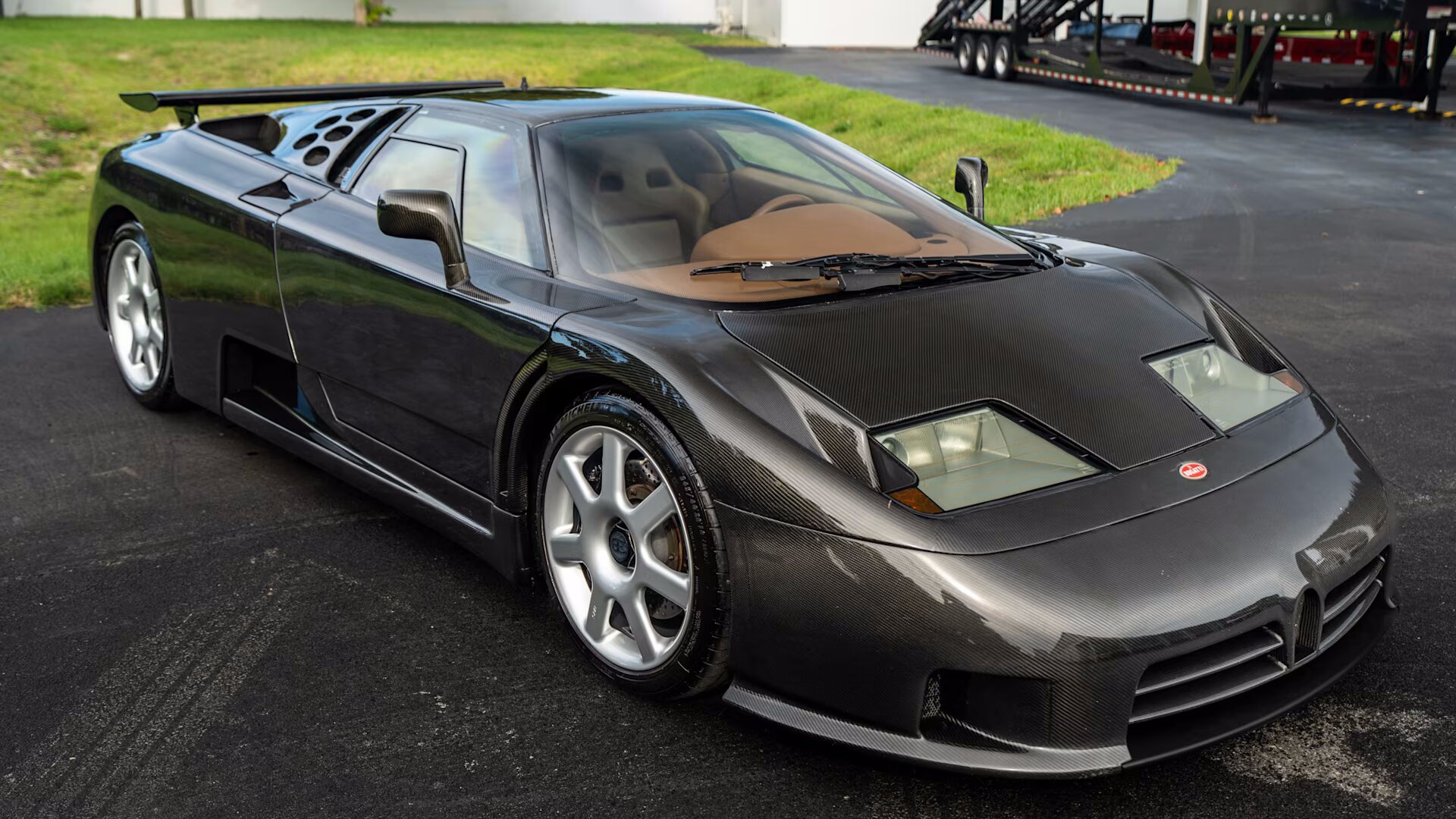
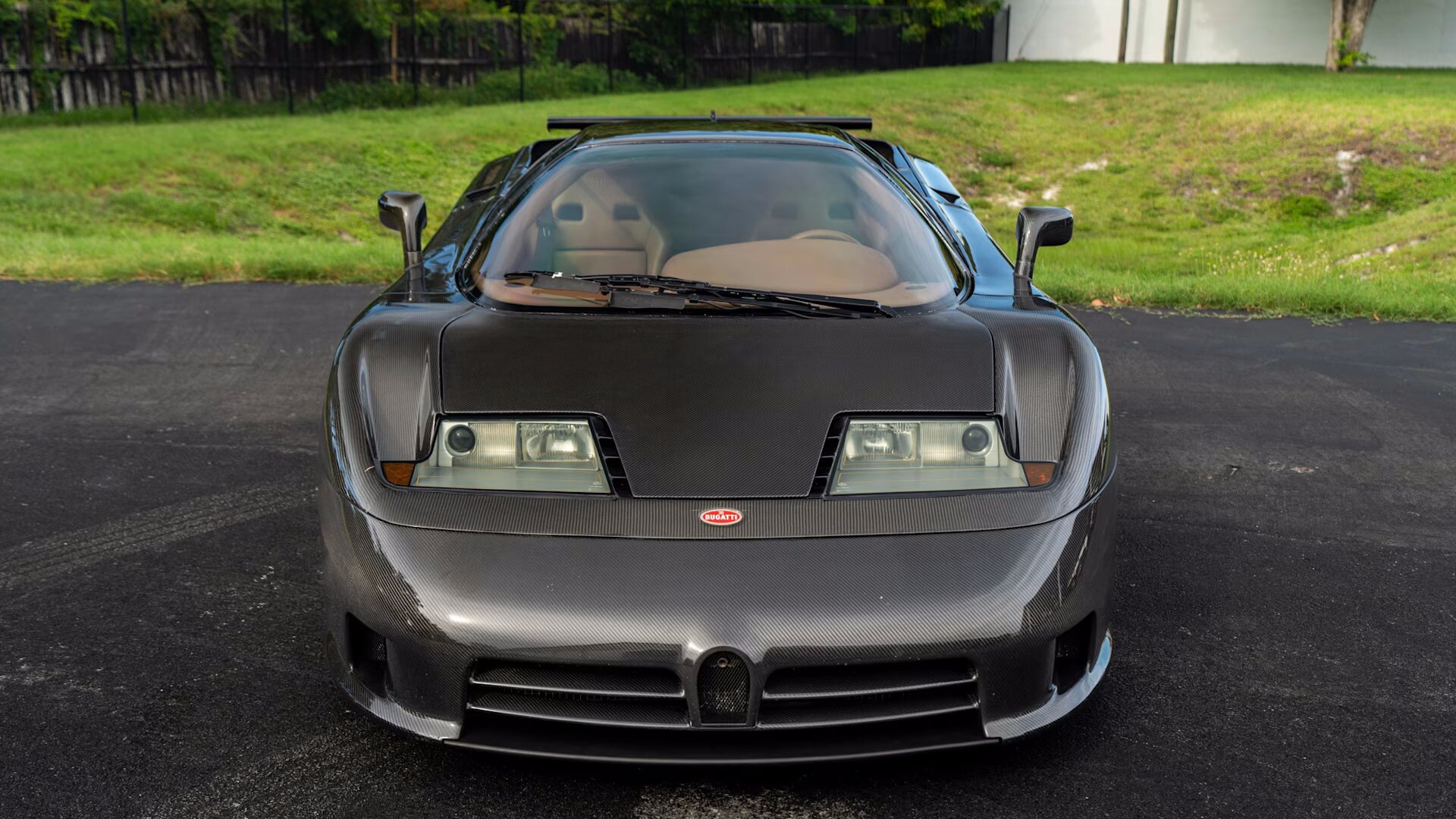
- Artioli’s company went into receivership in 1995 but the parts inventory was purchased by German company Dauer who proceeded to make a small number of EB110 cars, one of which was a carbon-fiber bodied Super Sport Lightweight whose bodywork is finished in clear lacquer.
- This car is coming up for sale by Mecum Auctions at the time of publication.
The re-establishment of the Bugatti marque owes its beginnings to Romano Artioli, and Italian entrepreneur with a special interest in luxury performance cars. He ran one of the most prominent Ferrari dealerships in the world during the 1980’s selling primarily to the northern Italy and southern German markets.
Artioli had a vision to bring Bugatti back from the dead and with this in mind he established a holding company called Bugatti International and purchased the Bugatti trademark name in 1987. Artioli became president of Bugatti Automobili S.p.A.
The company embarked on the ambitious plan to create a new Bugatti – and that plan was to expand in the attempt to create not one new model but two. The first was to be the Bugatti EB110, a performance car named to celebrate the 110th anniversary of the birth of Ettore Bugatti, the founder of the marque: while the second was to be the Bugatti EB112, a four door luxury car.
This was extraordinarily ambitious, creating one new car was going to be a great challenge of itself. But Artioli was both ambitious and determined.
Artioli had a network of engineers and designers whose expertise he could commission in the creation of the EB110. In 1984, prior to embarking on purchase of the Bugatti trademark, Artioli had discussions with Ferruccio Lamborghini and engineer Paolo Stanzani. From these conversations he understood the magnitude of the project, but decided the challenge, and the risk, were well worth it.
Stanzani was of the view that the engine development was the easier hurdle by comparison with the creation of the bodywork. In order to be of comparable sophistication by comparison with the cars this new Bugatti must compete against the chassis/bodywork had to be born of the aerospace industry.
Stanzani had actually begun the design process for this new Bugatti in 1986, the year prior to Artioli’s establishment of the new Bugatti Automobili S.p.A.. He was placed in the joint roles of Technical Director and sole Managing Director and he was ably assisted by a Tecnostile technical team led by Oliviero Pedrazzi.
Stanzani led the engine development for the new car. The engine was to be a 3.5 liter V12 which breathed via four turbochargers: the use of four being decided on to ensure minimal turbo lag. The engine was to have five valves per cylinder to optimize efficiency: five valves per cylinder for a twelve cylinder engine means a total of sixty valves. It was an engine at the acme of technical sophistication.
The chassis/body design was founded on the use of aluminum honeycomb sandwiched between aluminum sheets and bonded by epoxy glue in the initial design phase.
A variety of body styling alternatives were commissioned and examined with that by Marcello Gandini being provisionally accepted with a view to refining it further.
Artioli was a driving force behind the refining process: he was not entirely happy with the Gandini prototype design, and he was not in favor of the aluminum sandwich construction – he wanted the aesthetics made more gentle and rounded, and he wanted to go for a carbon-aluminum chassis construction because it should produce a stronger and therefore safer but a tad heavier chassis.
Ultimately Artioli got Marcello Gandini to make some changes, and then got Gianpaolo Benedini to bring the design into conformity with his vision for the car.
Work on the chassis was done with assistance from an Aerospatiale team, and the design led to test cars being created for road testing and aerodynamics refinement.
The suspension was fully independent using upper and lower “A” arms, and the car was all wheel drive to give it the sort of glued to the tarmac handling that this can make possible. Torque distribution front to rear finished up being set at 27:73.
The finalized production model was shown at the Grande Arche de la Défense, near Paris on September 14th, 1991. This was followed by an evening gala at Versailles which was attended by 1,700 guests: and then the following day, September 15th, on the 110th anniversary of Ettore Bugatti’s birth, a launch day was held at Molsheim, the original home of Bugatti.
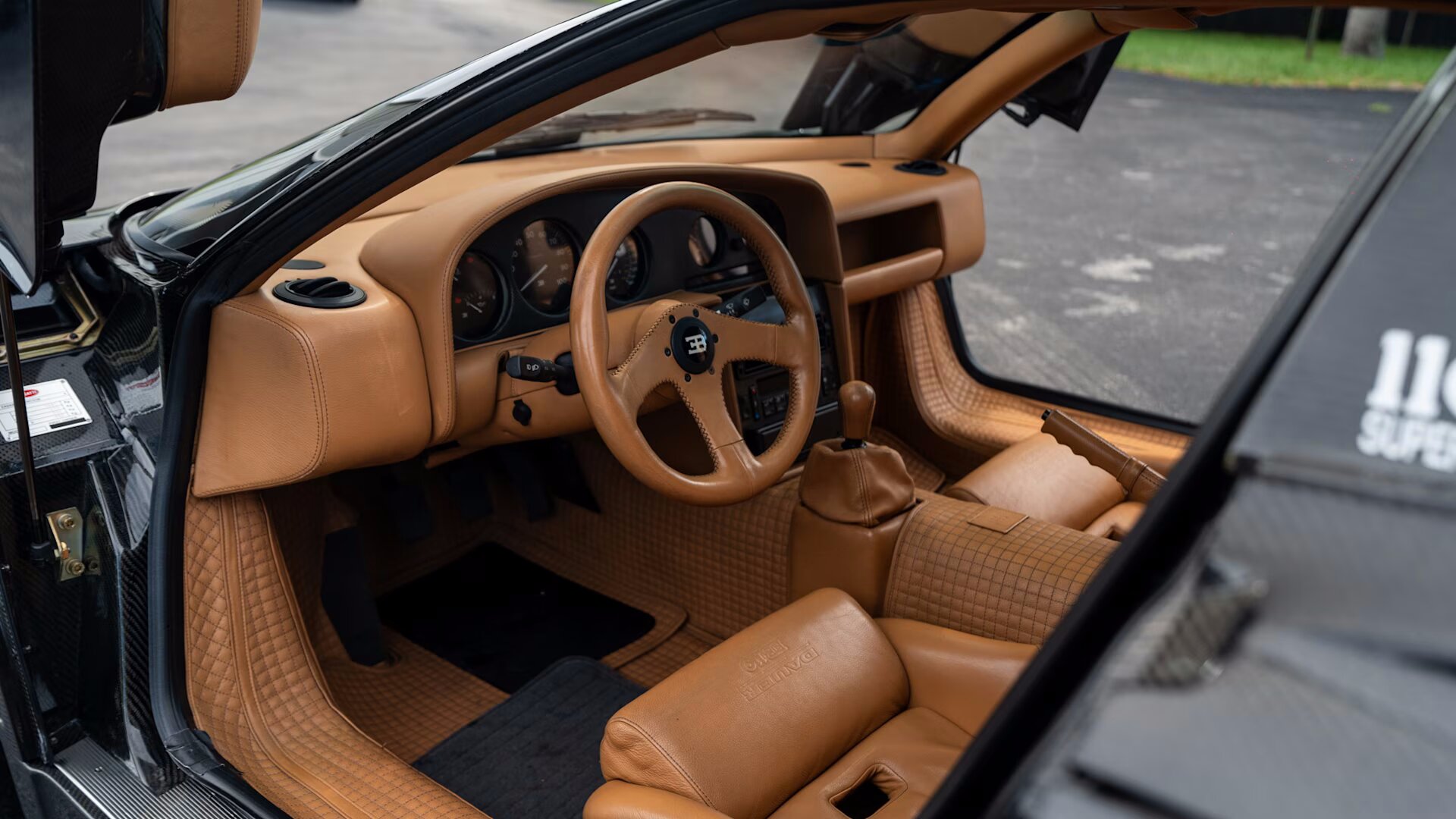
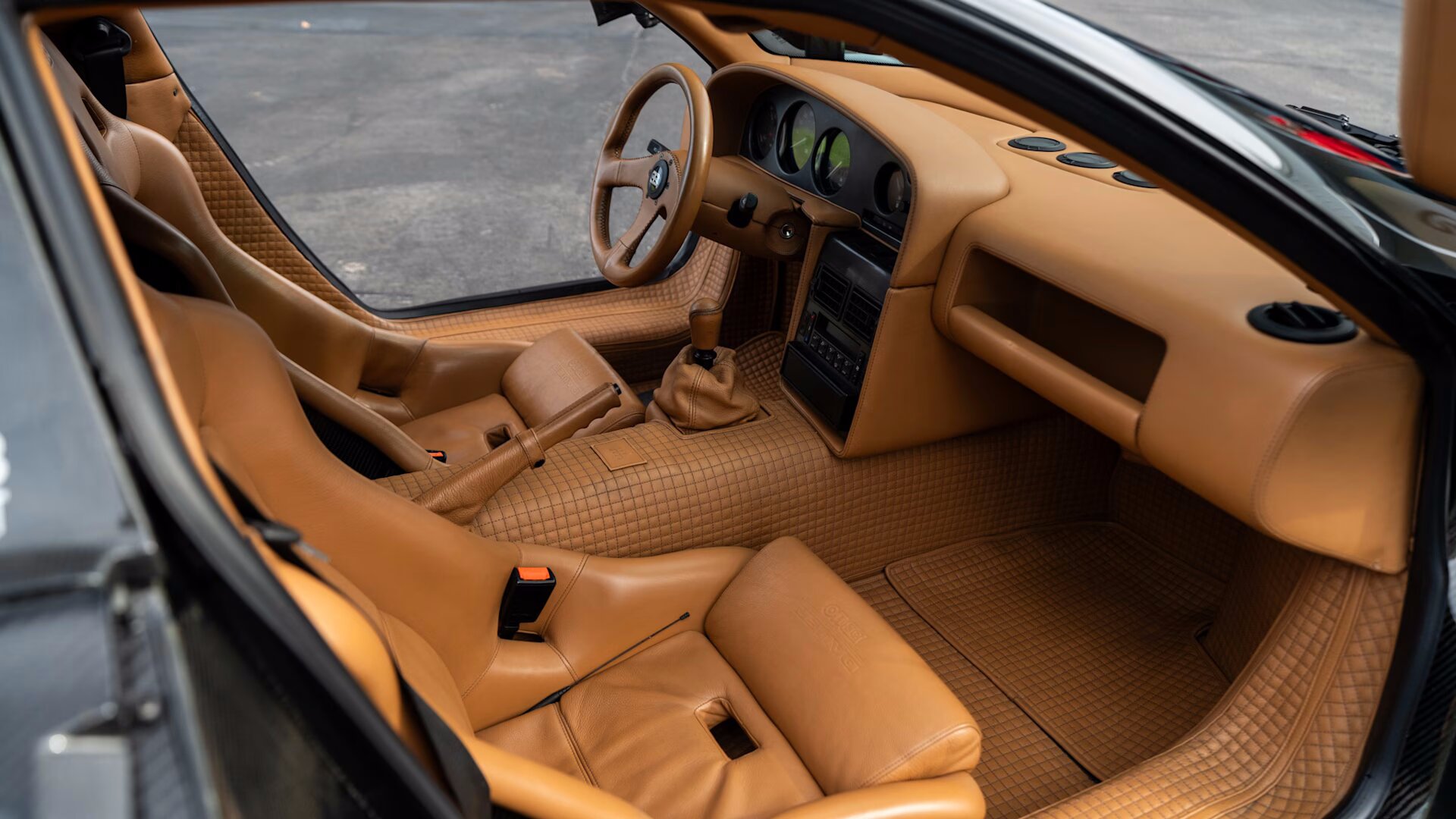
Artioli remained focused on ensuring that the EB110 would be a luxury Grand Touring car and he recognized that his potential buyers were looking for that, not for a spartan pure bred performance car. The EB110 was created to be a beautifully made and presented high performance luxury car: and it delivered this uncompromisingly.
In the ensuing years Artioli kept faithful to his vision for a luxury four door Bugatti – the EB112, and when British sports car maker Lotus became available for sale he decided to risk his finances to purchase the company with its high levels of technological knowledge. These two things however proved to be too much for the finances of Bugatti Automobili S.p.A. and the company was forced into liquidation in 1995.
The EB110’s story did not end there however. German company Dauer purchased the parts inventory of the EB110 and set about creating a complete parts catalog complete with diagrams and part numbers.
They then worked to create the final versions of the EB110 creating three Super Sport models and one GT between 1999 and 2000.
Then between 2001 and 2002 Dauer set about some final refinements of the EB110 and built five EB110 Super Sport Light Weight, with one of these cars being clothed in carbon fiber bodywork with clear lacquer finish.
This car is coming up for sale by Mecum Auctions at their Monterey 2026 sale to be held on Saturday August 15th, 2026.
Specifications for this car are quoted by Mecum Auctions as follows:-
- Dauer-built EB110 Super Sport Lightweight, 1 of 5 produced
- The only Dauer Super Sport Lightweight with an exposed, clear-lacquered, unpainted carbon fiber body
- Odometer reads 6,025 miles
- Quad-turbocharged 3.5L/705 HP V-12 with Remus Sport exhaust and re-mapped ECU
- All-wheel drive
- 6-speed manual transmission
- Saddle leather interior
- Approximately 500 pounds lighter than the aluminum-bodied EB110
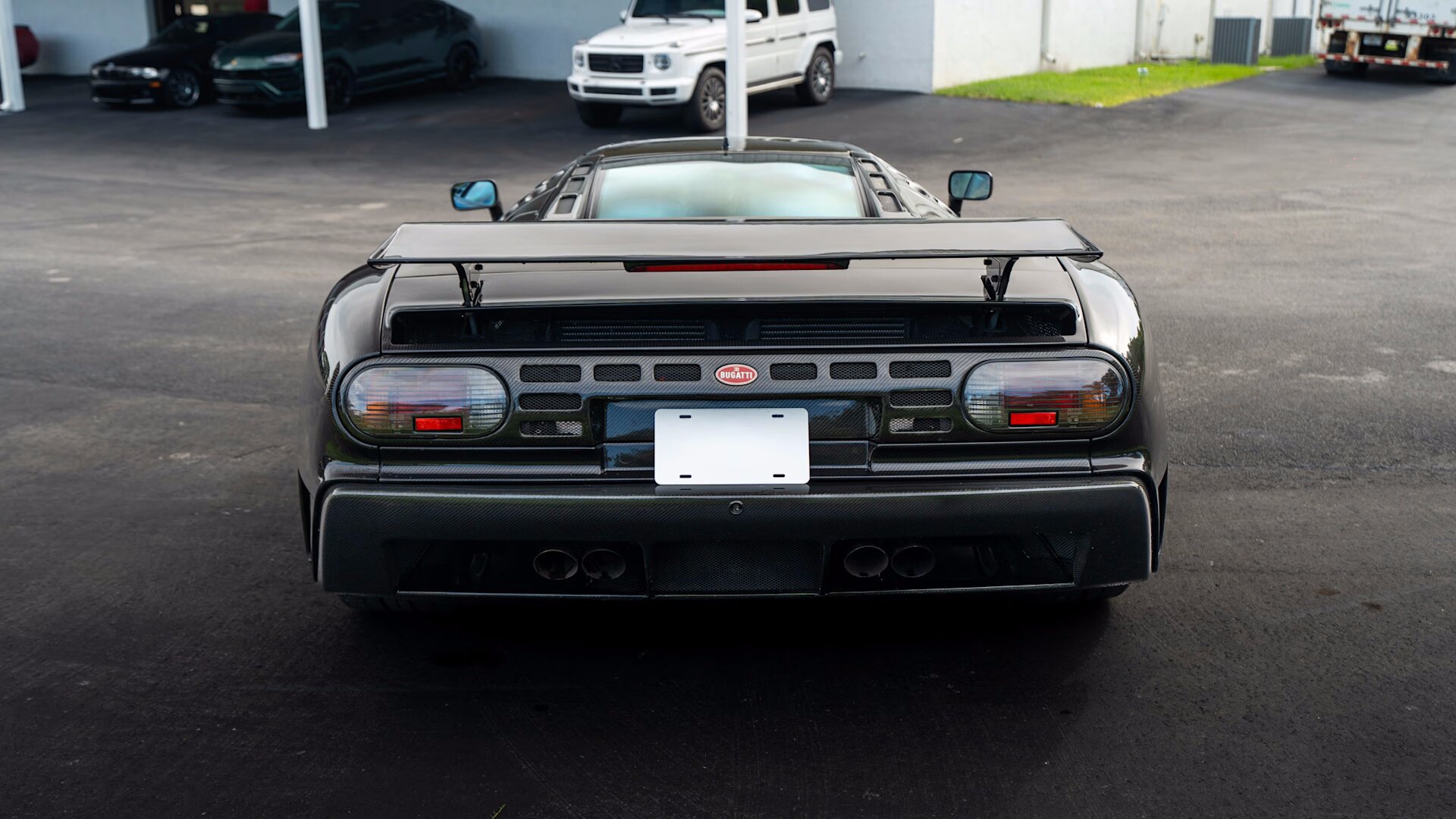
- Adjustable rear GT wing
- 7-spoke light alloy center-lock wheels
- Sport bucket seats
- Large Brembo brakes
- Functional cooling ducts
Picture Credits: All pictures courtesy Mecum Auctions.
Jon Branch is the founder and senior editor of Revivaler and has written a significant number of articles for various publications including official Buying Guides for eBay, classic car articles for Hagerty, magazine articles for both the Australian Shooters Journal and the Australian Shooter, and he’s a long time contributor to Silodrome.
Jon has done radio, television, magazine and newspaper interviews on various issues, and has traveled extensively, having lived in Britain, Australia, China and Hong Kong. His travels have taken him to Indonesia, Israel, Italy, Japan and a number of other countries. He has studied the Japanese sword arts and has a long history of involvement in the shooting sports, which has included authoring submissions to government on various firearms related issues and assisting in the design and establishment of shooting ranges.