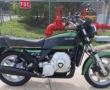
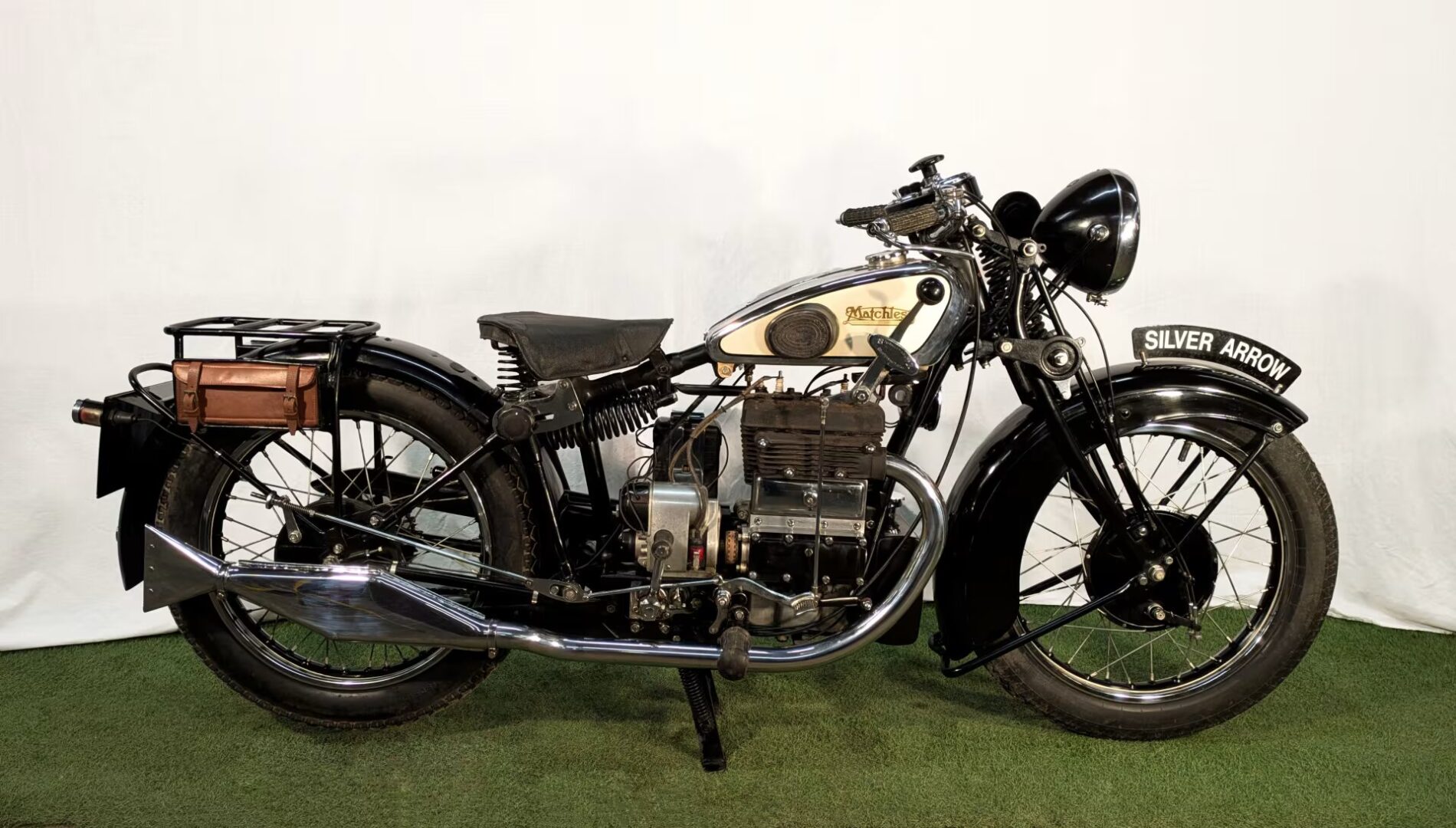
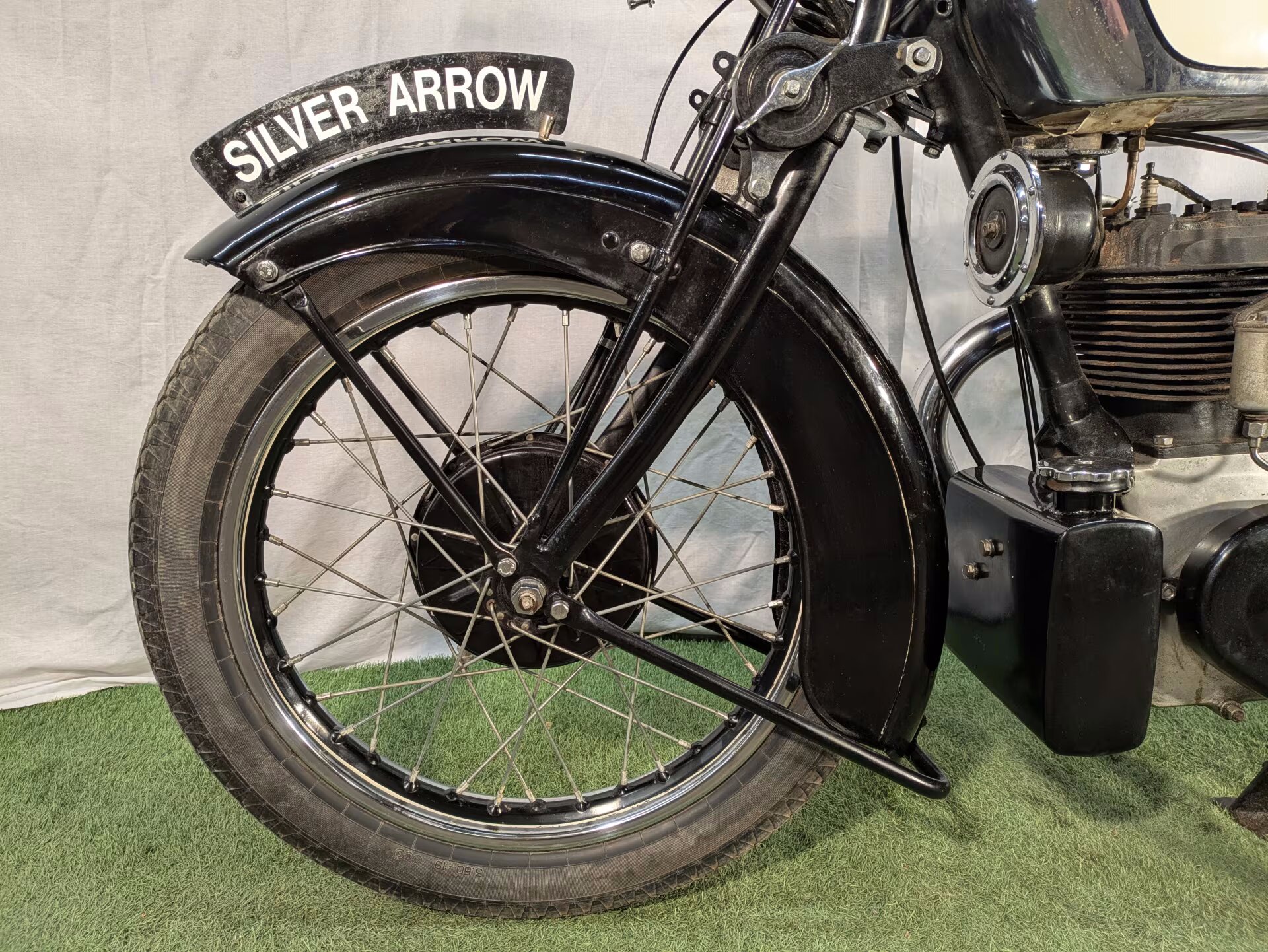
The Matchless Silver Arrow was a motorcycle that featured an unusual 18° side-valve V-twin engine that was said to be “vibrationless”. The bike also had a quite advanced suspension for the 1930’s giving it a reputation for comfort and good handling.
Fast Facts
- The Matchless Silver Arrow was made between 1929-1933.
- The heart of the Silver Arrow was an 18° side-valve V-twin engine that gained a reputation for being vibrationless and quiet.
- The bike was designed by Charlie Collier who was a two-time winner at the famous Isle of Man TT.
- These bikes are rare but one is coming up for sale by Mecum Auctions on Friday January 30th, 2026.
Matchless motorcycles began in 1899 and continued in production until 1966. Matchless forged a reputation for excellence in design, in manufacture, and in motorsport.
The actual company behind the Matchless name was Collier & Sons and it was run by British motorcycle pioneer Henry Herbert Collier who involved his sons Charlie and Harry in the family business.
Charlie Collier became a keen motorcycle racer being the winner of the first single-cylinder motorcycle race in the first ever Isle of Man TT, which was held in 1907. His brother Harry would go on to win the event two years later in 1909.
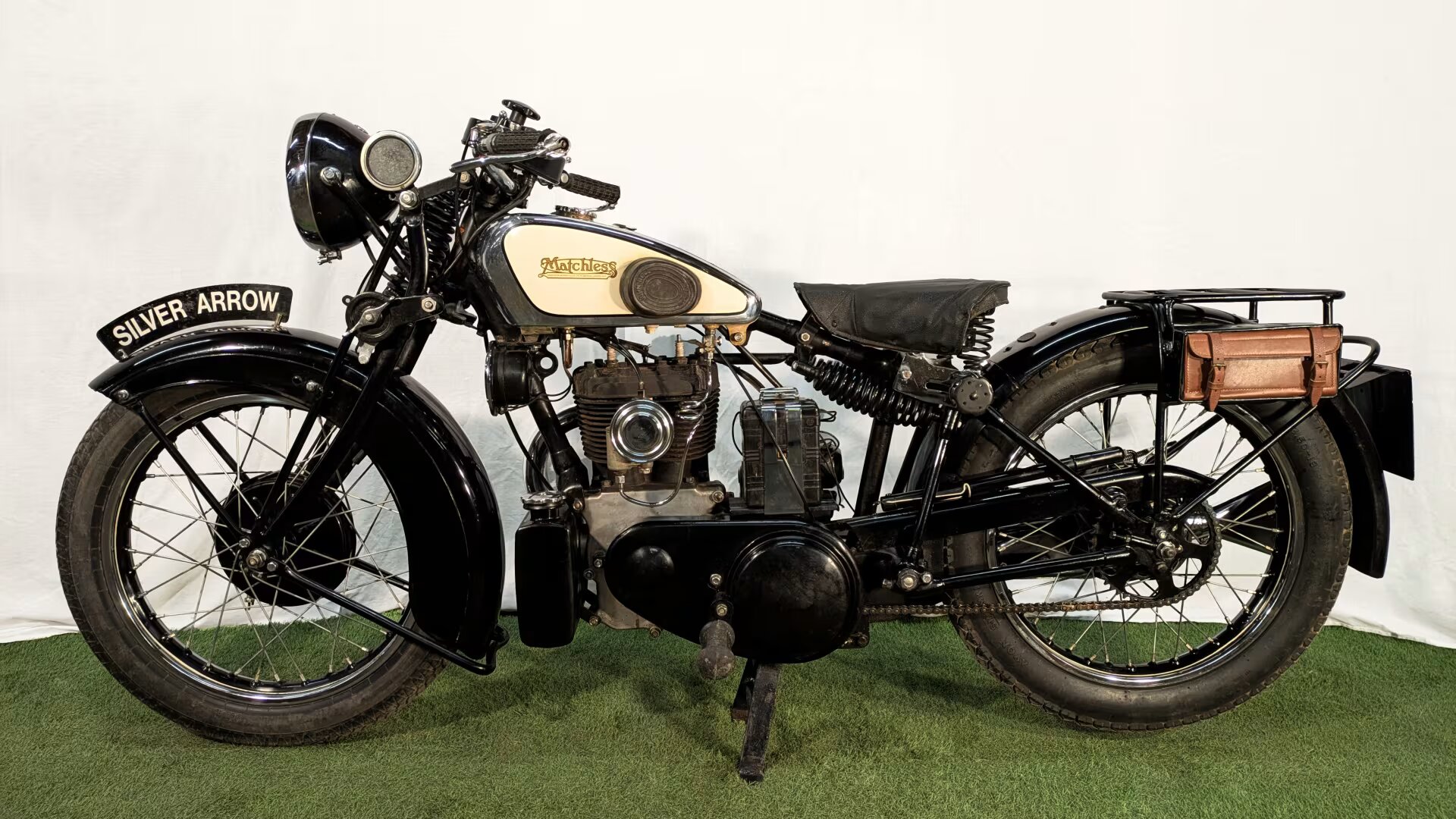
The company prospered and produced a variety of models, commonly fitted with J.A.P. V-twin engines as was common for British motorcycle makers in both the pre and post World War I period. These bikes being a popular choice for use fitted with a sidecar.
Henry Collier passed away in 1926 leaving his two sons to direct and lead the company. They restructured it as a limited company in 1928 and the following year unveiled their Matchless Silver Arrow model, which was designed by Charlie Collier.
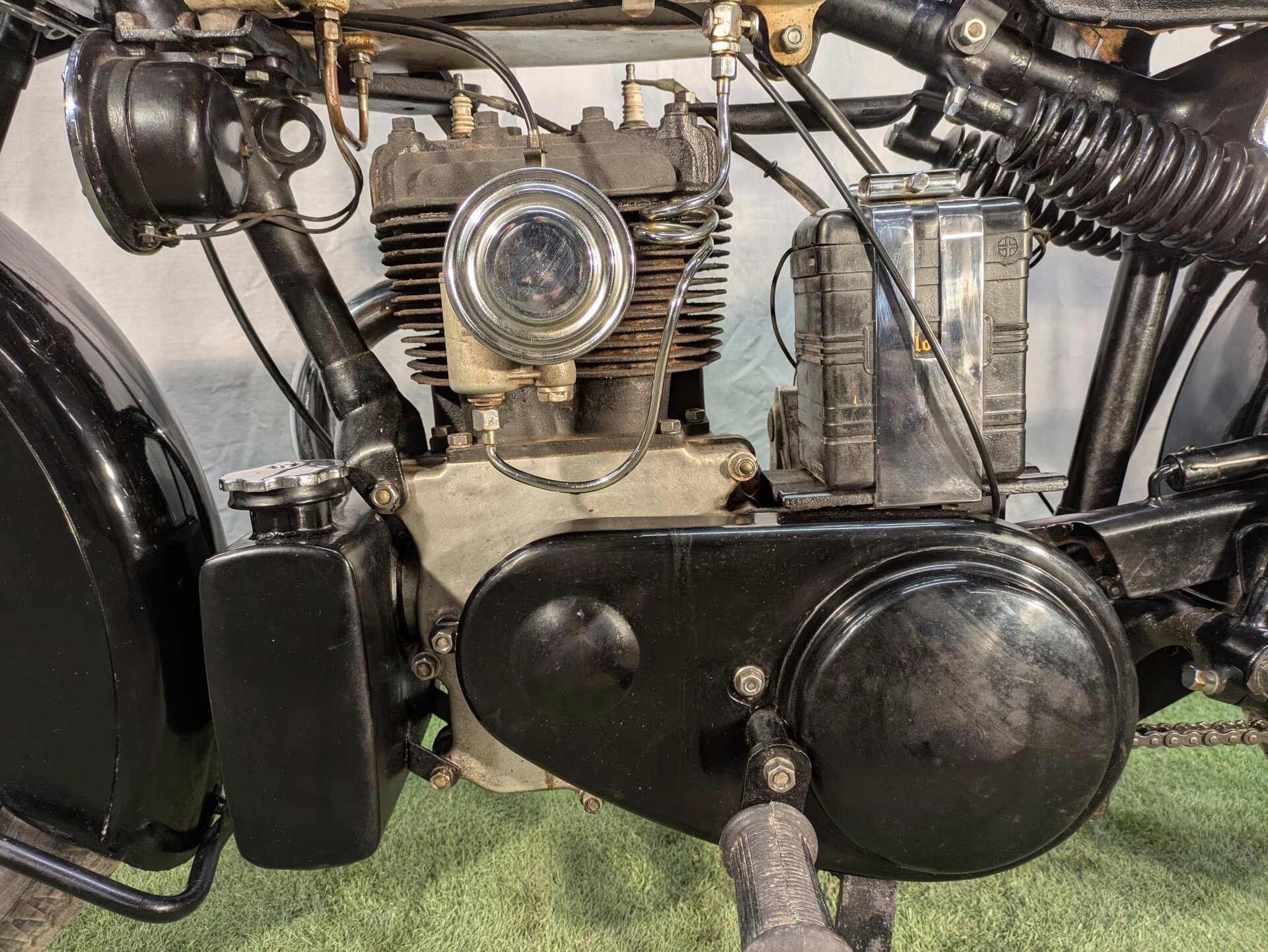
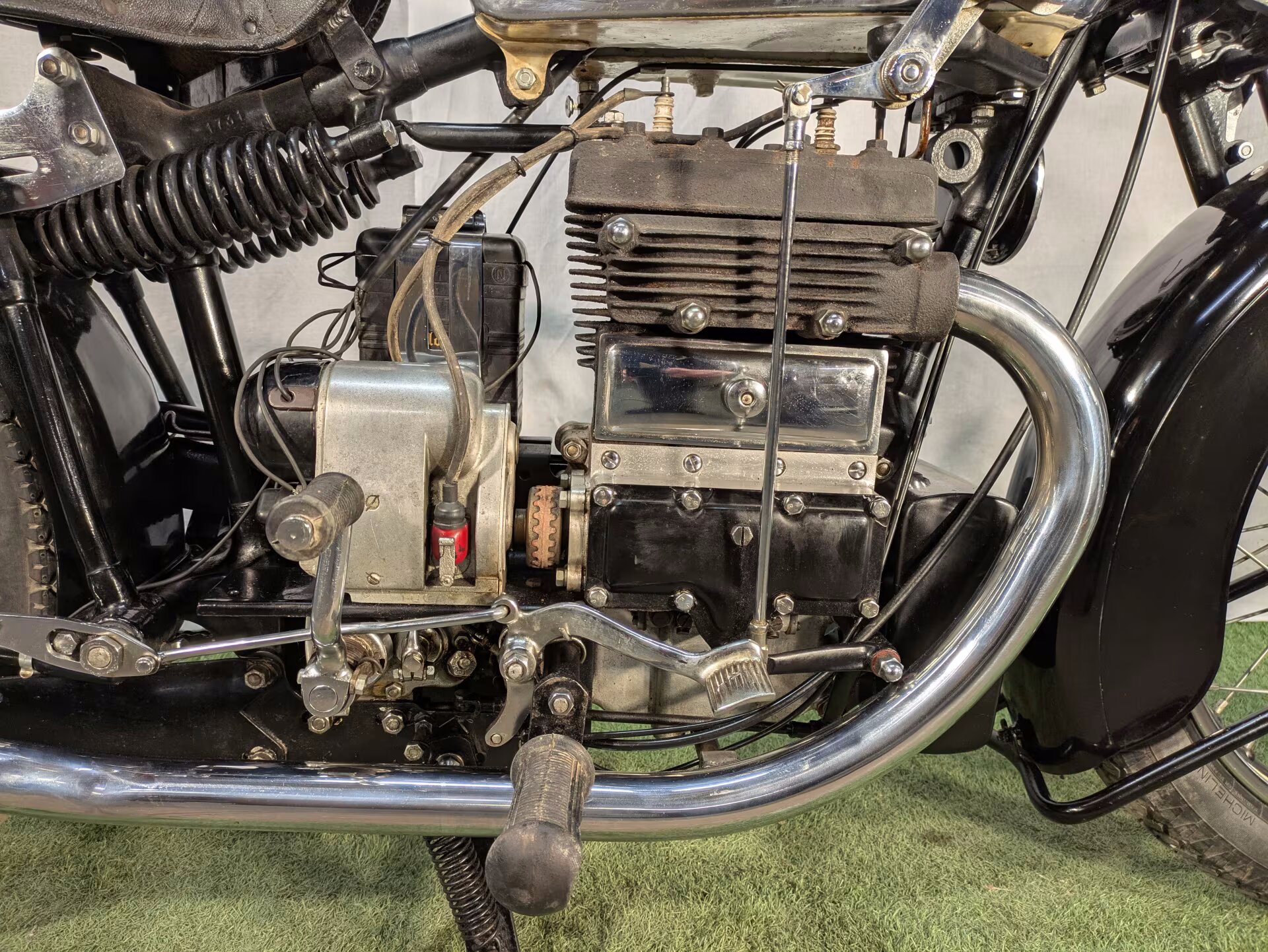
For the Silver Arrow Charlie Collier sought to incorporate the best technological advances of the era. The engine was a dry sump side-valve 397cc (i.e. a “400cc”) V-twin with the cylinders set in a narrow 18° Vee. This enabled the use of a one-piece cylinder head. The engine breathed via an Amal 4/014 carburetor.
The crankshaft was mounted laterally while the camshaft was mounted longitudinally and driven by a pinion crown wheel.
The exhaust valves shared a common manifold enabling the use of a single exhaust pipe which was directed along the right side of the bike.
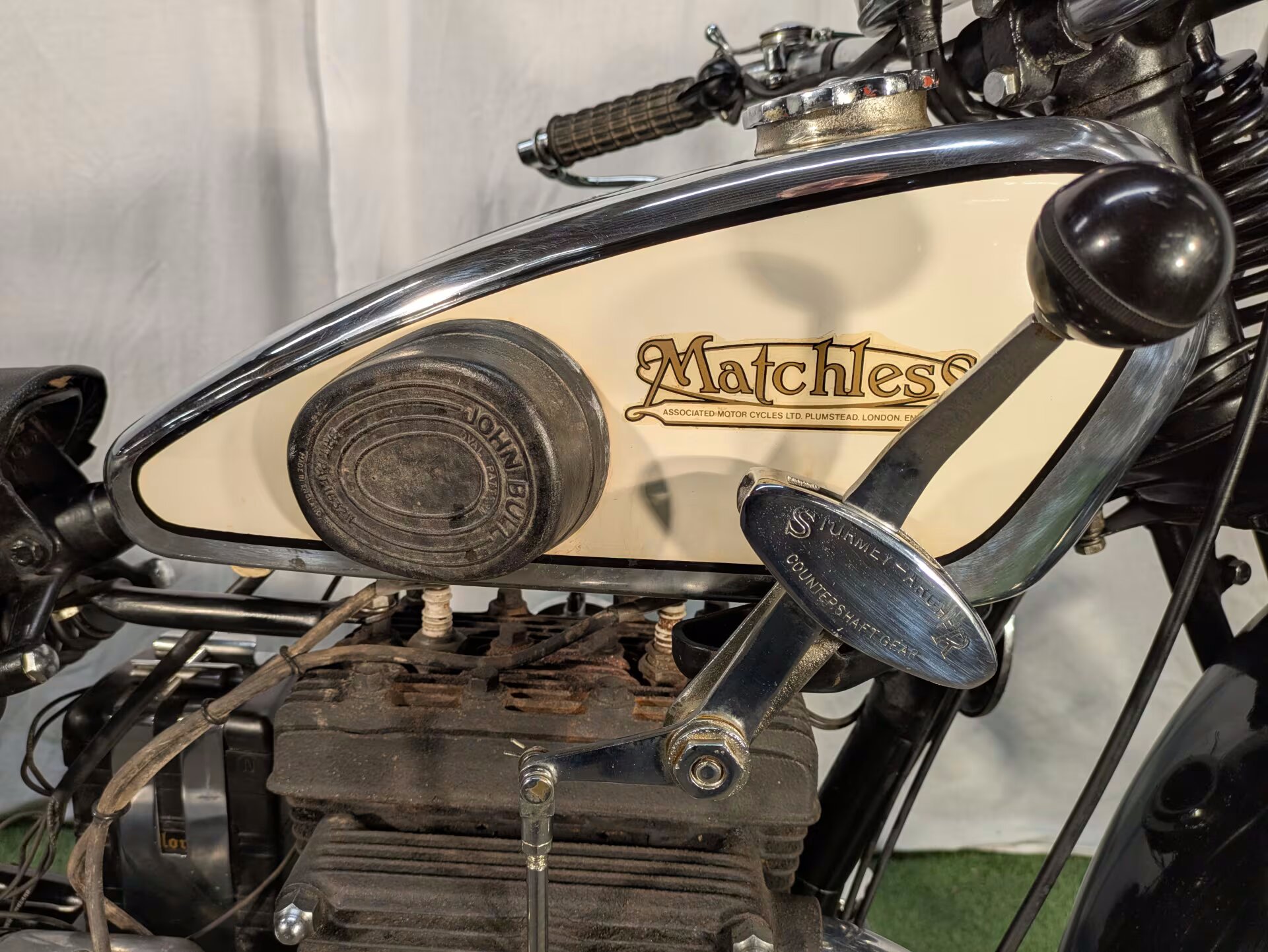
This engine delivered 16bhp @ 5,000rpm and it was made as a unit with the Sturmey Archer three speed gearbox, which was mounted under the engine and was accessible for maintenance via a side-plate on the right hand side.
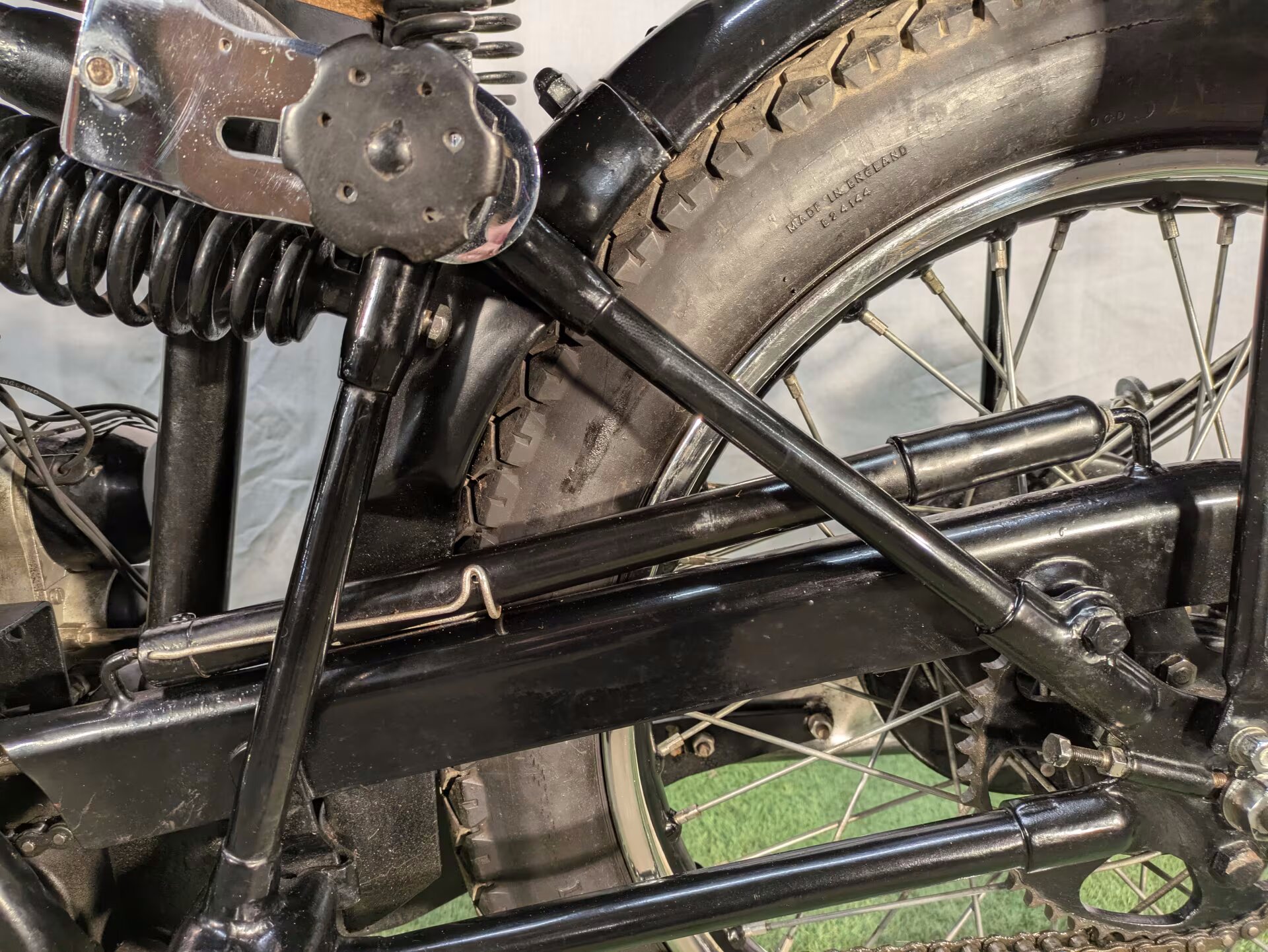
The gearbox was controlled by a gear shift lever on the right side of the 2.5 imperial gallon (3 US gallon/11 liters) fuel tank. The three speed transmission was fitted from 1929-1932 and then upgraded to a four speed from 1932 to the end of production in 1933. The four speed gearbox provided a lower first gear, and a higher top gear. Drive to the rear wheel was by chain.
The bike was equipped with girder forks at the front while at the rear was a cantilever suspension with two springs and friction dampers mounted under the seat. A similar arrangement to that used on the Vincent HRD motorcycles of the time.
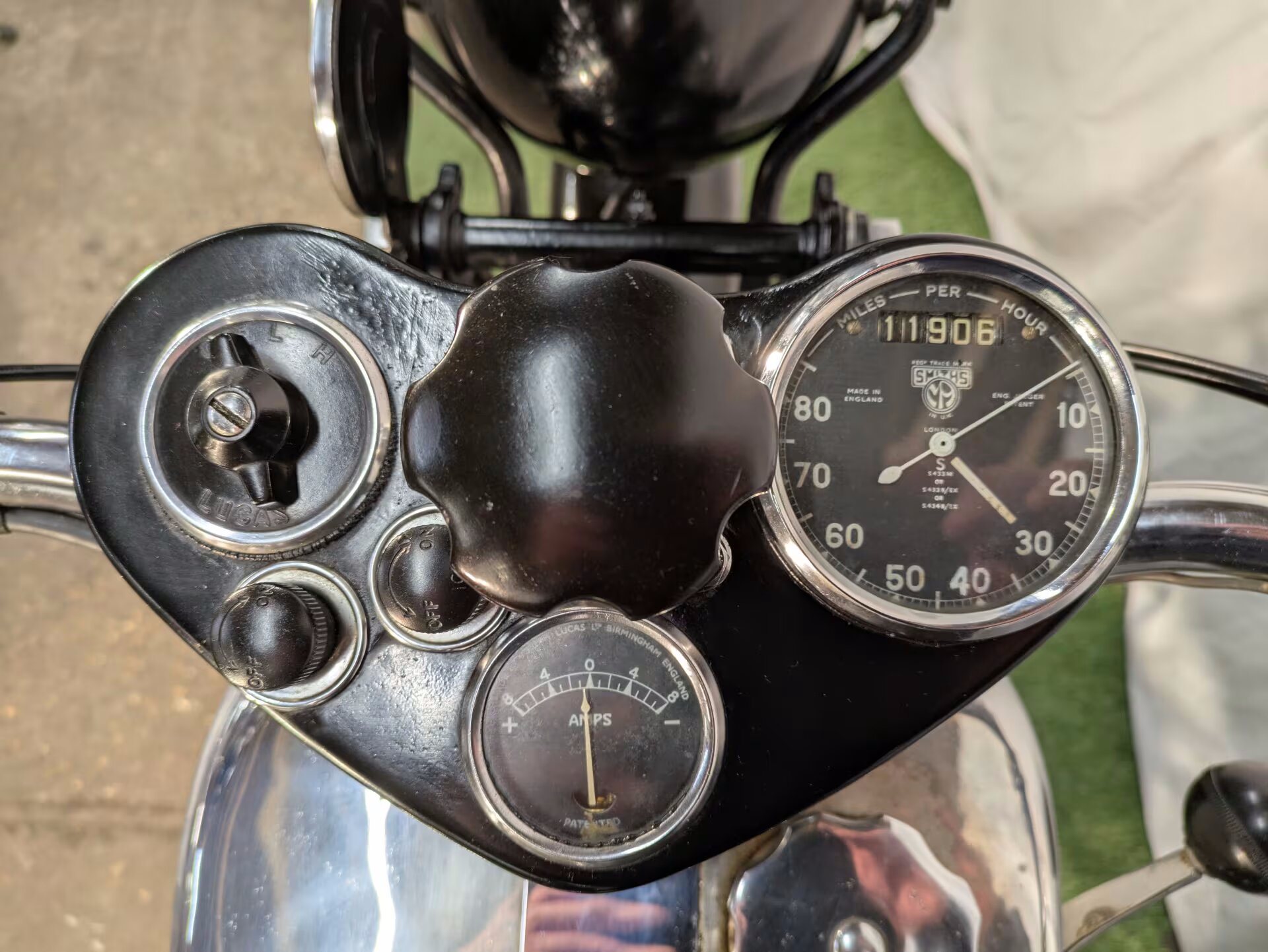
The Matchless Silver Arrow was offered in two models; the Standard model was equipped with an acetylene headlight and a bulb horn, while the Deluxe model featured a electric lights and an instrument panel with speedometer and ammeter.
The bike weighed 380 lb (170 kg) dry.
The Silver Arrow was reputably a pleasant bike to ride with the engine giving smooth, quiet, vibrationless performance.
Very few Matchless Silver Arrows have survived to the present day but one is coming up for sale by Mecum Auctions at their Las Vegas auction to be held on Friday January 30th, 2026.
You will find the sale page for this motorcycle if you click here.
Jon Branch is the founder and senior editor of Revivaler and has written a significant number of articles for various publications including official Buying Guides for eBay, classic car articles for Hagerty, magazine articles for both the Australian Shooters Journal and the Australian Shooter, and he’s a long time contributor to Silodrome.
Jon has done radio, television, magazine and newspaper interviews on various issues, and has traveled extensively, having lived in Britain, Australia, China and Hong Kong. His travels have taken him to Indonesia, Israel, Italy, Japan and a number of other countries. He has studied the Japanese sword arts and has a long history of involvement in the shooting sports, which has included authoring submissions to government on various firearms related issues and assisting in the design and establishment of shooting ranges.