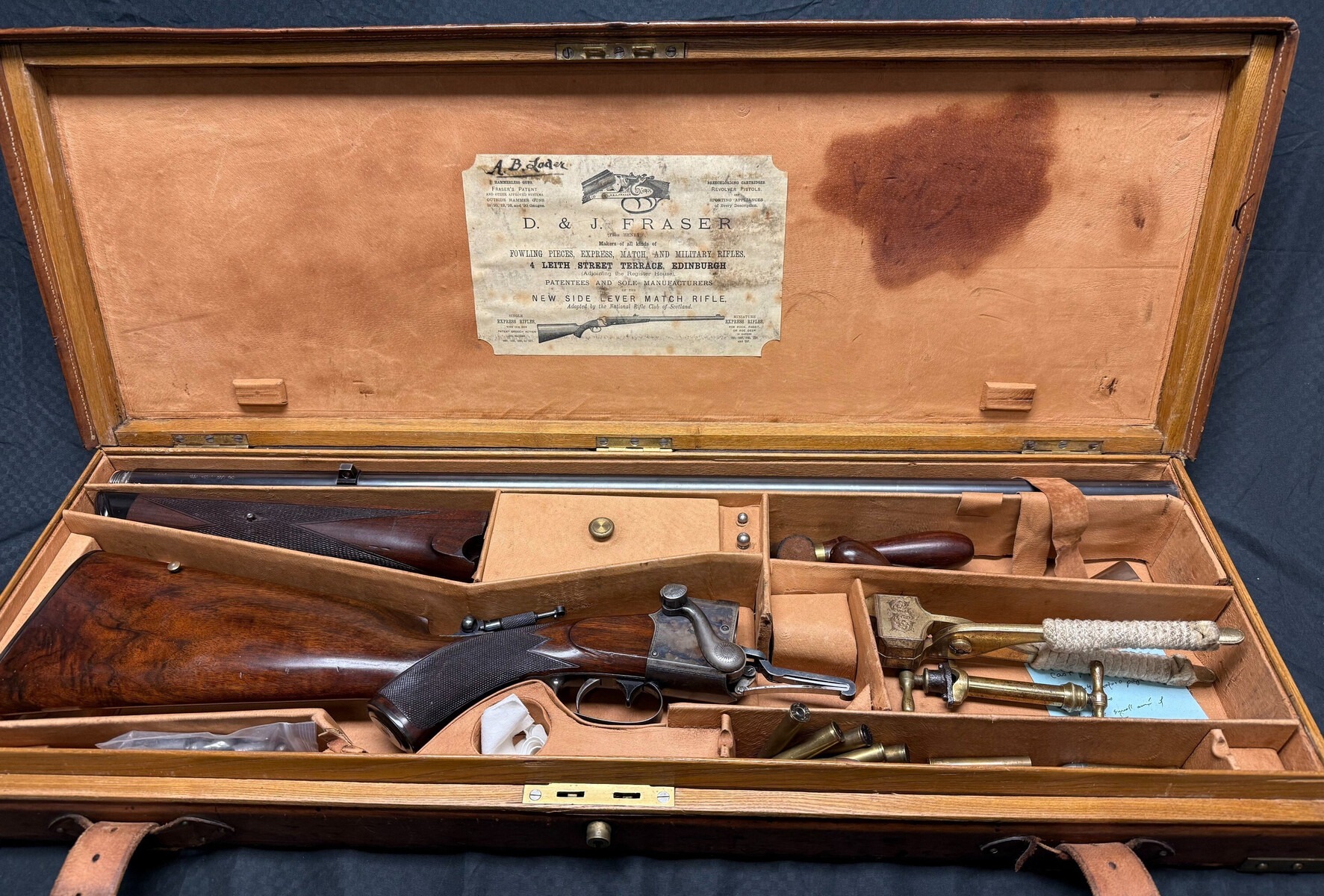
Daniel Fraser is one of Scotland’s most respected gunmakers and his side-lever falling block rifle action is perhaps his best known creation. Fraser made target and hunting rifles based on his falling block action and they were adopted by the National Rifle Club of Scotland.
Fast Facts
- Daniel Fraser is one of Scotland’s gunmaking greats.
- Perhaps Fraser’s most famous action is is side-lever falling block which was highly respected.
- One of these Fraser side-lever falling block rifles is for sale on GunsInternational at time of publication.
Daniel Fraser began his gunmaking business in 1872 after he had completed his seven year apprenticeship with famed Scottish gunmaker Alexander Henry of Edinburgh.
Daniel Fraser’s business was initially called D. Fraser, Gunmaker until 1878 when his brother John joined the business, at which point the name was changed to D. & J. Fraser.
John Fraser stayed with the company until 1889, at which time Daniel Fraser renamed the business Daniel Fraser & Company.
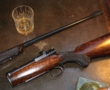
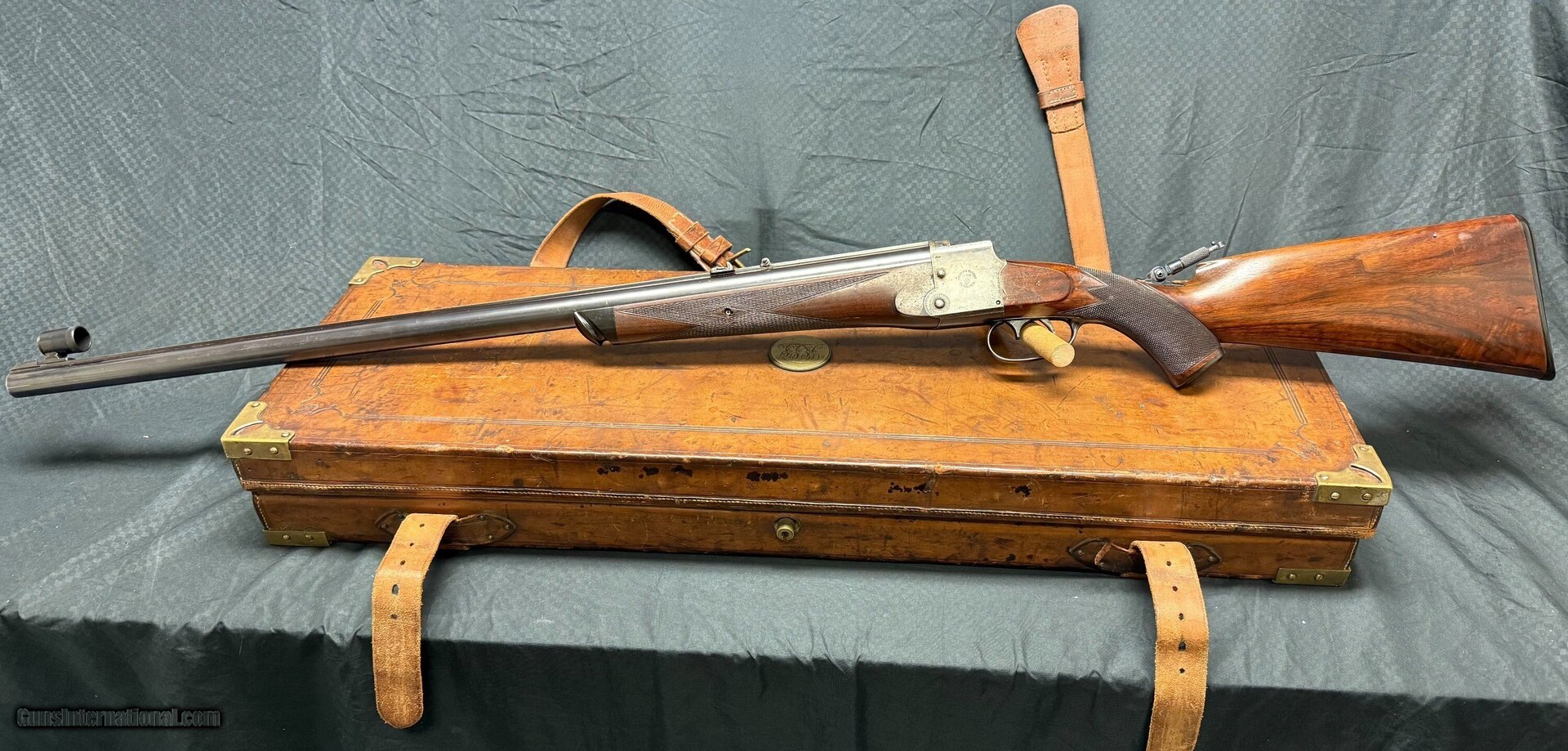
The falling block rifle featured in this post is an 1884 model.
This D. & J. Fraser falling block rifle is set up as a target rifle for competition. Back in that period of history target shooting was quite popular with competitors using various positions in order to best stabilize their rifles and thus shoot more accurately.
Two common positions were supine, and prone. In the supine position the shooter lay on his back and laid the rifle across a leg.
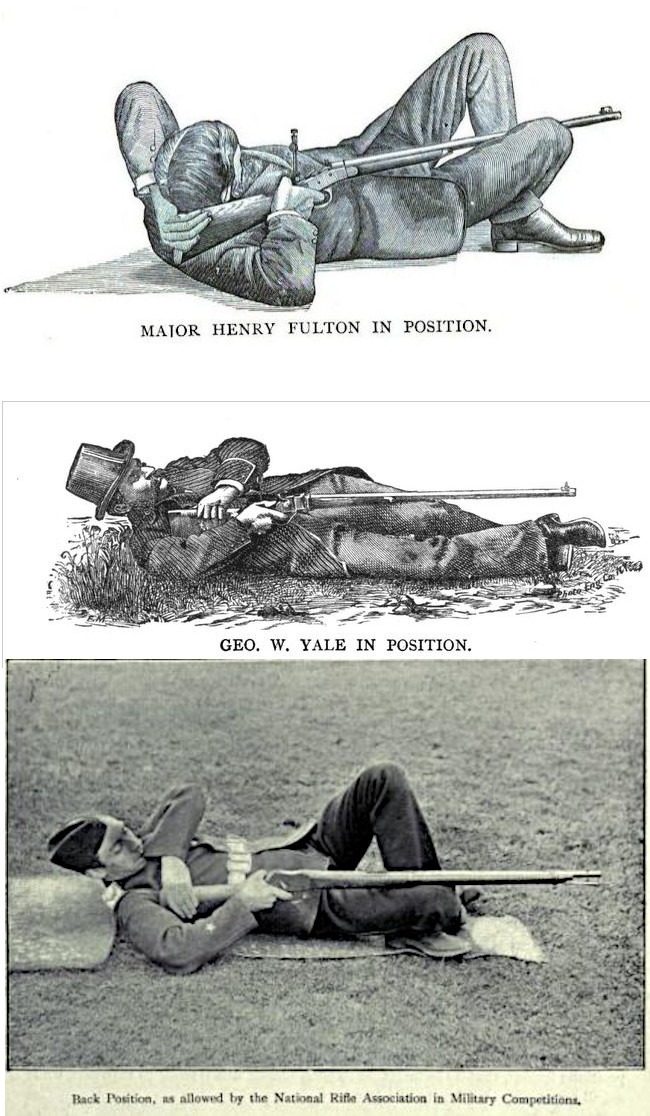
Rifles made for shooting in the supine position needed to have sights adapted to this. An aperture sight was sometimes fitted into the butt-stock just ahead of the heel plate.
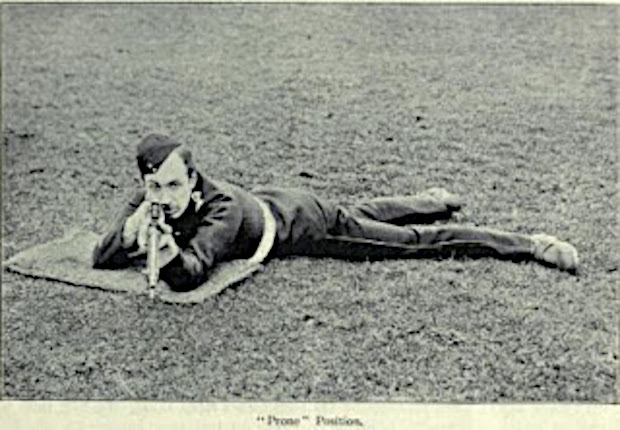
The other position, favored by Americans, was the prone position which is familiar to us nowadays. The shooter lays on their stomach with legs splayed, or partly on their side with a knee brought up to enhance support and minimize the effect of heartbeat.
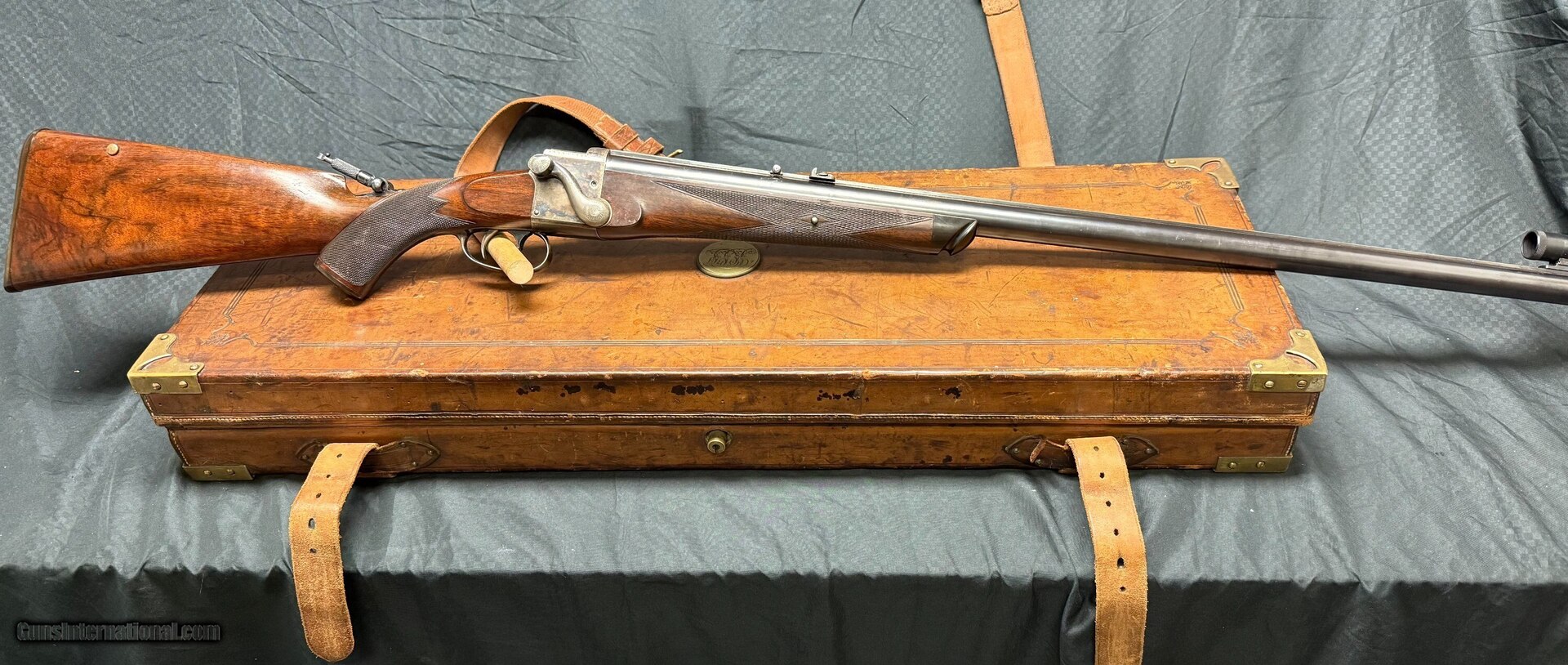
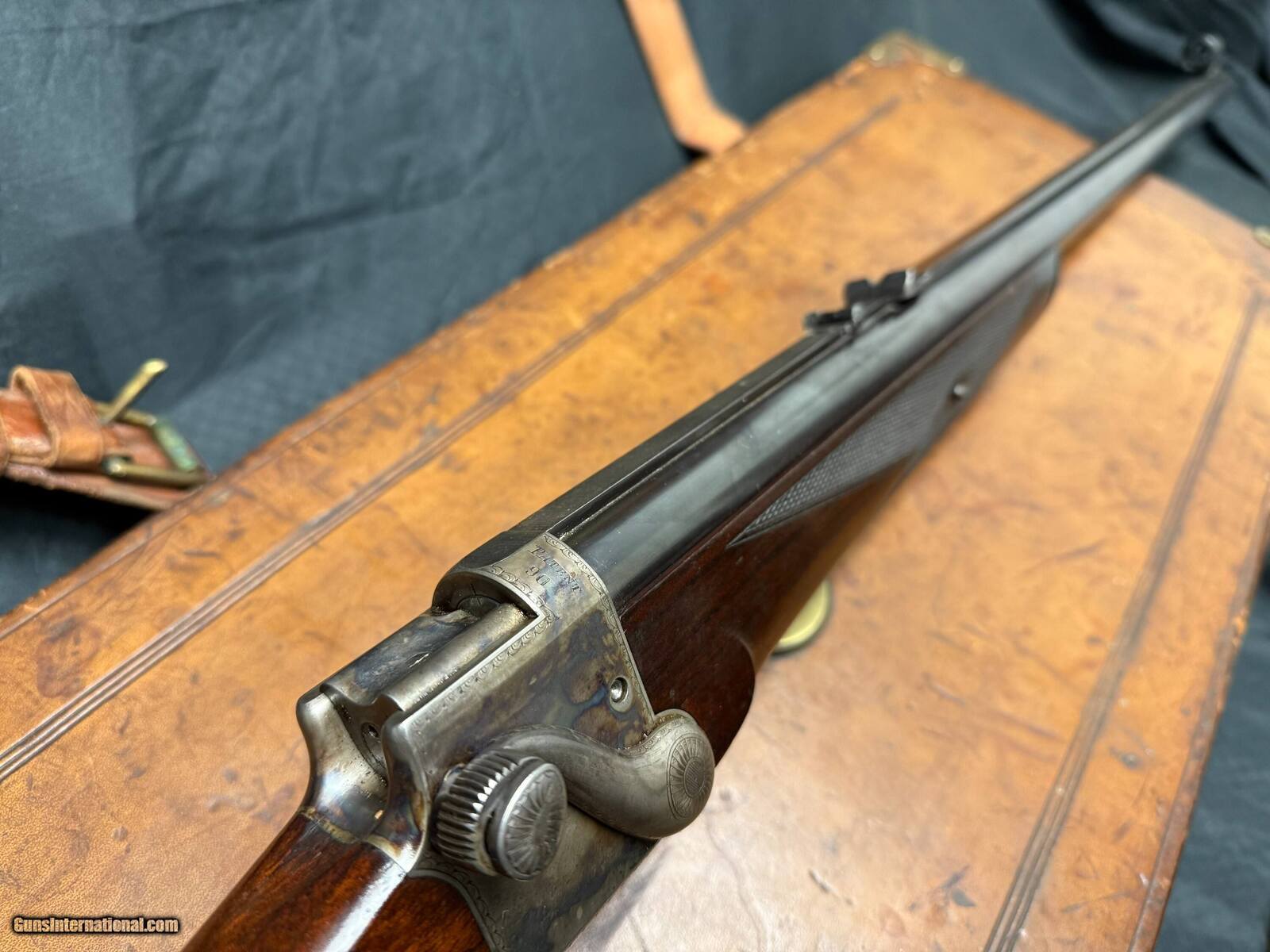
The D. & J. Fraser rifle featured in this post is equipped for use in all shooting positions including supine and prone.
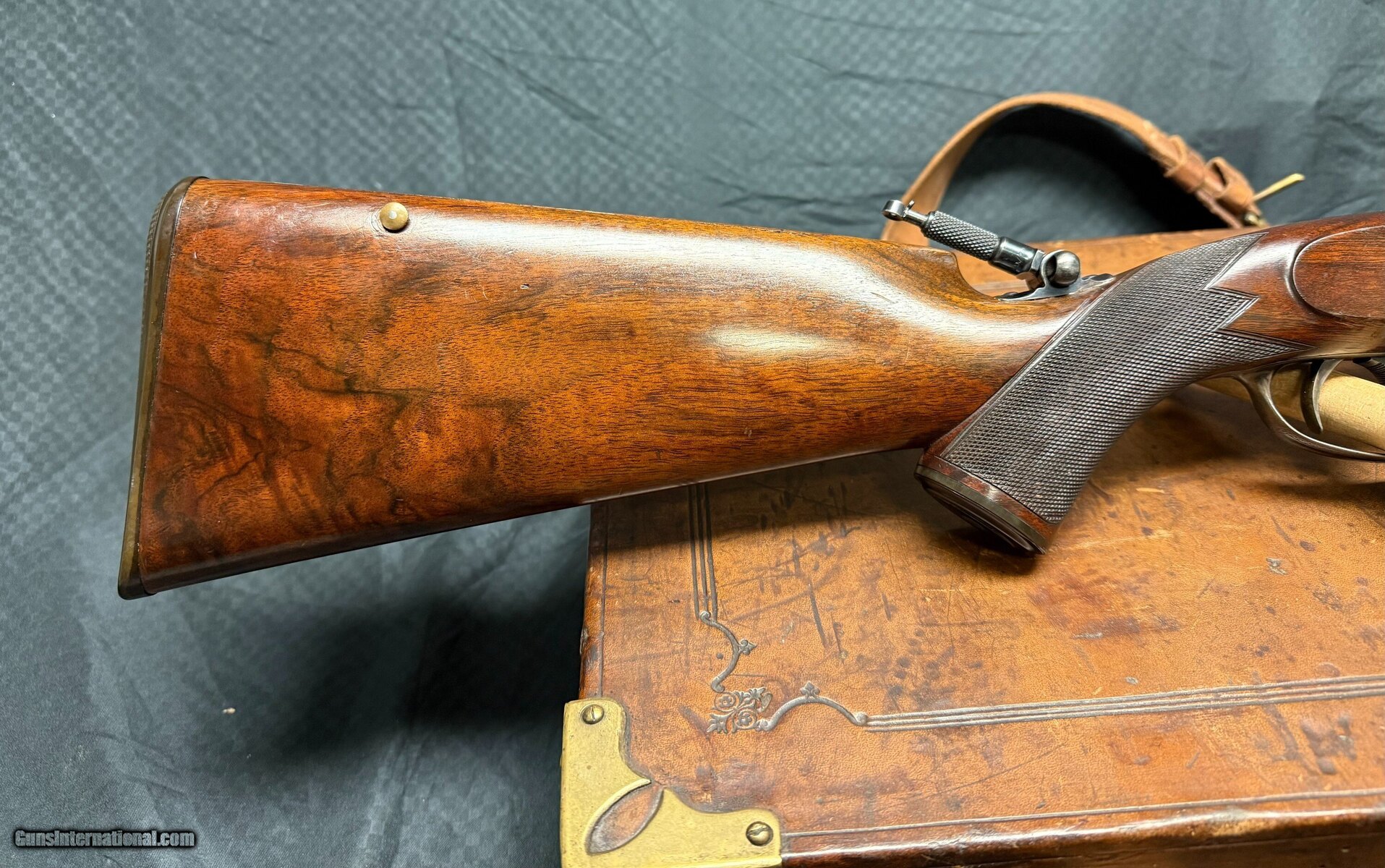
For one of the styles of supine position the rifle is fitted with a rear orthoptic sight which is concealed under a wooden panel in the butt-stock comb. When lifted the folded down bracket that holds the orthoptic sight can be folded upright.
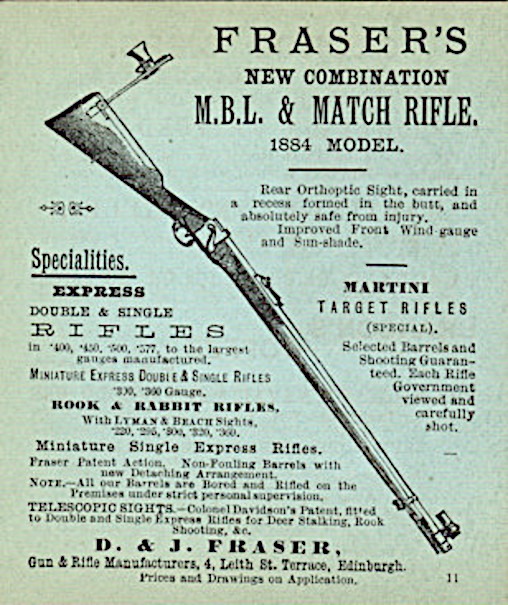
The feature rifle is equipped with this folded bracket for the rear orthoptic sight, but does not have the orthoptic sight included with it.
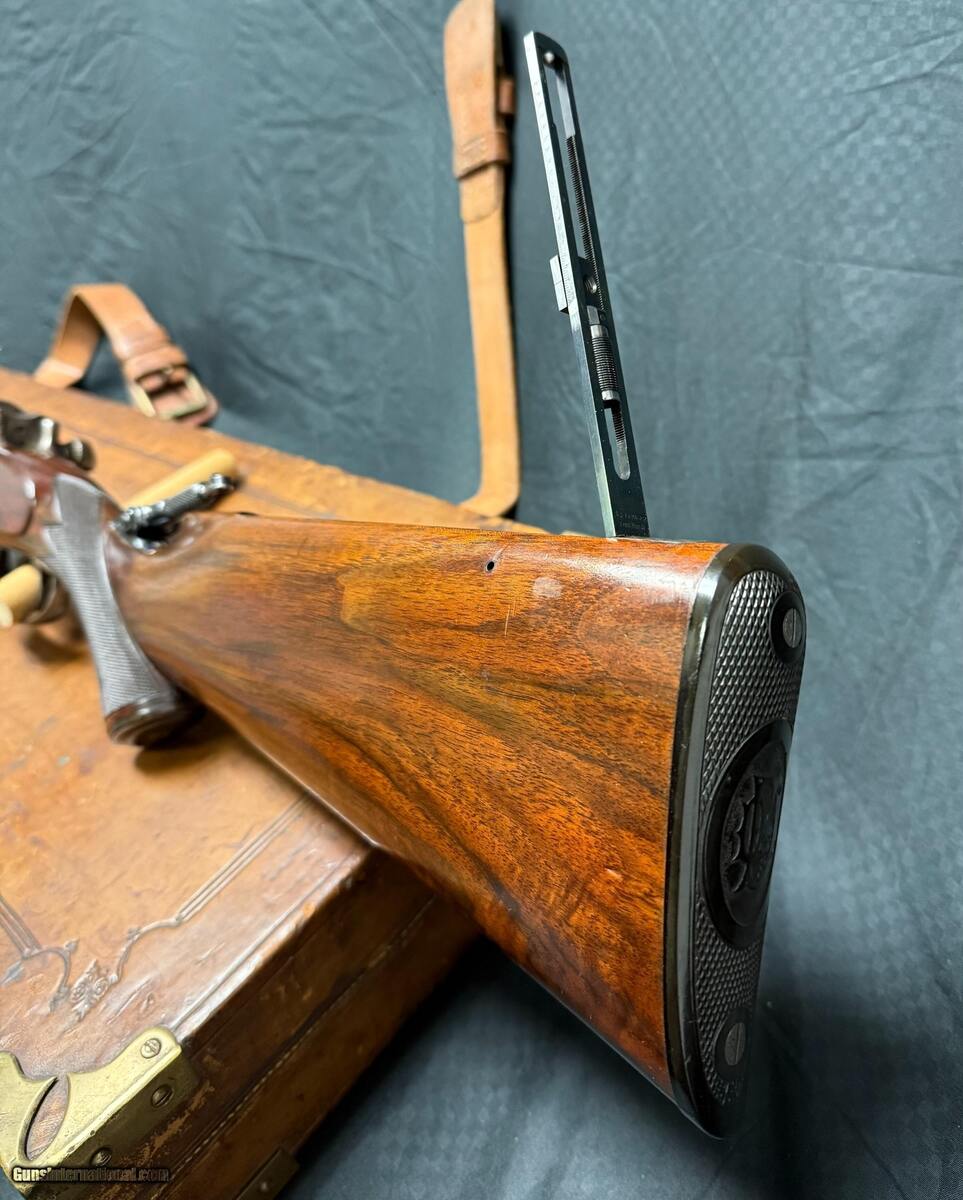
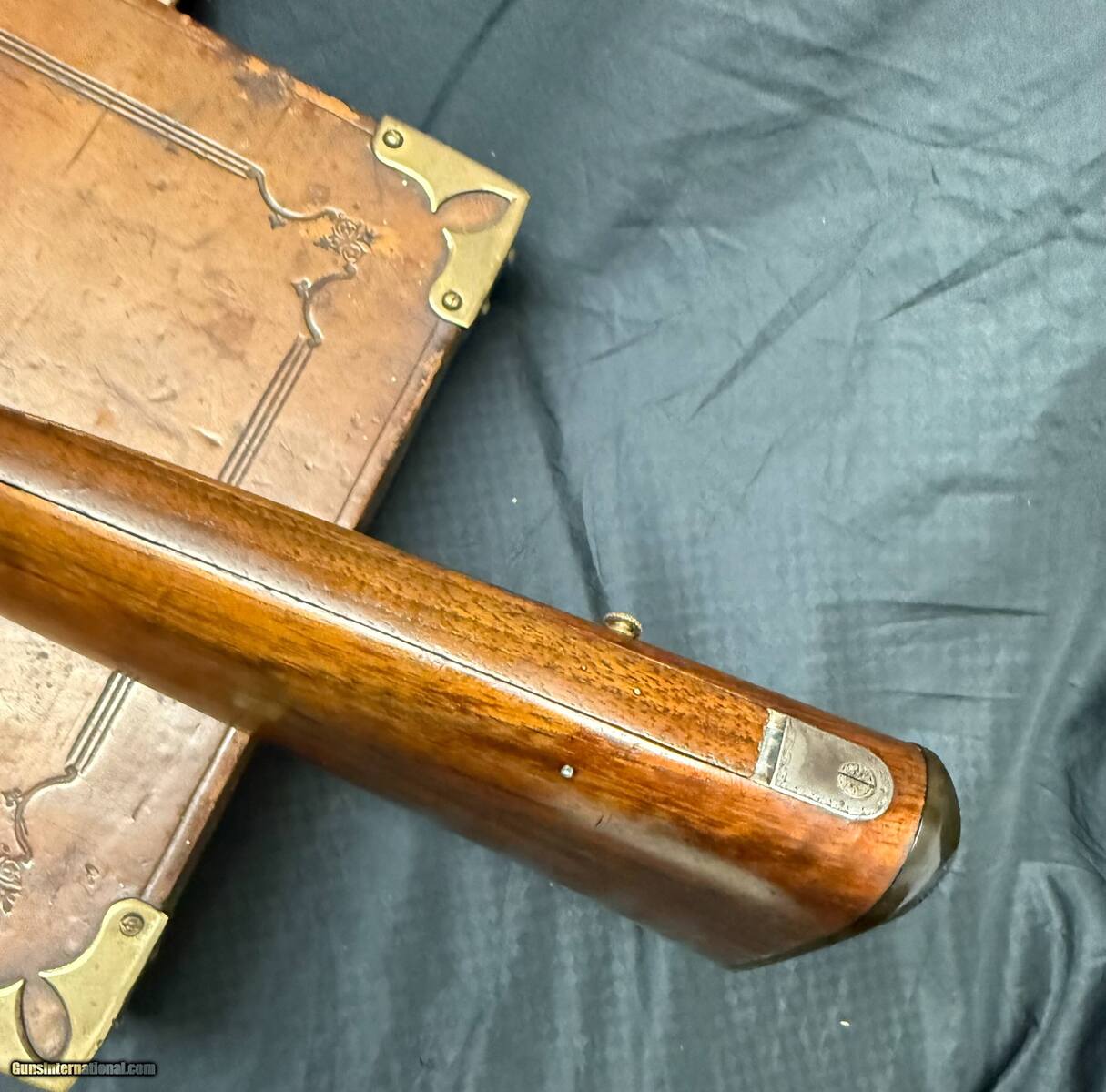
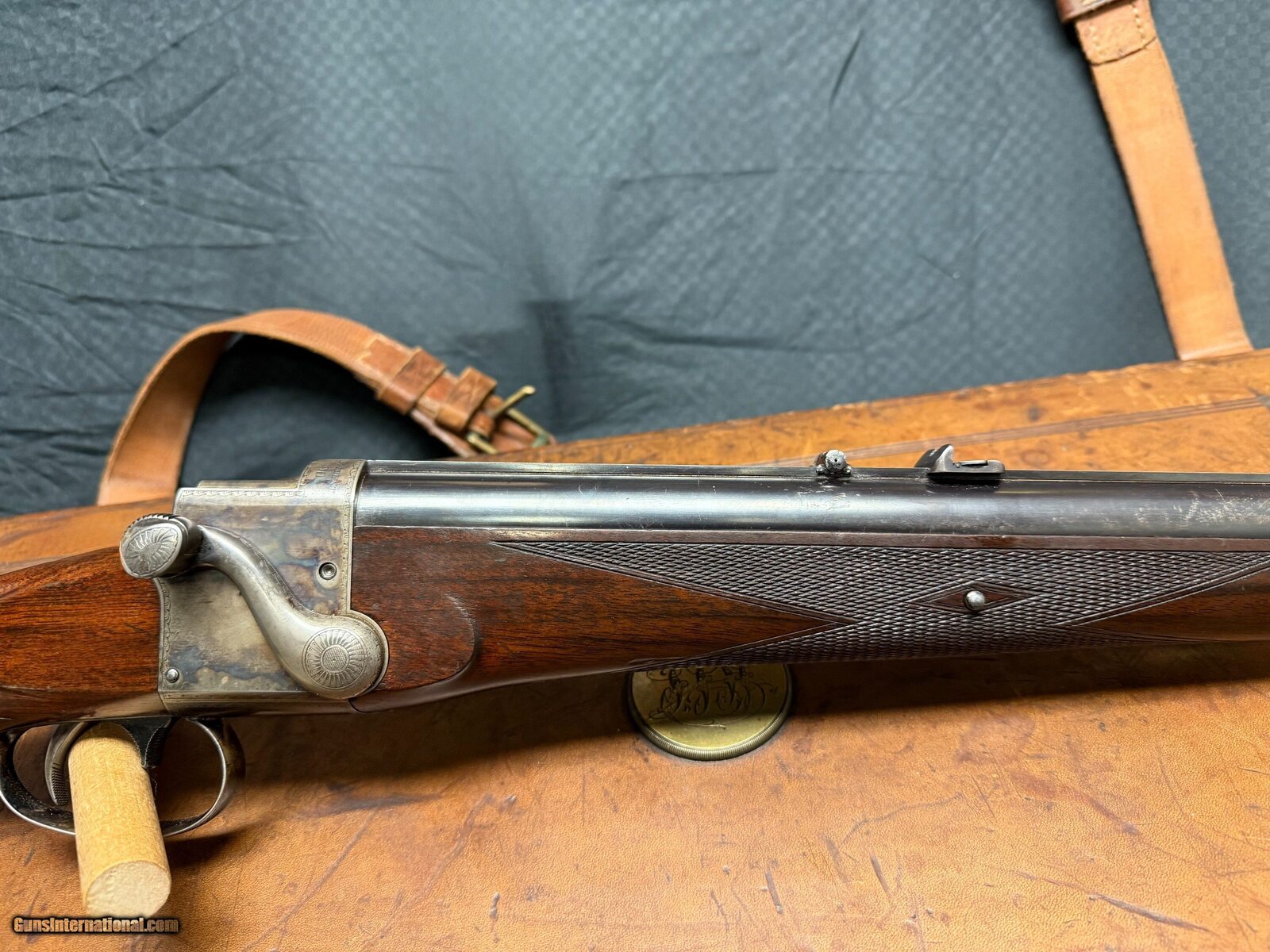
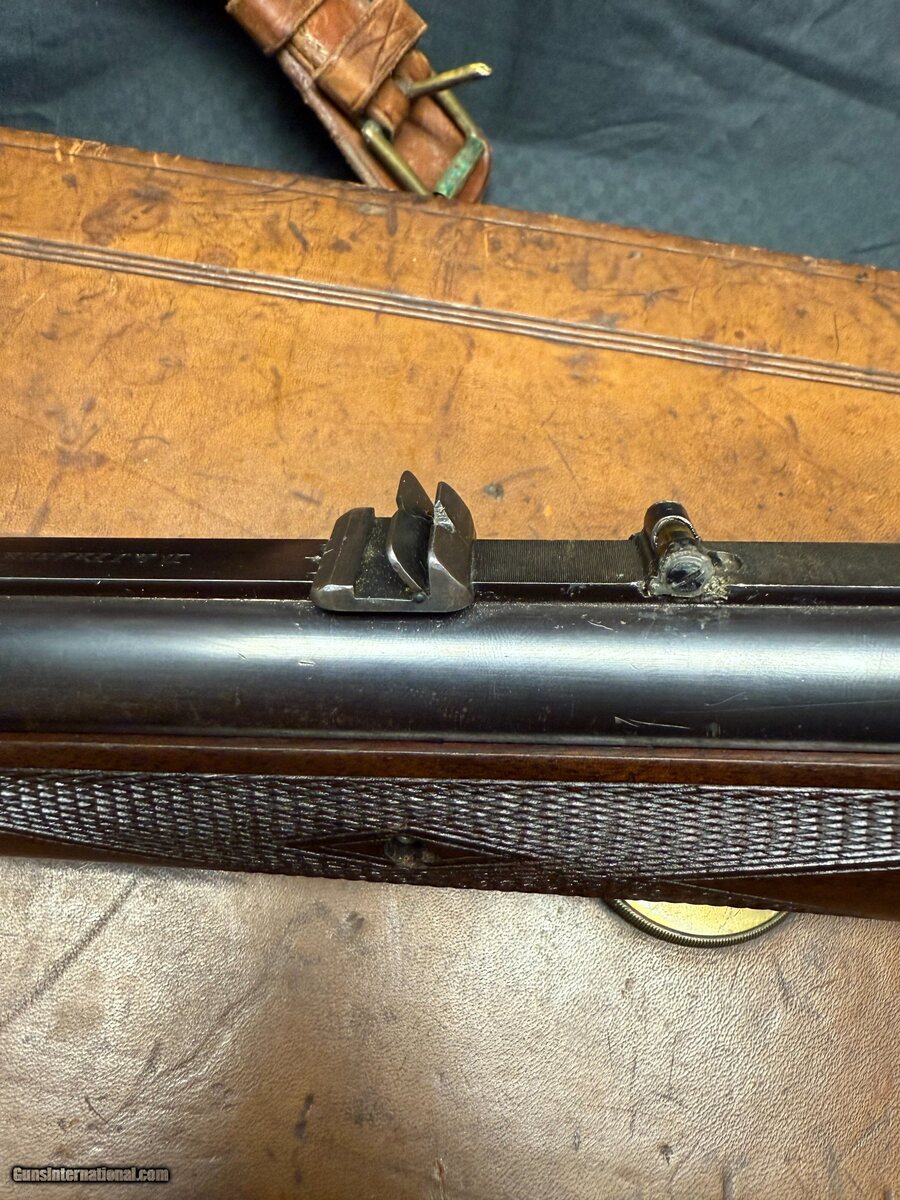
The rifle is also fitted with a tang mounted Lyman aperture sight, and with conventional rear open sights with twin blades, one fixed and one folding.
The front sight is a tube with a target style circular element.
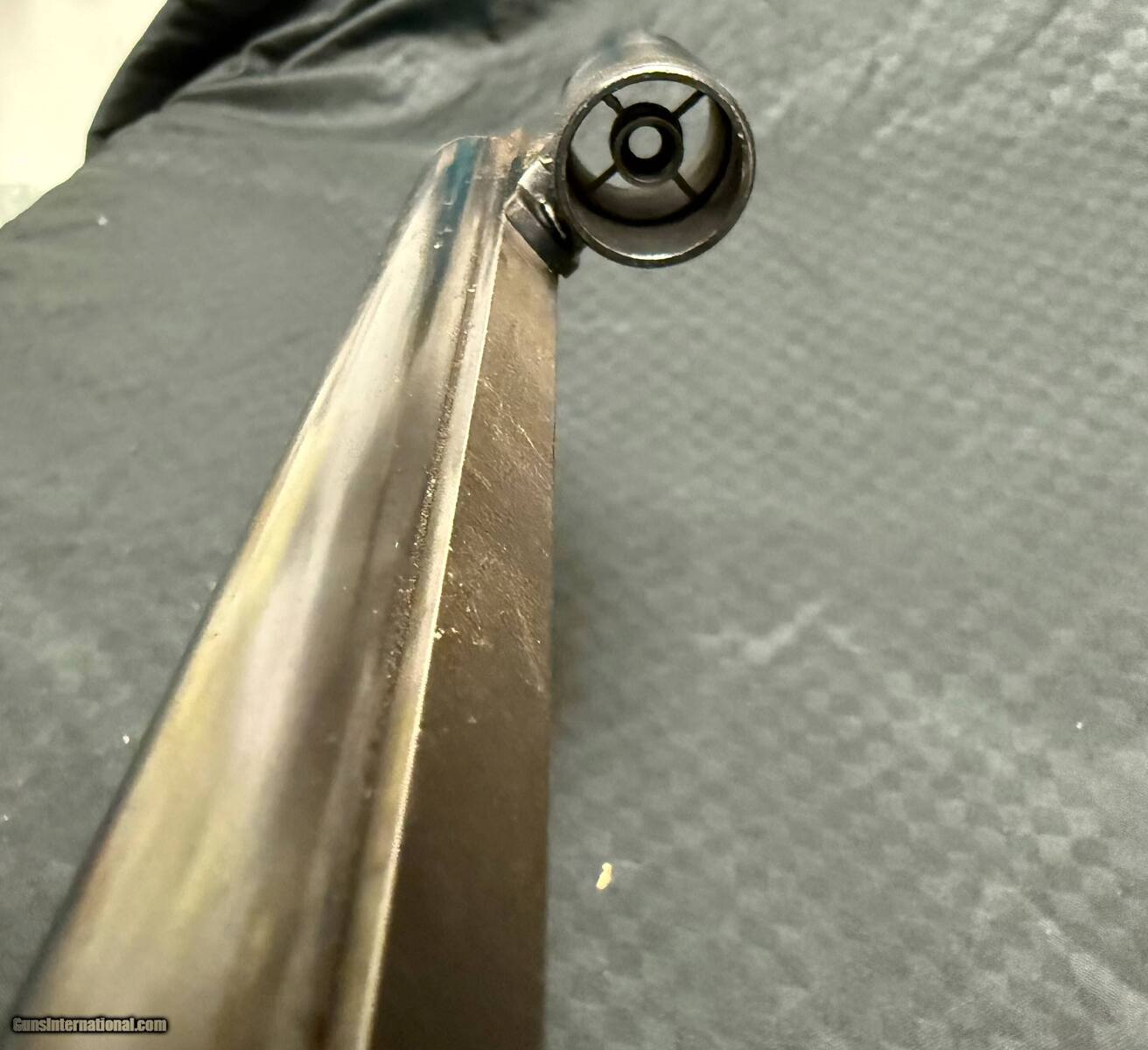
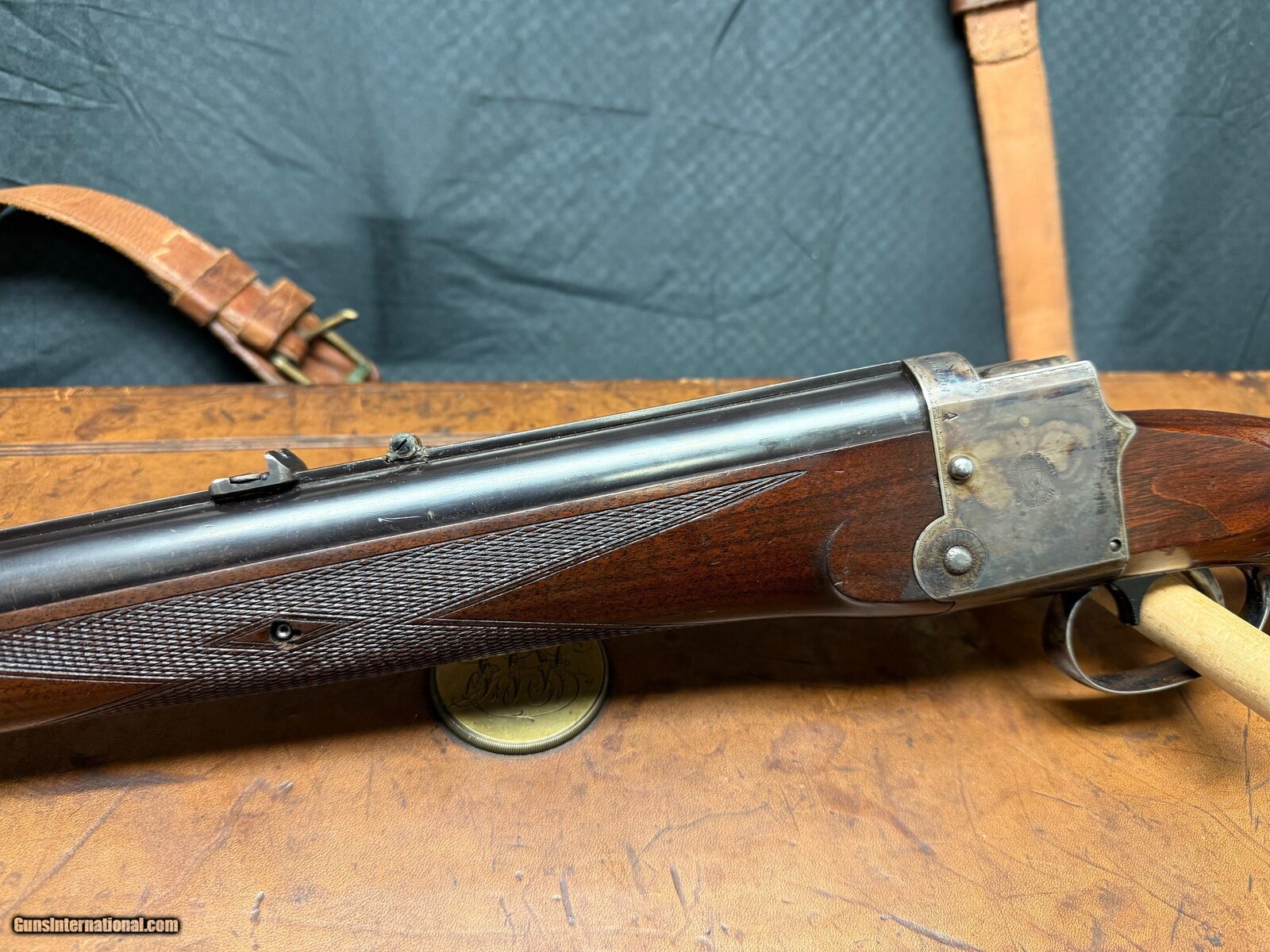
The action of this rifle is Fraser’s side-lever falling block which he patented in 1880 (Patent No. 5403). This action became highly respected and the target rifles fitted with it were adopted by the National Rifle Club of Scotland.
Six of the eight Scottish team members competing for the 1881 Elcho Shield used the Fraser rifle.
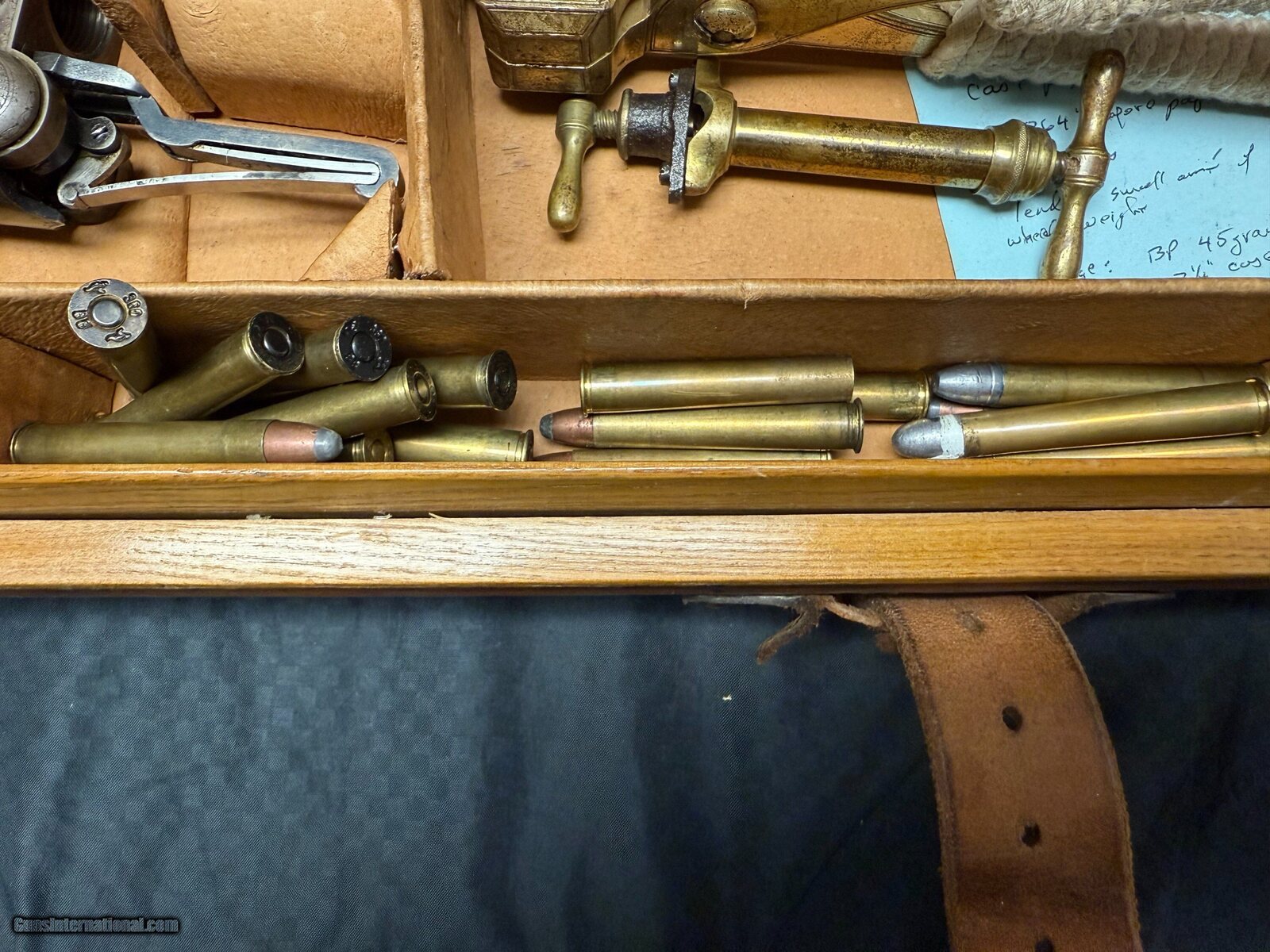
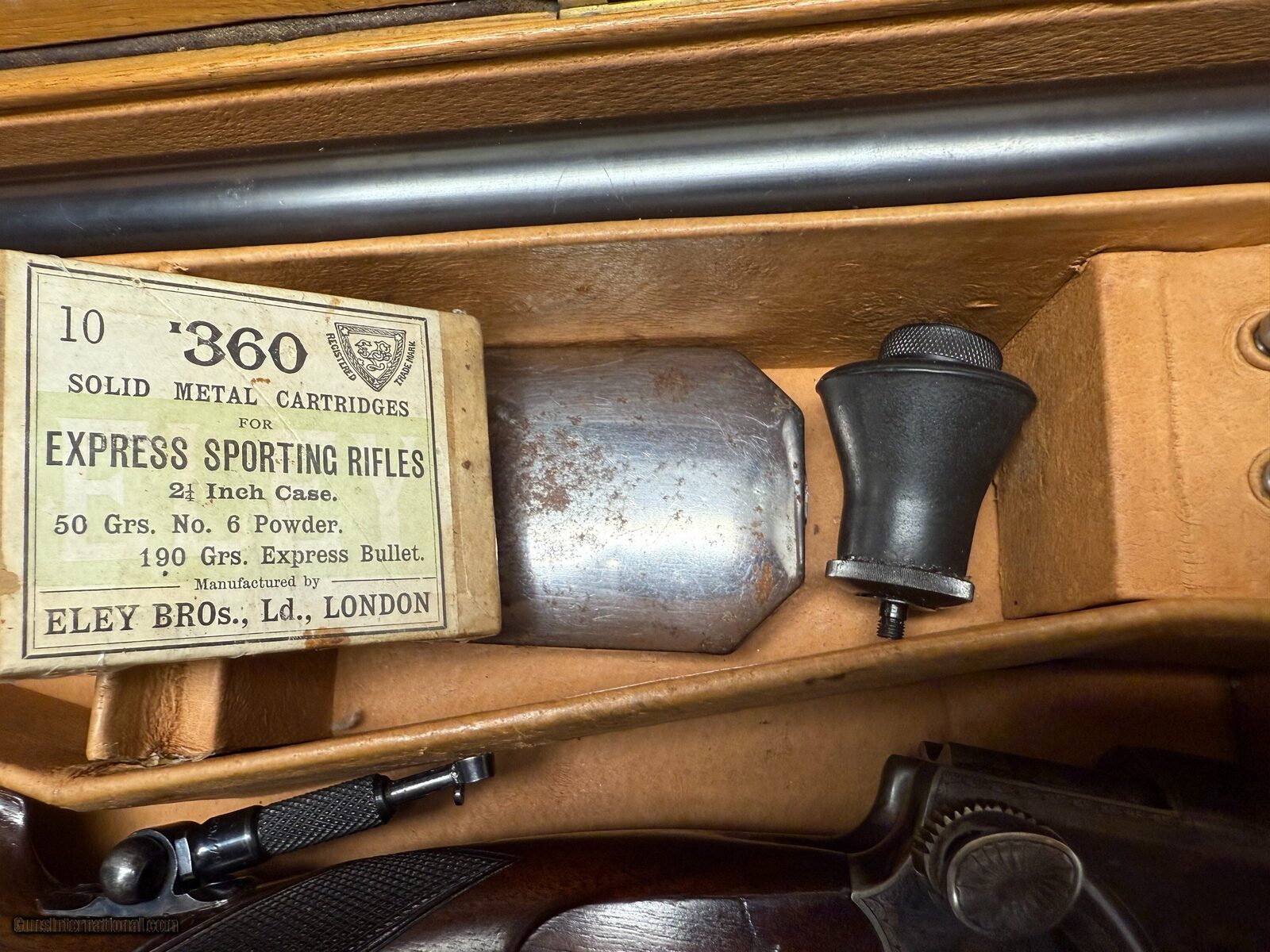
The feature rifle is chambered for the 360 2¼ inch Express cartridge. This is a black powder cartridge.
The rifle is up for sale on GunsInternational at time of publication.
The vendor’s description is as follows:-
“Description:
Fraser Falling Block Rifle
Patent 1880 , # 5403
Attributed to an A. B. Loder ??
Major , Royal Buck Hussars , also Boer War
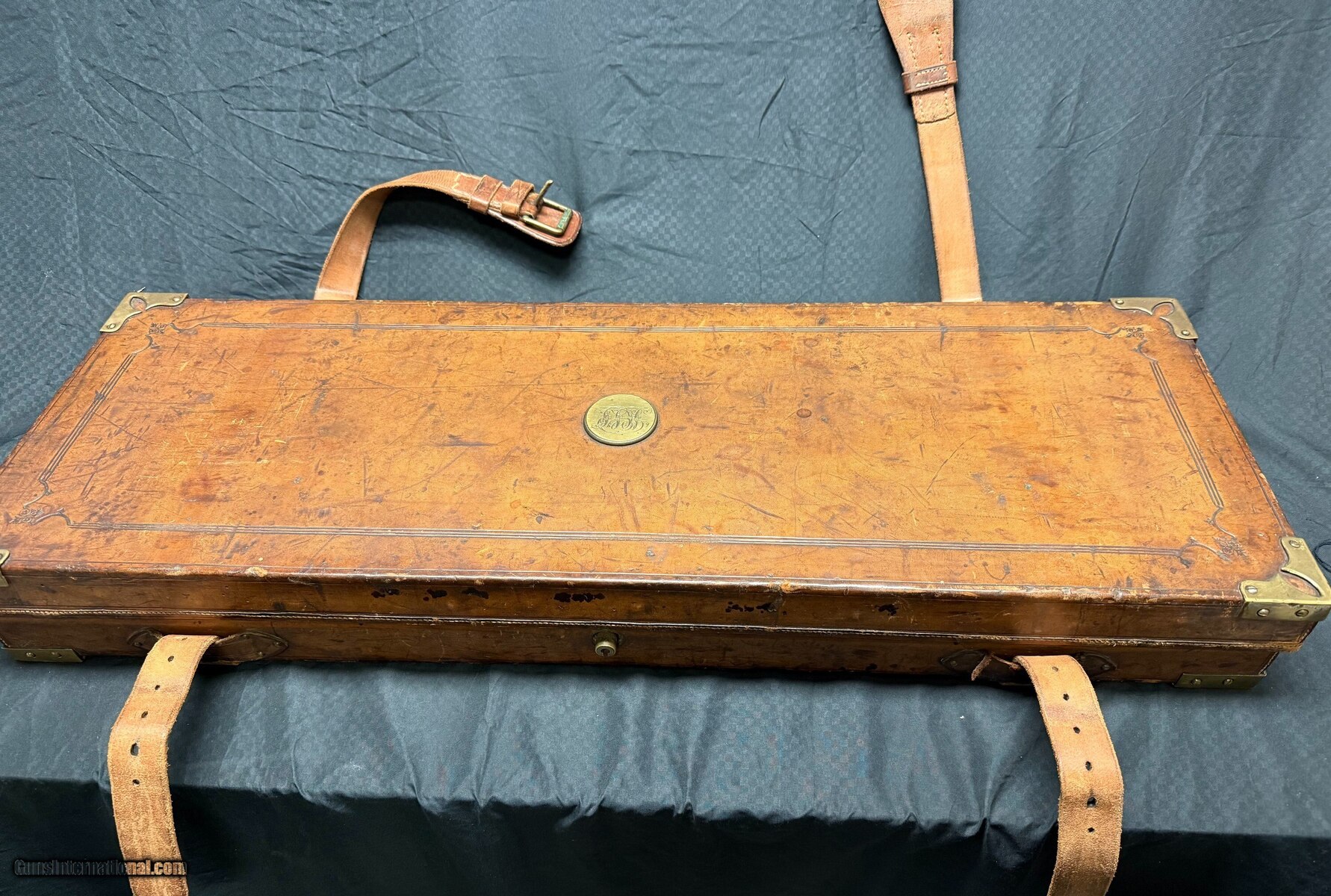
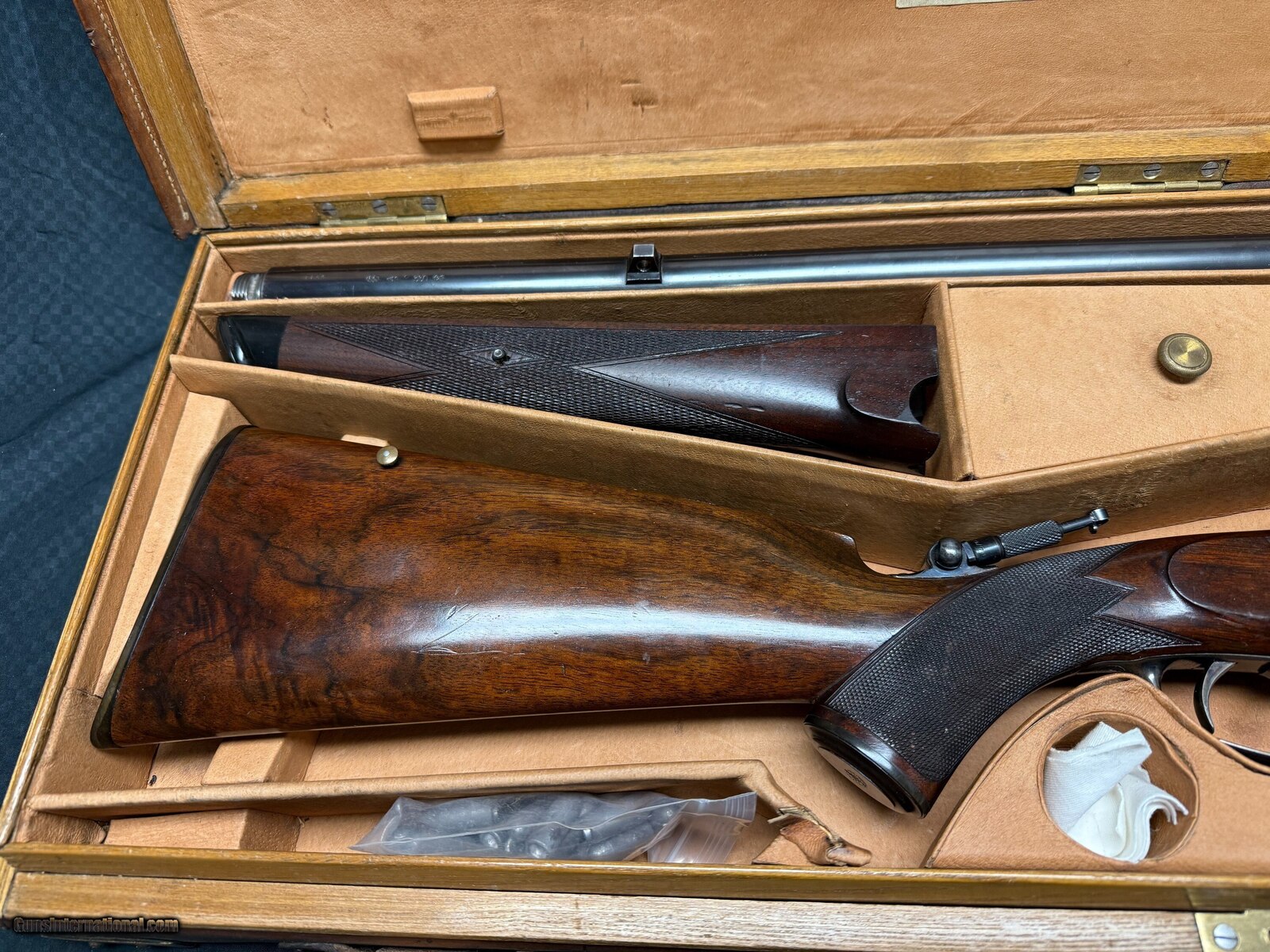
Falling Block Back position target ( sporting ) rifle , cased take apart
TPSN 1186 , APUN 90 , made 1884 approx. ( per Dickson&Son Co.)
360 2.25” express cartridge
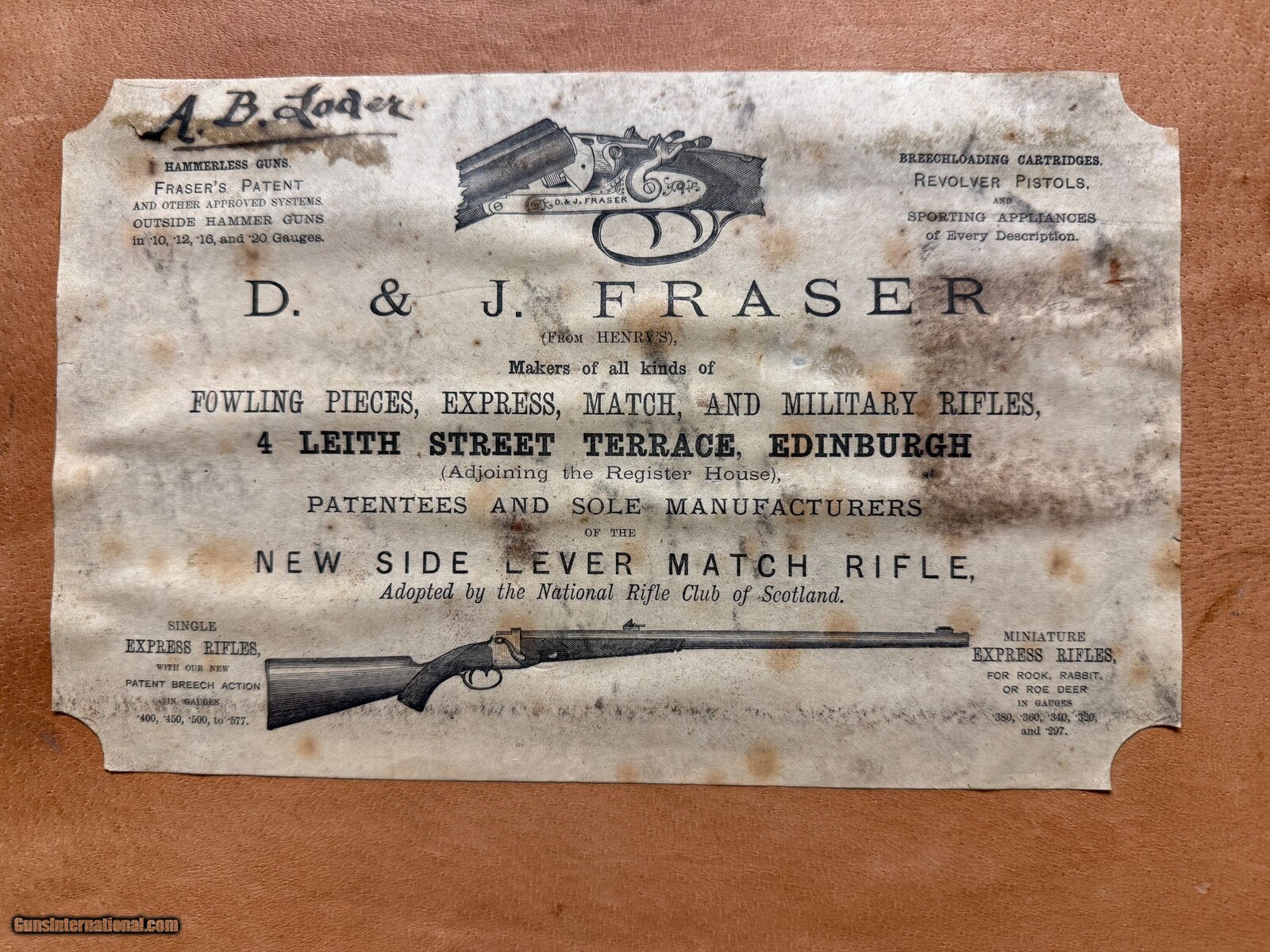
D. & J. Fraser , 4 Leath St Terrace , Edinburg
30” round barrel with attached rib . Sporting style front sight
Sporting rear style , one fixed leaf and one folding leaf
Lyman tang sight and a concealed Vernier back position sight in comb
Does not have the Fraser detachable front back position sight
Has a spirit level attached to the barrel between action and the rear sight , broken
Walnut , pistol grip stock , fore end pinned to barrel , comb with compartment for the Vernier sight with cover pinned
Has two aperture discs for the Vernier sight
360 bullet mold , and push tool to remove stock and barrel pins
Two cleaning rods , leather relined oak case with makers label.”
You will find the sale page for this rifle if you click here.
Picture credits: Pictures of the sale rifle courtesy GunsInternational. Others are in the public domain.
Jon Branch is the founder and senior editor of Revivaler and has written a significant number of articles for various publications including official Buying Guides for eBay, classic car articles for Hagerty, magazine articles for both the Australian Shooters Journal and the Australian Shooter, and he’s a long time contributor to Silodrome.
Jon has done radio, television, magazine and newspaper interviews on various issues, and has traveled extensively, having lived in Britain, Australia, China and Hong Kong. His travels have taken him to Indonesia, Israel, Italy, Japan and a number of other countries. He has studied the Japanese sword arts and has a long history of involvement in the shooting sports, which has included authoring submissions to government on various firearms related issues and assisting in the design and establishment of shooting ranges.