The early years of the twentieth century were marked by a bit of an “arms race” between gunmakers across the world as they tried to create semi-automatic pistols they could sell in large numbers to military and police organizations.
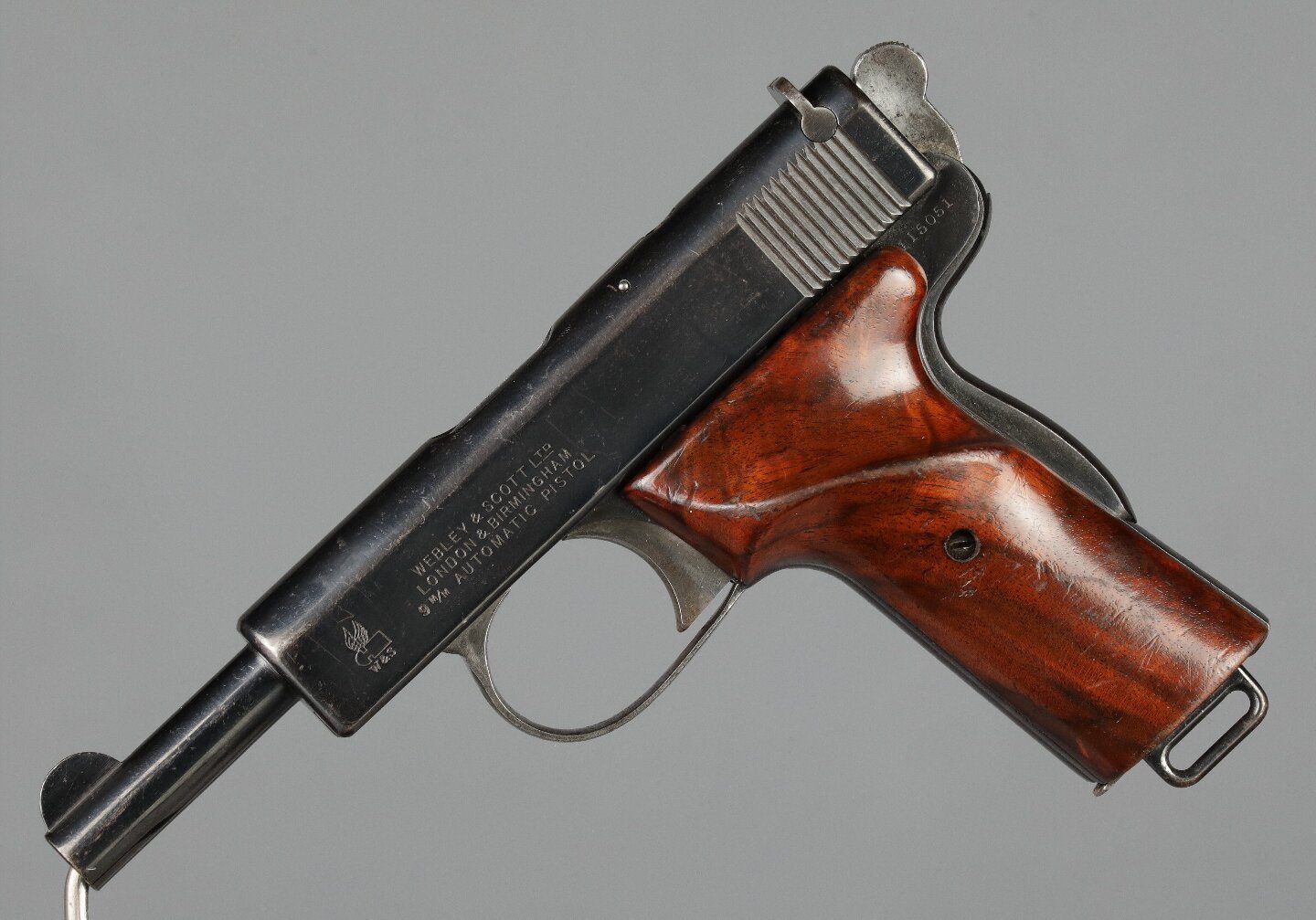
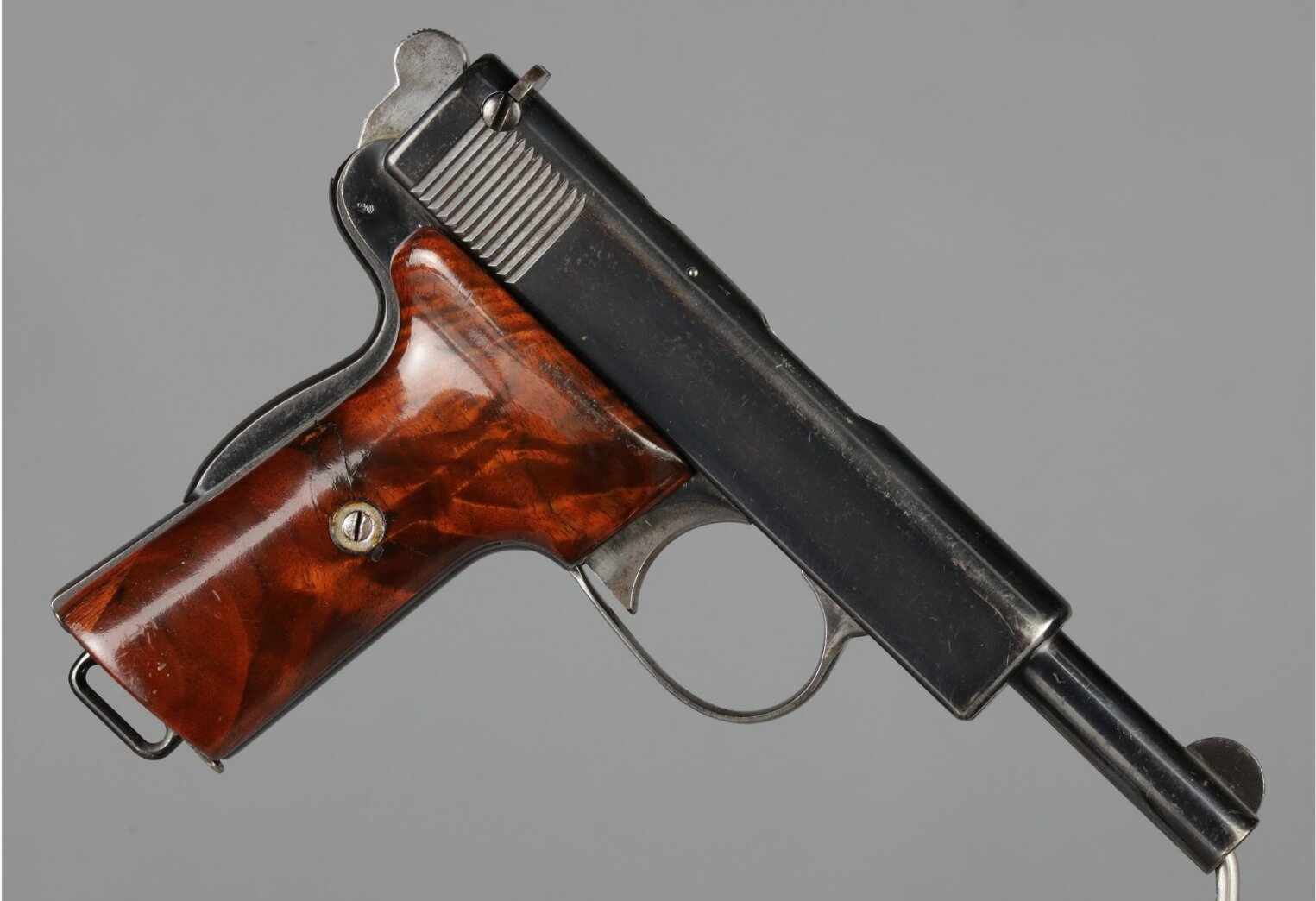
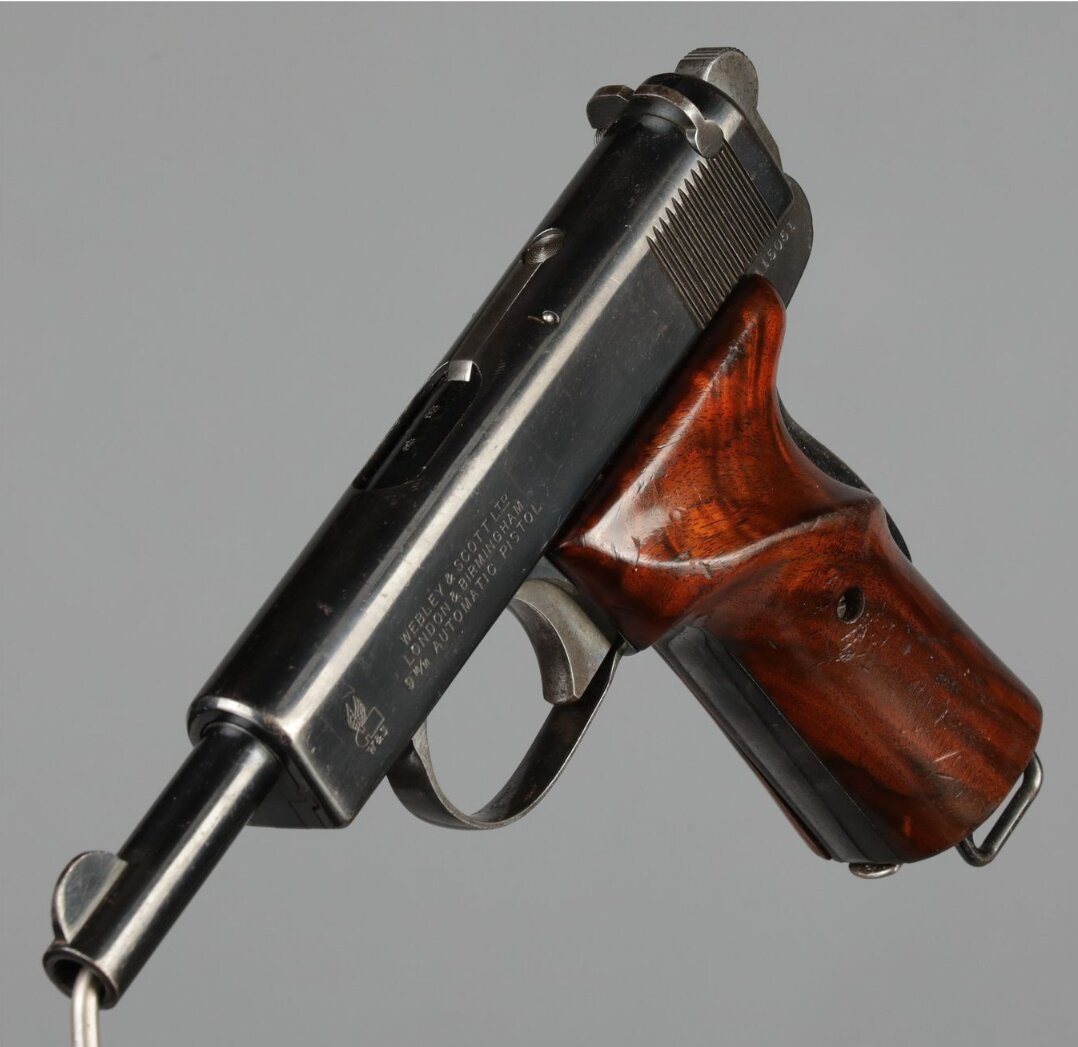
One of the pistols created in this time was the Webley & Scott Model 1909 chambered for the 9mm Browning Long (9x20SR) cartridge.
Fast Facts
- British gunmaker Webley & Scott entered the design and development race to create viable and marketable semi-automatic pistols in the early years of the twentieth century.
- Webley & Scott made two families of semi-automatic pistol models, a smaller series of blowback action models, and a larger locked breech series aimed at Britain’s military requirements.
- One of the more rare of the smaller blowback action models is the Model 1909 chambered for the 9x20SR cartridge.
- One of these Webley & Scott Model 1909 pistols in 9mm Browning Long (9x20SR) is for sale by Rock Island Auction at time of publication.
While British gunmaker Webley & Scott had built their business in large part by creating revolvers, primarily for military officers who purchased their own handgun during the nineteenth and early twentieth centuries. But the extreme conditions of the trenches of the First World War demonstrated that the revolver was not the best choice of handgun for conditions where officers found themselves “up to the neck in muck and bullets”.
European gunmakers got busy creating self-loading pistols during the late nineteenth and early twentieth century as did American designers and manufacturers also – most famous being John Moses Browning.
Thus it was that Webley & Scott were under pressure to create auto-loading pistols of their own and they created an absolute plethora of designs, some of which went into production, and some that were made in limited numbers and so are more valued by collectors.
Among the pistols created by Webley & Scott were a range that were based on simple blowback actions and chambered for low powered cartridges such as the 25ACP, 32ACP, and 9mm Browning Long. And there were the locked breech larger pistols chambered for more powerful cartridges such as the 455 Webley Automatic (note: not to be confused with the rimmed 455 Webley revolver cartridge), and the 38 Automatic (i.e. the 38 ACP, not to be confused with the smaller and much less powerful 380ACP).
Among the blowback action pistols one of the most scarce is the Model 1909 chambered for the 9mm Browning Long (9x20SR) cartridge – the same cartridge that was developed by FN in Europe for the Browning designed FN Model 1903 – a pistol whose design was derived from Browning’s Colt Model 1903 which was chambered for the 32ACP and 380ACP, but which is not the same.
To create the 9x20SR chambered FN Model 1903 FN’s engineers scaled up Browning’s design to make it suitable for that more powerful cartridge. It was a slim and light, quick to reload and reliable, and it became quite popular with a number of military and police organizations: notably the armies of Sweden and the Ottoman Empire, and a number of police departments.
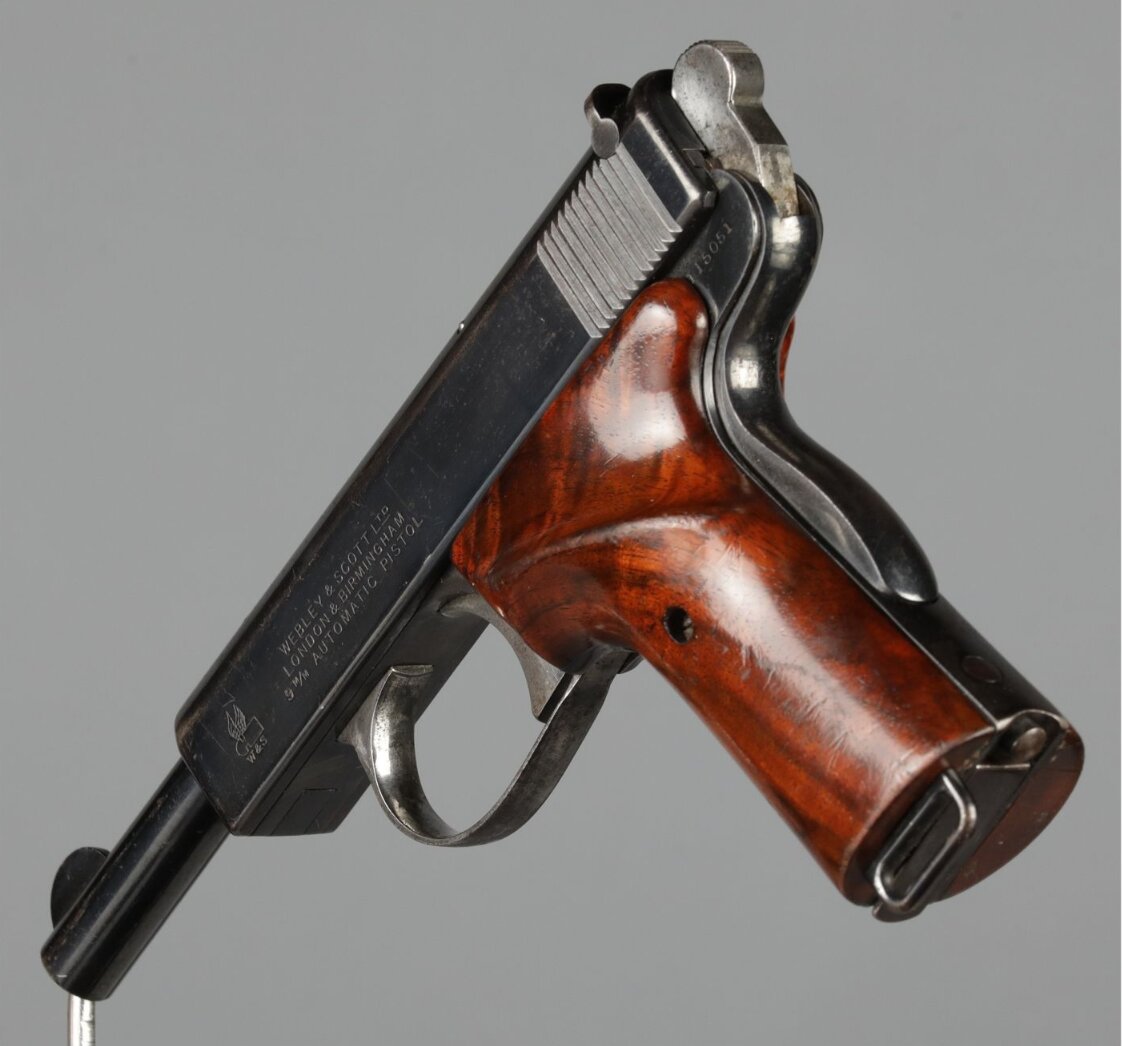
Seeing the success the FN Model 1903 with its 9x20SR cartridge were having Webley & Scott could see that they could scale up their 32 caliber Model 1908 and created a rather neat British made pistol to offer to such military organizations as the Swedes, possibly at a slightly cheaper price than the FN Model 1903.
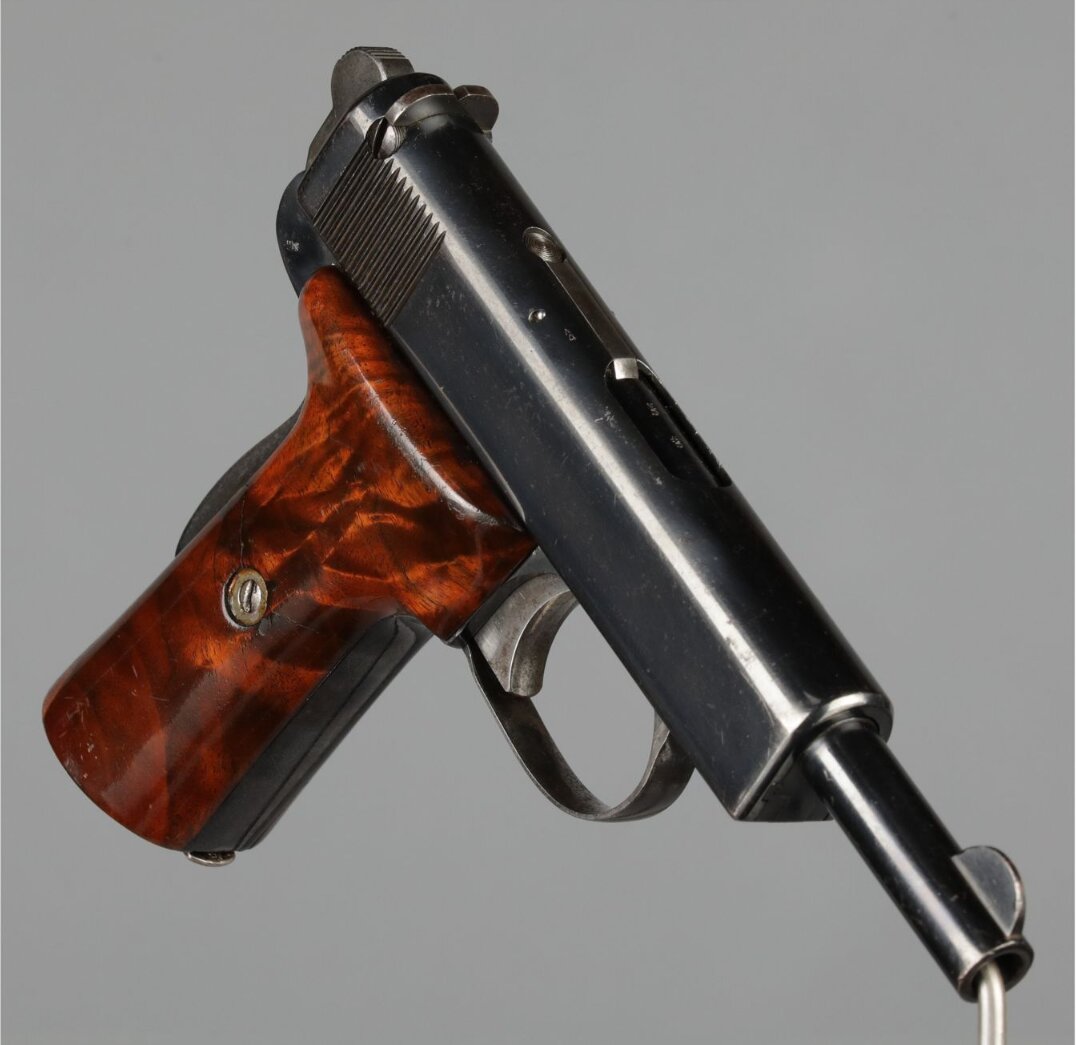
Webley & Scott made some design changes in the creating of this new model, changes aimed at military and police users. They incorporated a grip safety and eliminated the manual safety, and fitted a slide hold-open mechanism that kept the slide open even when the magazine was removed: so the magazine could be withdrawn, a fresh magazine inserted, and then the slide dropped to chamber a fresh cartridge.
The magazine release was a button at the bottom rear of the magazine well.
Being a military and police pistol Webley & Scott did not fit the Model 1909 with a hammer block or firing pin block safety device. The sear was kept out of reach of the transfer bar when the grip safety was not depressed, and moved forward into contact with the transfer bar ready for firing when the grip safety was depressed.
Design work on this model was begun in 1908 and two prototypes were made in November of that year, with six more being made in 1909. The pistol was put into initial production in 1910 and approximately 1,694 are believed to have been made.
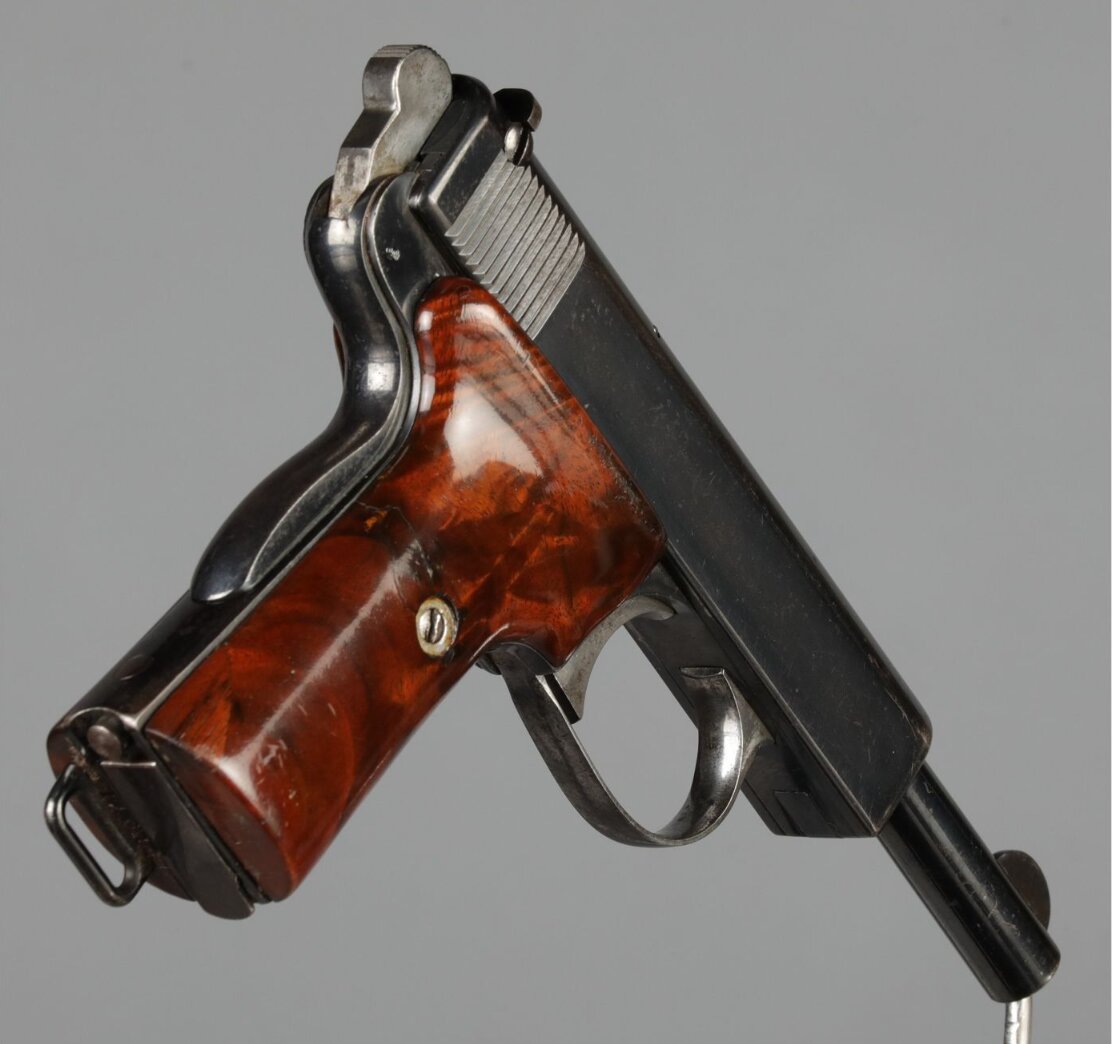
The Model 1909 in 9x20SR did not achieve the success that Webley & Scott had hoped for and no further production of this model took place.
One of these unusual examples of the blowback action Webley & Scott pistols is for sale at time of publication by Rock Island Auction. So if you are looking to plug a gap in your collection – or start a collection of Webley & Scott semi-automatic pistols this is an opportunity to do so.
You will find the sale page for this Webley & Scott Model 1909 if you click here.
Rock Island Auction describe the condition of this pistol as follows:-
“Good as refinished with much of the finish, moderate general wear, some pitting, and light oxidation. Replacement grips are very good with dings, scratches, and some cracks. Mechanically functions.“
Picture Credits: All pictures courtesy Rock Island Auction.
Jon Branch is the founder and senior editor of Revivaler and has written a significant number of articles for various publications including official Buying Guides for eBay, classic car articles for Hagerty, magazine articles for both the Australian Shooters Journal and the Australian Shooter, and he’s a long time contributor to Silodrome.
Jon has done radio, television, magazine and newspaper interviews on various issues, and has traveled extensively, having lived in Britain, Australia, China and Hong Kong. His travels have taken him to Indonesia, Israel, Italy, Japan and a number of other countries. He has studied the Japanese sword arts and has a long history of involvement in the shooting sports, which has included authoring submissions to government on various firearms related issues and assisting in the design and establishment of shooting ranges.