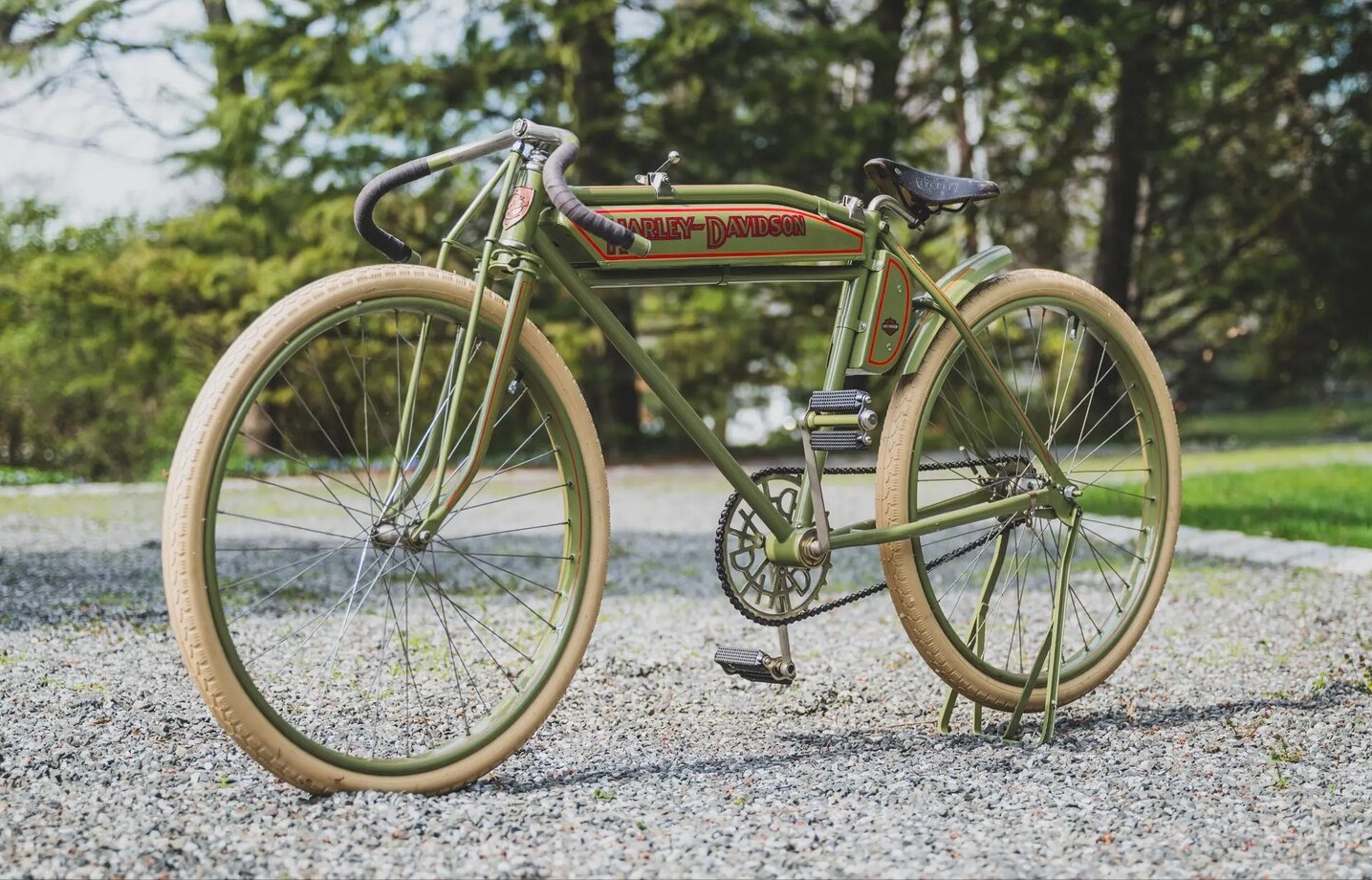
By the time Harley-Davidson had been making motorcycles for about ten years they branched out to include bicycles in their product line-up. They offered bicycles from 1917-1921 with the aim of getting young people to ride “Harley-Davidson” bikes who they hoped would graduate to Harley-Davidson motorcycles when they were old enough.
Fast Facts
- While Harley-Davidson began their motorcycle manufacturing business in 1907 they branched out into offering bicycles in 1917.
- The Harley-Davidson bicycles were made by the Davis Sewing Machine Company and sent to Harley-Davidson as parts for Harley-Davidson to assemble.
- Harley-Davidson ceased offering bicycles in 1921.
The Harley-Davidson story began back in 1901: and it began with William S. Harley’s design for an engine – bicycles were not prominent in his thinking as he set about creating motorized transport so he and his friend Arthur Davidson could go fishing more easily. The idea was simple and practical, fit a bicycle with an engine and watch out fish here we come.
By 1903 the design and prototype work was well under way and the following year in 1904 a prototype gained fourth place in the Milwaukee Motorcycle Race with their 440cc 4hp bike.
Harley-Davidson set up their production facility in 1907 in what was then named Chestnut Street and later re-named Juneau Avenue, which became their headquarters location up to the present day.
Wanting to expand their customer base – and thus expand their sales and the profitability of their fledgling business Harley-Davidson’s management decided to start marketing bicycles under the Harley-Davidson name. The aim was to target young people who might want to have a bicycle bearing the Harley-Davidson brand name, before they could move up to a Harley-Davidson motorcycle.
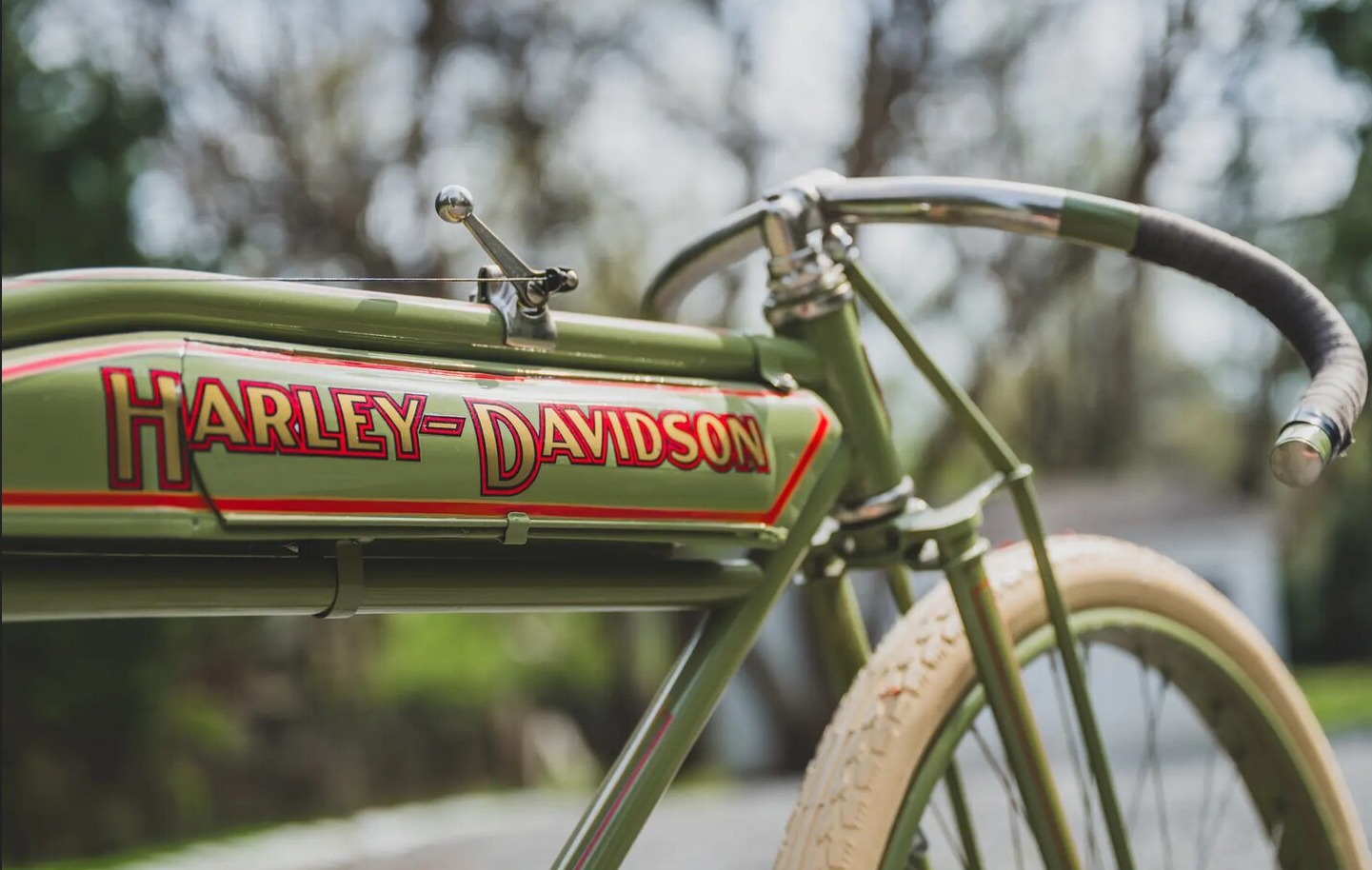
Rather than trying to design and engineer a bicycle of their own Harley-Davidson management approached the Davis Sewing Machine Company who had designs and manufacturing engineering already in place for bicycle manufacture. All that would be needed would be Harley-Davidson branding prominently displayed on the bike.
An agreement was reached between the two companies and the Harley-Davidson bicycle was born, with Davis making the parts for the bicycles and shipping them to Harley-Davidson, where the completed bikes were assembled and then sold through Harley-Davidson’s distribution network.
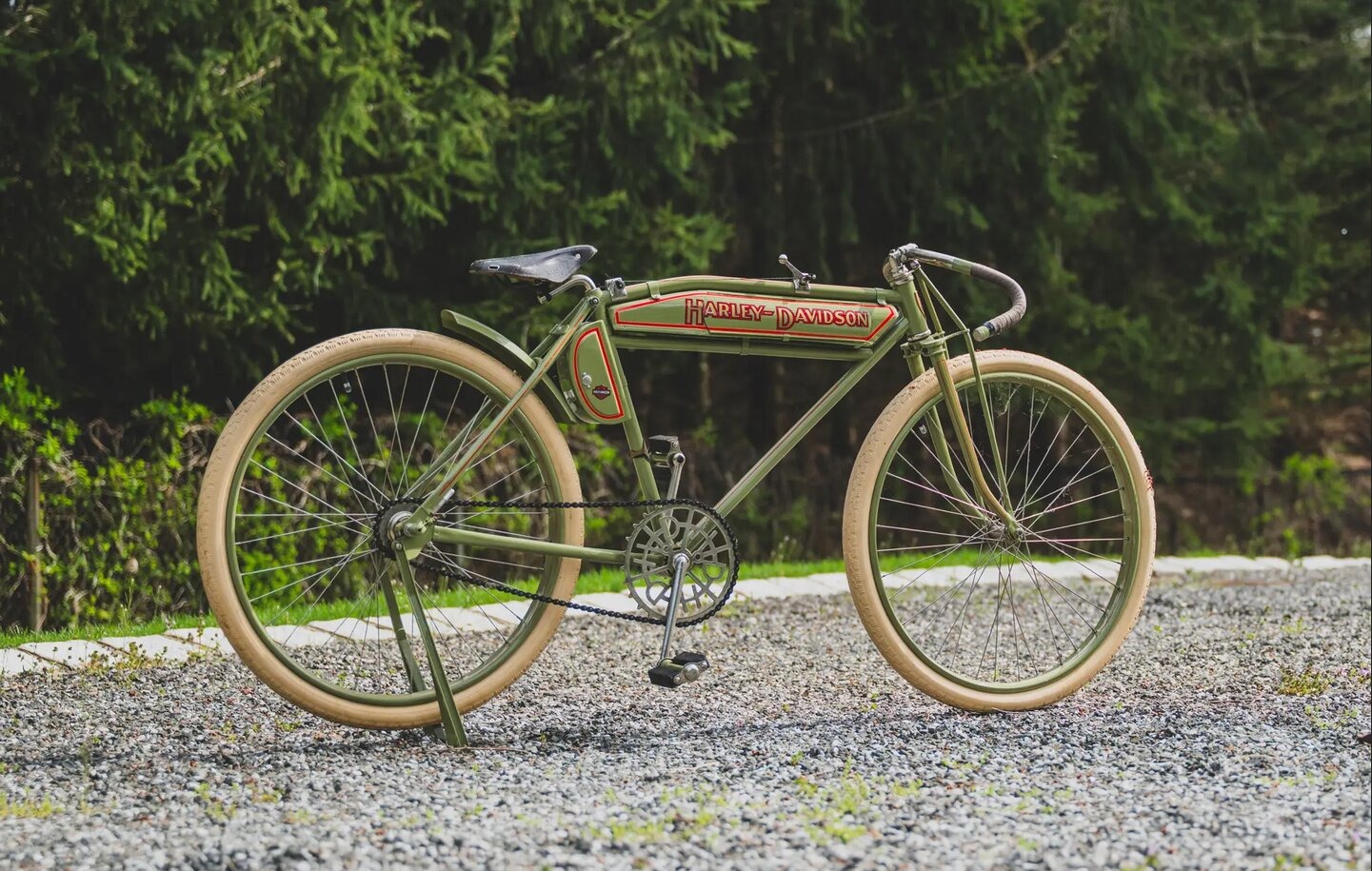
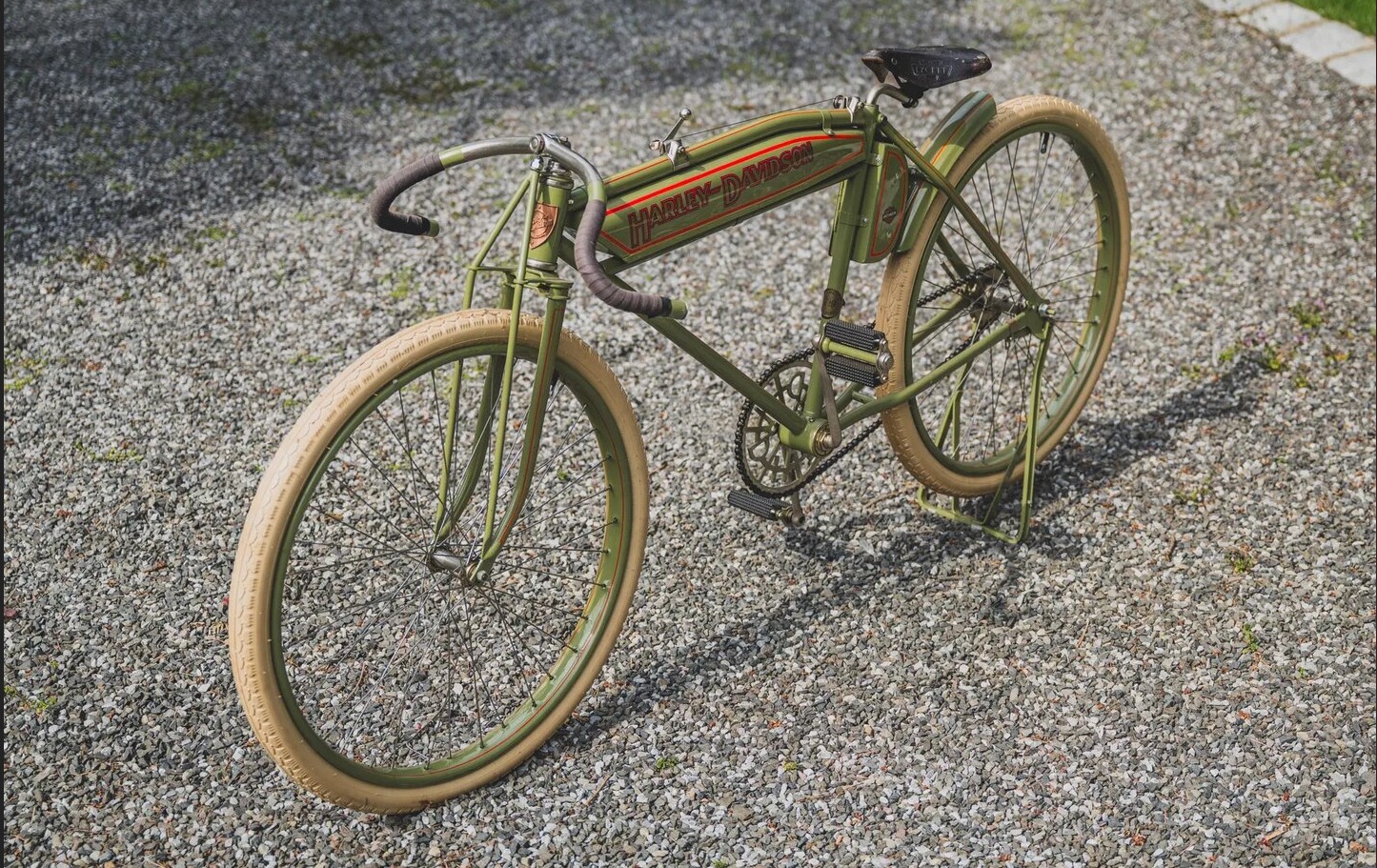
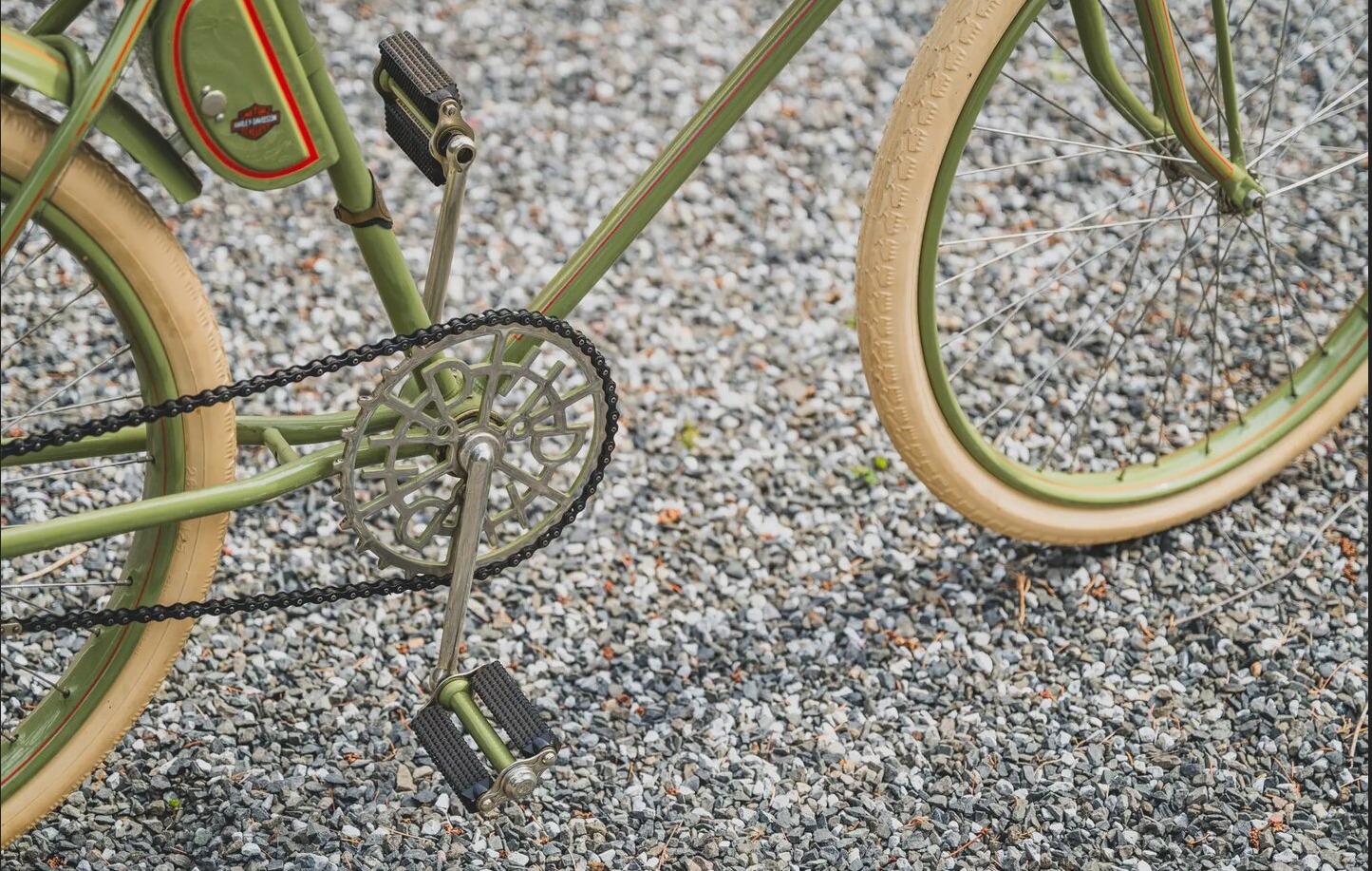
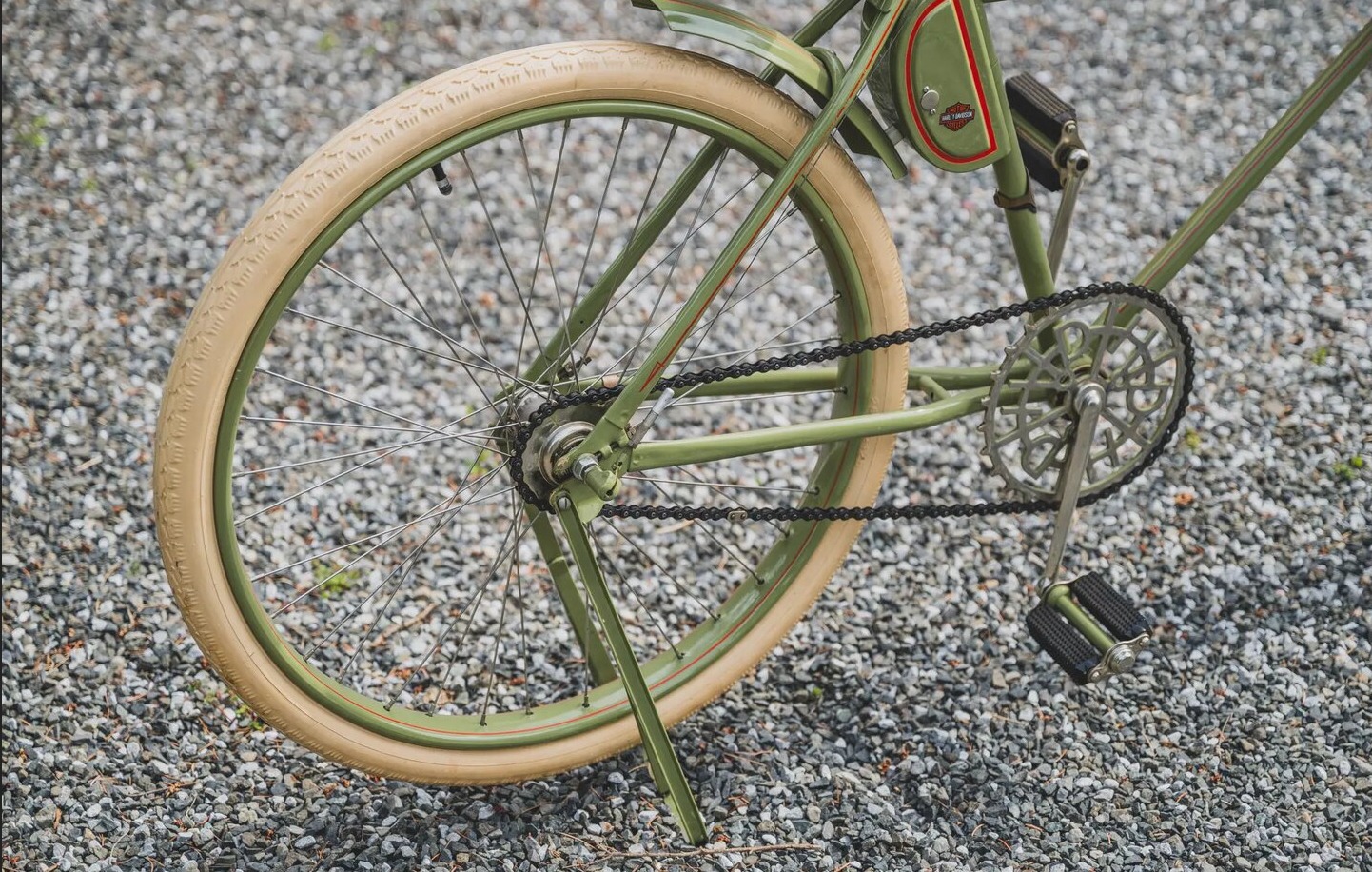
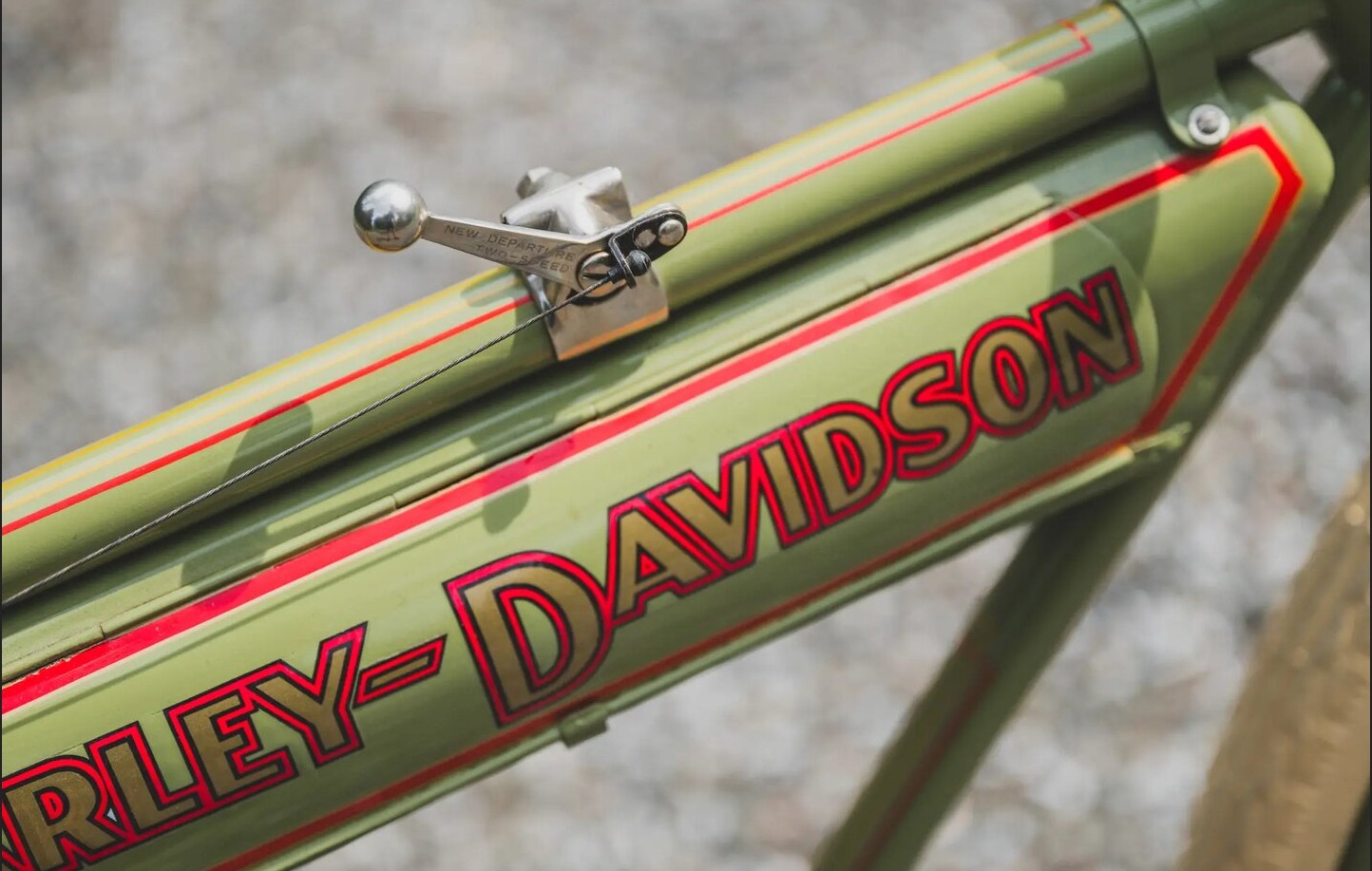
The bikes made their debut in 1917 and there were a few different models such as the “Racer” and the Motorcyke – which despite its name did not have a motor. It did however feature what looked like a fuel tank, which was actually a storage compartment and which could be used to hold a battery to power a headlight.
Around this time Harley-Davidson’s rival Indian also went to the Davis Sewing Machine Company and entered a similar manufacturing arrangement with them, so there were Indian branded bikes that looked just like the Harley-Davidson ones.
The Motorcyke model was made to look like a board-track racing motorcycle with dropped handlebars and racing style seat.
Harley-Davidson ceased offering bicycles in 1921 and put their efforts into their motorcycles.
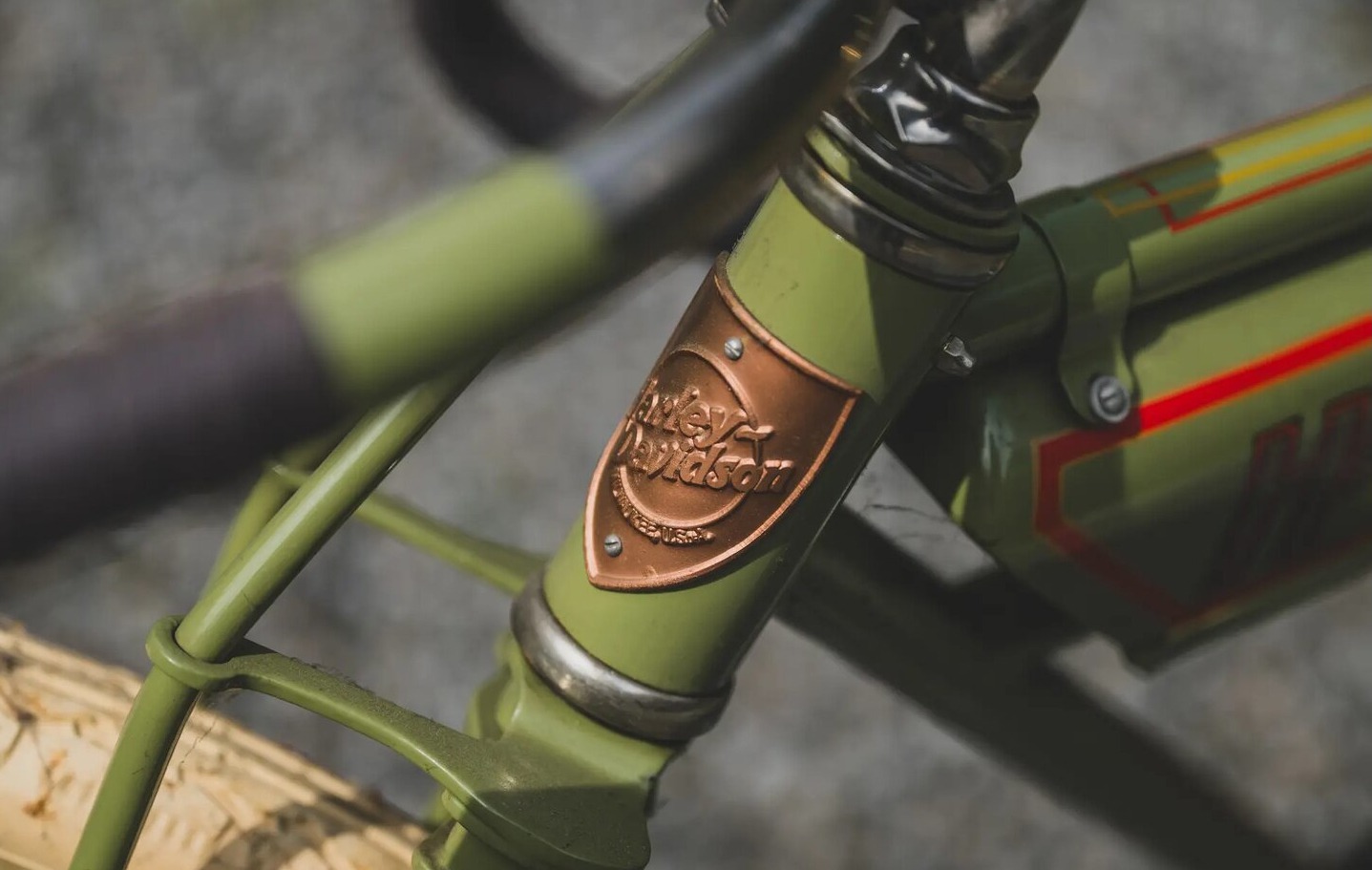
A nice example of a 1919 Harley-Davidson Motorcyke is coming up for sale by RM Sotheby’s at their Monterey auction and will be offered on August 13, 2026.
You can find the sale page for this rather unusual Harley-Davidson Motorcyke if you click here.
Picture Credits: All pictures courtesy Darin Schnabel @ RM Sotheby’s
Jon Branch is the founder and senior editor of Revivaler and has written a significant number of articles for various publications including official Buying Guides for eBay, classic car articles for Hagerty, magazine articles for both the Australian Shooters Journal and the Australian Shooter, and he’s a long time contributor to Silodrome.
Jon has done radio, television, magazine and newspaper interviews on various issues, and has traveled extensively, having lived in Britain, Australia, China and Hong Kong. His travels have taken him to Indonesia, Israel, Italy, Japan and a number of other countries. He has studied the Japanese sword arts and has a long history of involvement in the shooting sports, which has included authoring submissions to government on various firearms related issues and assisting in the design and establishment of shooting ranges.