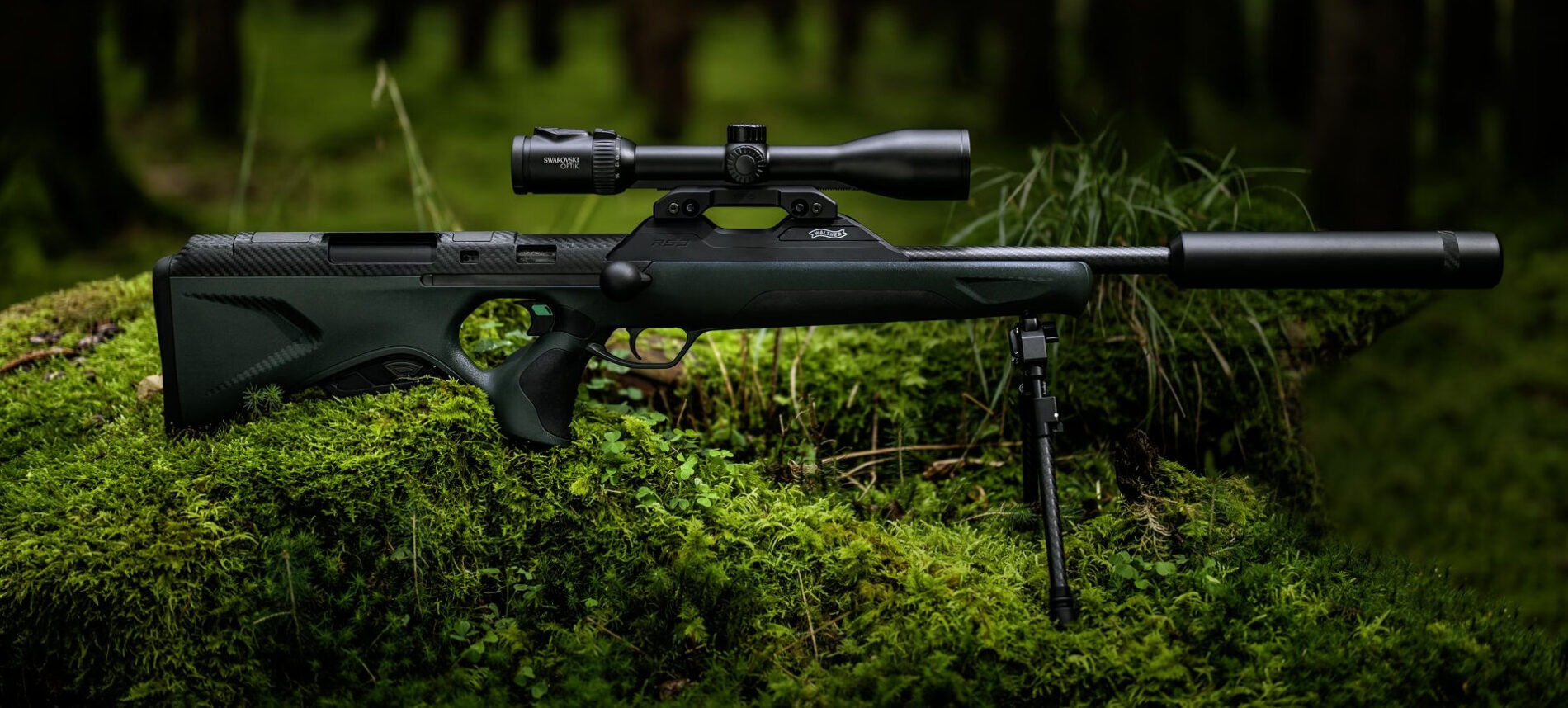
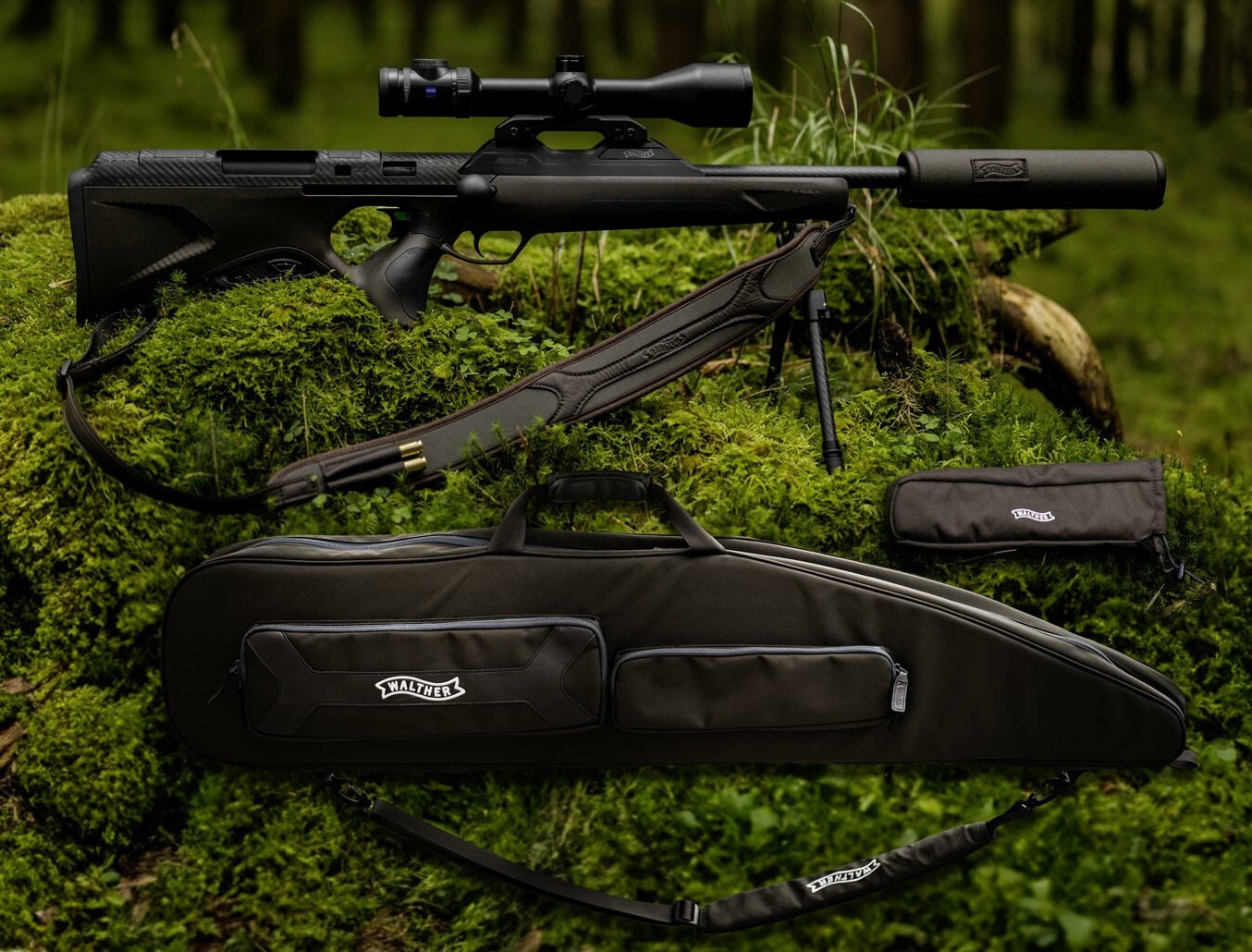
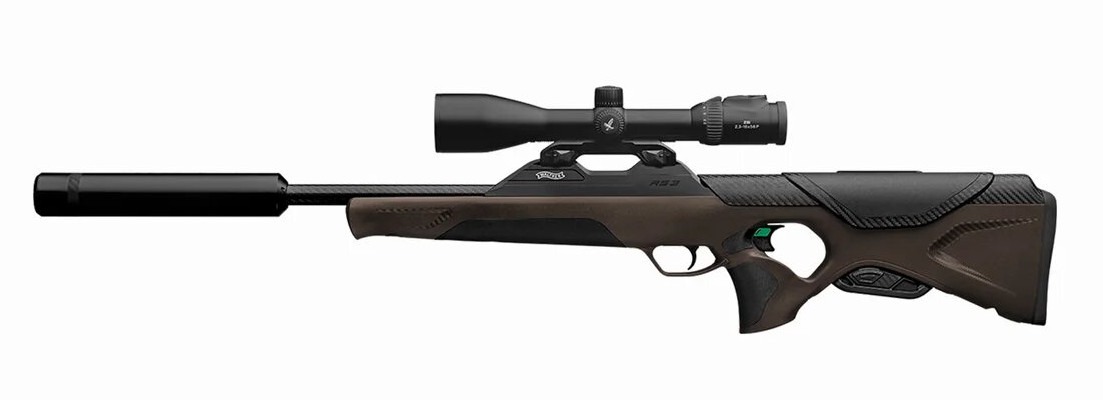
The Walther RS3 is one of the most imaginative and promising new rifle designs to emerge this year. It may well prove to be a design trend setter for the 21st Century.
Fast Facts
- The Walther RS3 is a new rifle designed and made by Carl Walther in Germany.
- The RS3 is a bullpup style rifle which uses a straight pull bolt action.
- The bullpup design was chosen to provide a standard barrel length with a suppressor on it, yet keep the length of the rifle short, and the handling fast and instinctive.
- The RS3 is fitted for Walther’s “Fixlock” optic sight mounting system and can use a wide range of sights.
Sometimes the best creations take a set of old established ideas and blend them together in a new way.
In the world of hunting sporting rifles things have been changing: we are in a season in which traditional designs hold strong, but a season in which a new generation is looking for a rifle that is truly a rifle of the 21st Century: and Carl Walther of Germany has just created a rifle that fits that bill perfectly.
Back when I started shooting and hunting back in the early 1970’s the bolt action rifle reigned supreme. The sport of benchrest shooting had demonstrated that not much of anything could compete with a properly set up turn-bolt rifle action as a foundation for an accurate rifle, with the Remington 700 and 600/660 actions being by far the most common and respected.
This reputation for accuracy ensured that a large proportion of sporting shooters chose to buy bolt action rifles as their hunting rifles.
The accuracy formula back then was for a “glass” bedded action, and a thick and stiff free floated barrel. This was the tried and tested method used by competitive benchrest shooters, hunters, vermin control professionals, and Australia’s Special Air Service military snipers.
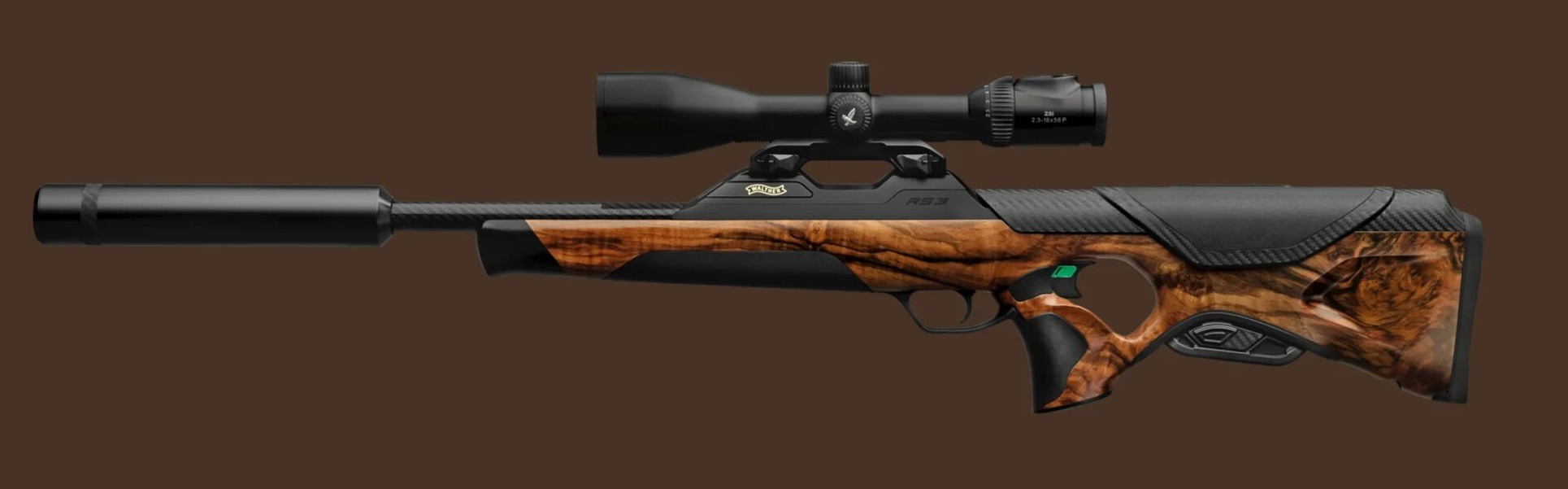
In the decades since then this formula has been standard, but the standard bolt action rifle has been required to accommodate a suppressor to moderate the loud bang that assaults the shooter’s ears when 50,000 psi of burning gas is released to do the inevitable hearing damage.
So what resulted was a functional conflict between having a rifle with a barrel long enough to allow the cartridge to fully use its powder charge, and the need to hang a suppressor on the end of it, which made the rifle excessively long and awkward, and messed up its handling.
And on top of that the suppressor looked awkward – a “can” hanging off the end of the barrel – not a thing that enhanced the beauty of the rifle.
The design team at Walther looked at this situation, put their analytical engineer’s thinking caps on, and pieced together what, I think, is an outstanding solution.
The first question was how to keep an efficient barrel length but make the rifle short and well balanced? The answer to that was to use a bullpup design. Bullpup rifles are mostly semi-automatic and semi-automatic rifles are often restricted or illegal for sporting shooters in many jurisdictions.
The decision was made to use a manual bolt action, which provides a fixed breech closure for consistent accuracy. But a bullpup tended to not favor a turn bolt action, so Walther’s engineers went with a straight pull bolt action. This enabled the bolt handle to be located directly above the trigger guard making it convenient and comfortable for the shooter to operate.
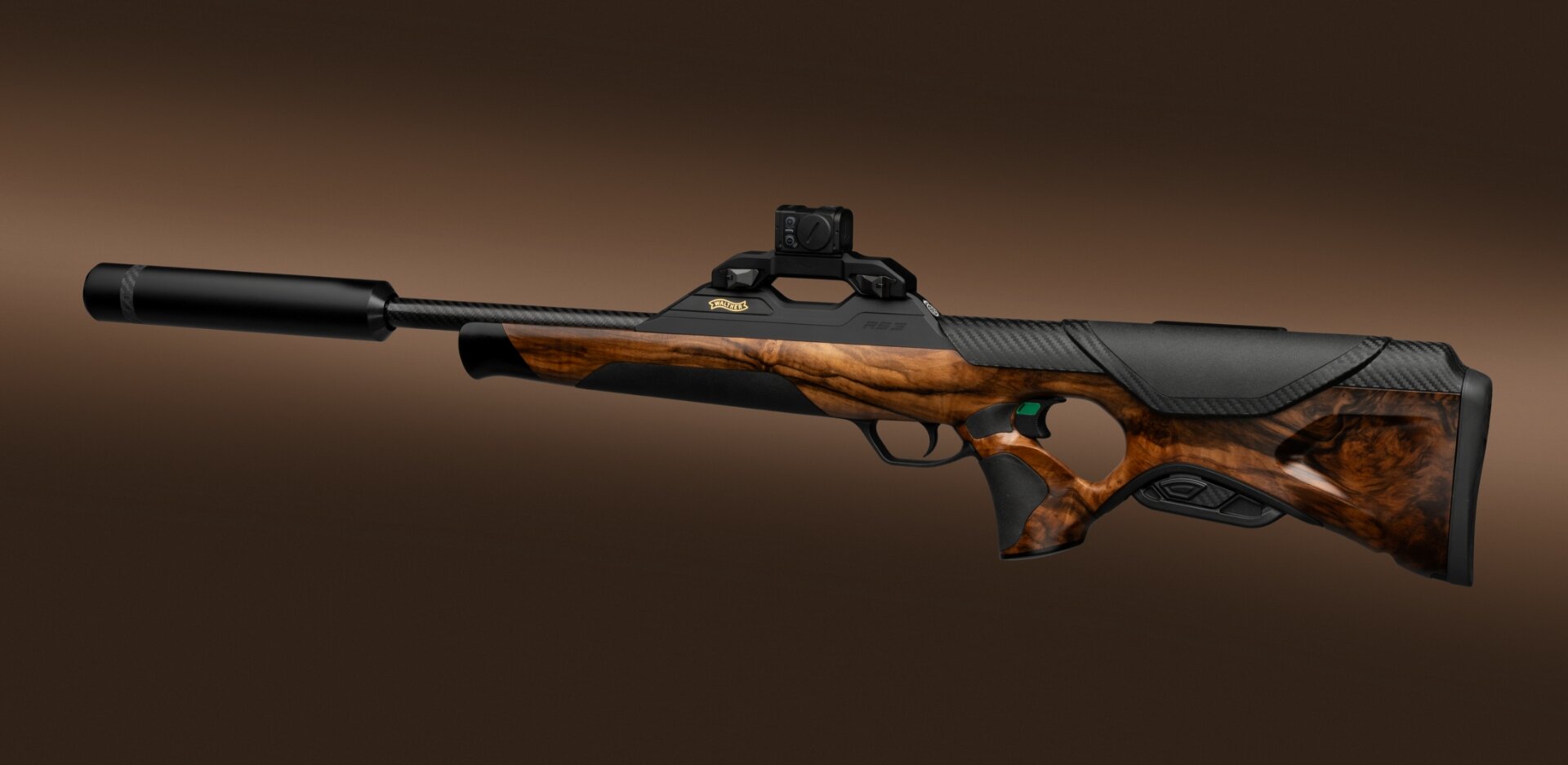
Straight pull actions date from the late nineteenth century but have gained in popularity in the last decade and most jurisdictions internationally treat them in the same way they treat a turn-bolt action.
Walther’s engineers wanted to ensure a stable bedding of the action into the stock and chose to go the way of an alloy monocoque chassis, similar to the monocoque chassis of a car but applied to a rifle.
This chassis provides the skeletal frame, 64cm long, into which the barrel, bolt, magazine and trigger mechanisms all fit.
The barrel’s stiffness is enhanced by a carbon fiber sheath which provides thickness without excess weight.
The trigger is set at 800 grams (1.76 lb.) and is combined with a cock/de-cock safety system instead of a conventional safety catch. This sort of system being very common on modern European straight pull rifles.
The stock of the RS3 is a thumb-hole style and the cock/de-cock button is located in the thumb-hole at the place where the Carpometacarpal (CMC) Joint at the base of the shooter’s thumb sits, and has a prominent green panel on it to show when the rifle is de-cocked and thus safe.
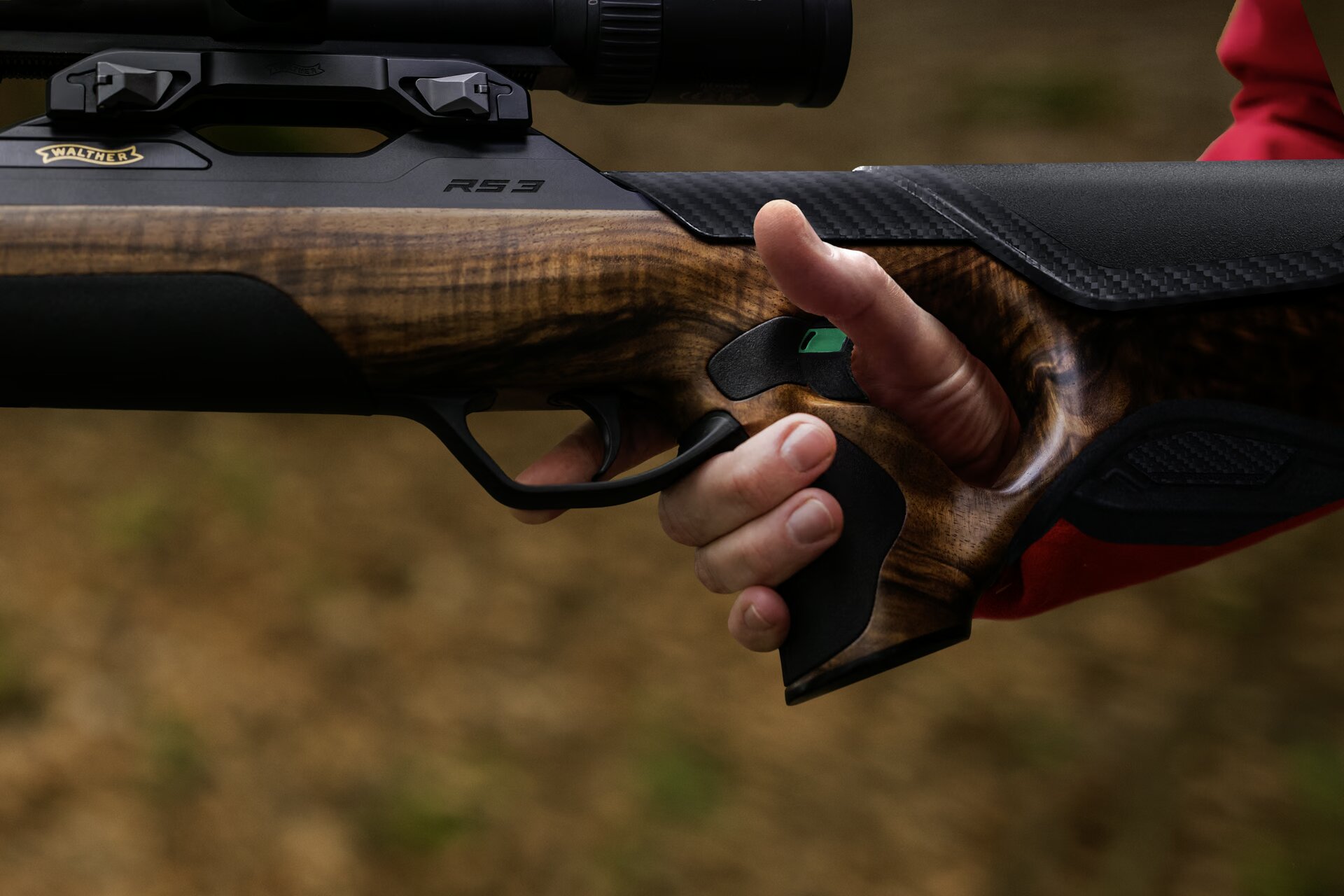
To cock the rifle ready to fire the shooter pushes the button in: this can be done either by depressing it with the Carpometacarpal (CMC) Joint, a bit like depressing the grip safety on a Colt M1911, or with the tip of the thumb. This makes for a very instinctive action enabling the rifle to be brought into action as conveniently as depressing a grip safety, or a tang safety.
The cock/de-cock button remains in the cocked position until the shooter intentionally de-cocks it. To do this the button is pressed and then released which causes the green panel to become visible: and in this state the rifle is in a safe condition.
One of the primary reasons to create the RS3 in the bullpup style was not only to give it a convenient length but also to give it the fast handling of a well balanced double barrel shotgun or double rifle. The point of balance is located just ahead of the front of the trigger guard. With the barrel set well back thanks to the bullpup design the weight of the suppressor becomes something that contributes positively to the handling, not something that forces the rifle to be unwieldy.
The stock design is very straight and the centerline of the barrel points straight into the shooter’s shoulder meaning that recoil is directed exactly where it’s supposed to go to enable recoil absorption and control. It also helps with instinctive point-ability.
The bullpup design provides advantages that may not immediately be obvious. Because the magazine is located in the butt-stock the weight of the cartridges is kept more to the rear, contributing to the balance and sweet handling of the rifle.
The second advantage to this design is that a single column magazine can be used, and a single column magazine tends to provide better and more reliable feeding than a staggered column because the cartridges are always aligned with the bore.
The magazine of the Walther RS3 is made of plastic and holds six standard rounds or five magnum. It is removed by depressing buttons on both left and right sides, and locks into place securely.
The Walther RS3 is a very new rifle at time of publication, having been recently displayed at a gun show in Dortmund, Germany.
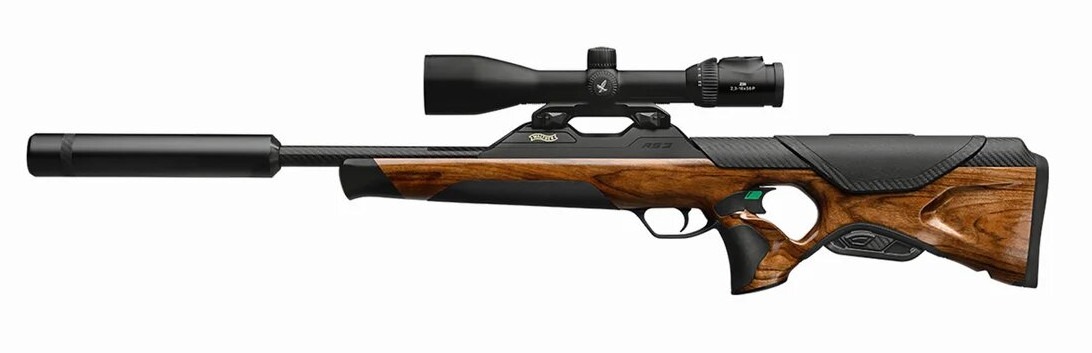
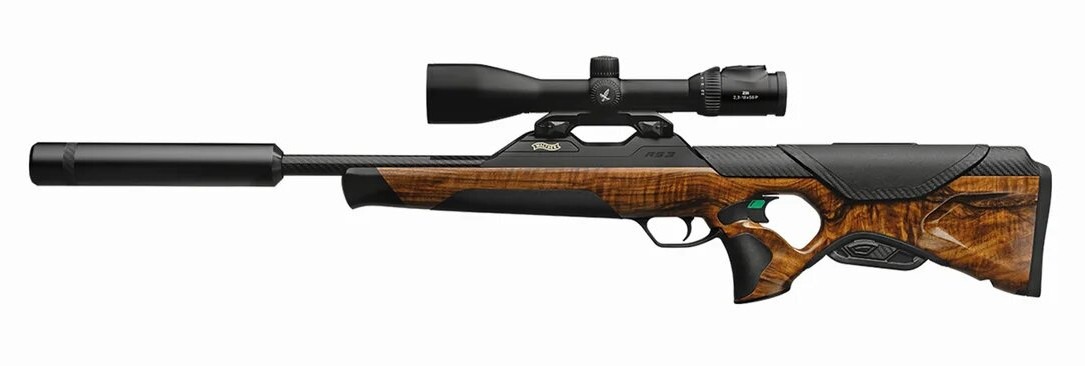
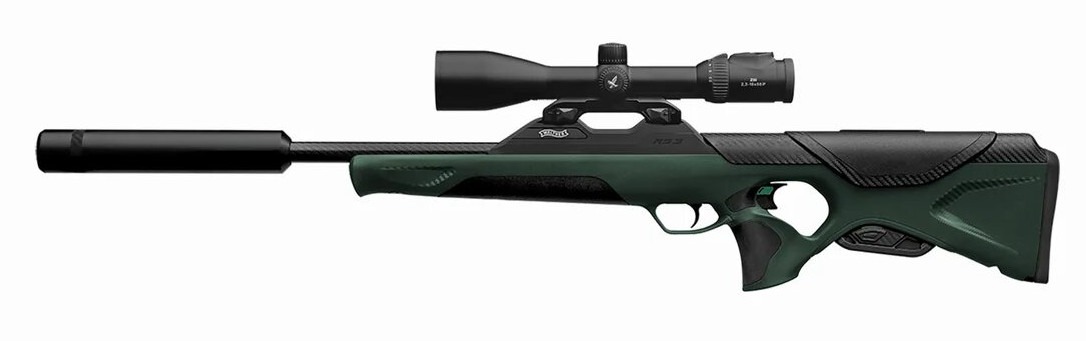
The RS3 is currently being offered in four models as follows:-
- RS3 Heritage Fourstar: with walnut wood stock.
- RS3 Heritage Sevenstar: with higher grade walnut wood stock.
- RS3 Pro Pine: with green synthetic stock.
- RS3 Pro Chestnut: with brown synthetic stock.
The caliber offerings will depend on customer demand. The first will be 308 Winchester because this is by far the most popular cartridge chosen for new rifles in Germany. In second place is the 300 Winchester Magnum which will likely be next.
Walther will look at market demands, but other calibers may include the 6.5 Creedmore and perhaps the 9.3x62mm (a cartridge that Americans and Canadians should really discover).
The RS3 is set up for optical sights and Walther have specific “Fixlock” mounts for it, quick detachable and able to return to zero with German precision.
You will find Walther’s Fixlock mounts if you click here.
I think that this is one of the most interesting, and outstanding new designs to appear this year, It answers the question as to how to incorporate a suppressor into a modern sporting rifle and still ensure it has a long enough barrel to fully exploit the cartridge for which it is chambered.
The Walther RS3 might just be all set to become a 21st Century trendsetter.
You will find the Walther RS3 homepage if you click here.
Picture Credits: All pictures courtesy Carl Walther.

Jon Branch is the founder and senior editor of Revivaler and has written a significant number of articles for various publications including official Buying Guides for eBay, classic car articles for Hagerty, magazine articles for both the Australian Shooters Journal and the Australian Shooter, and he’s a long time contributor to Silodrome.
Jon has done radio, television, magazine and newspaper interviews on various issues, and has traveled extensively, having lived in Britain, Australia, China and Hong Kong. His travels have taken him to Indonesia, Israel, Italy, Japan and a number of other countries. He has studied the Japanese sword arts and has a long history of involvement in the shooting sports, which has included authoring submissions to government on various firearms related issues and assisting in the design and establishment of shooting ranges.