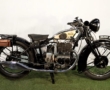
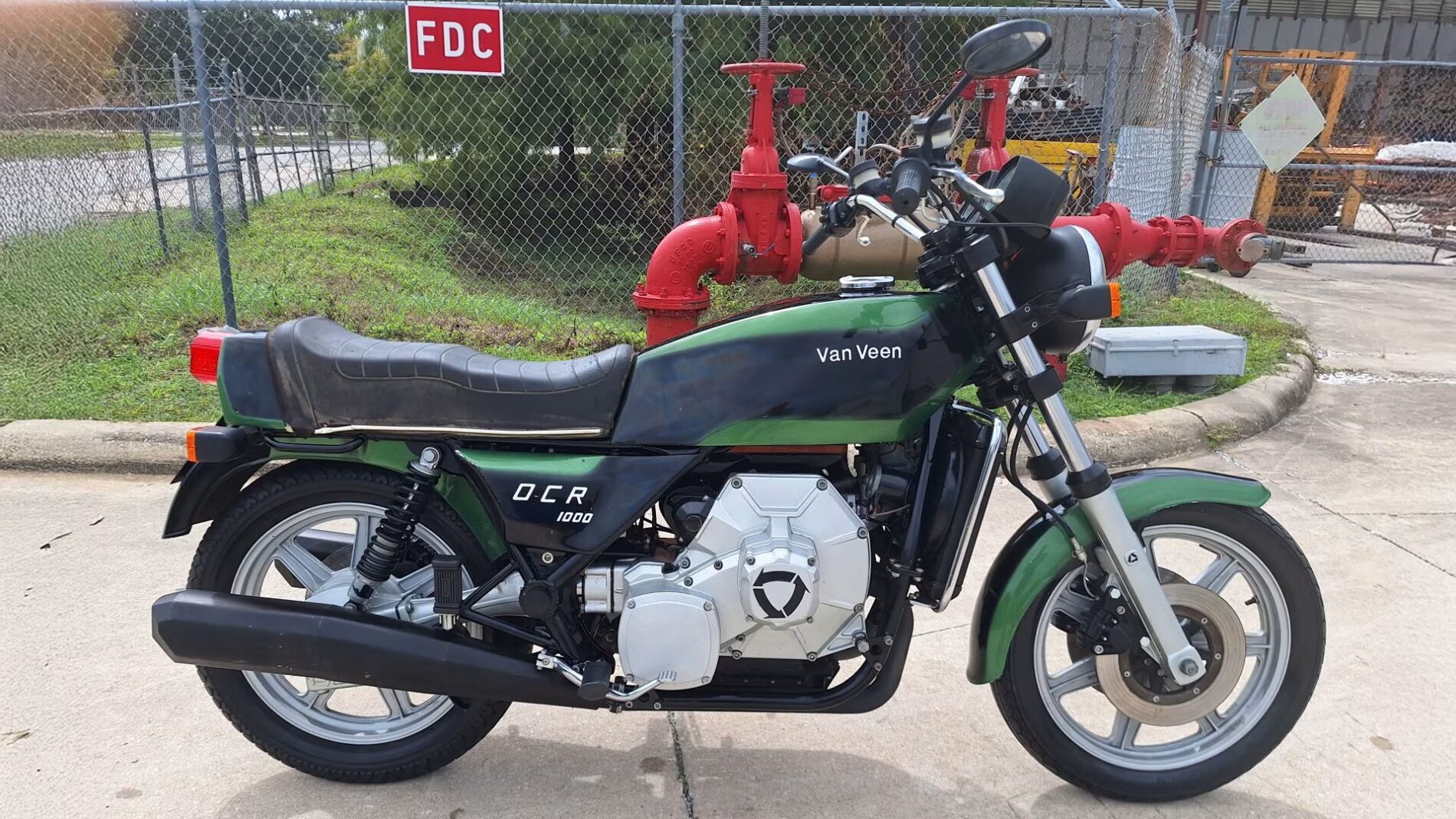
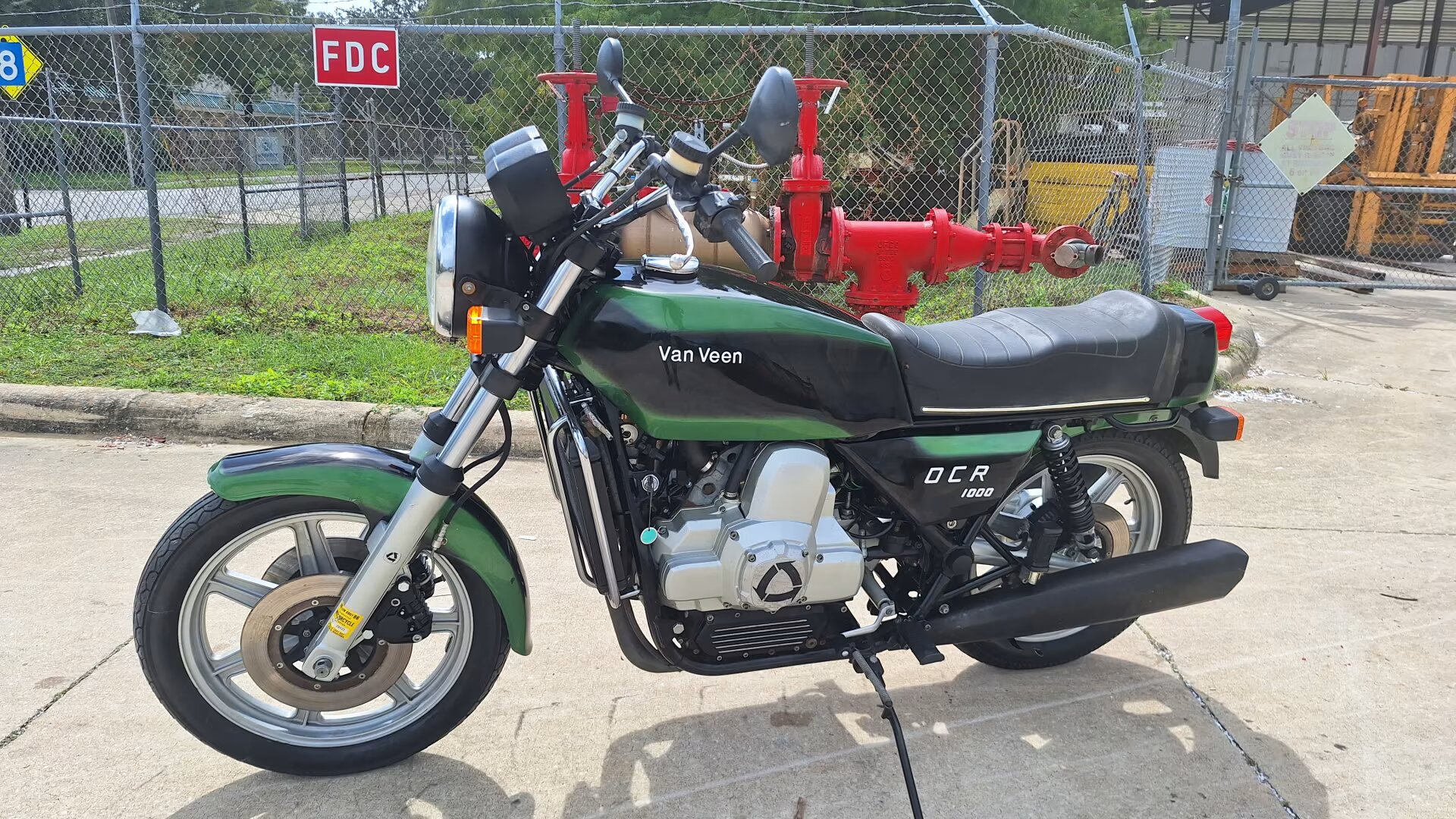
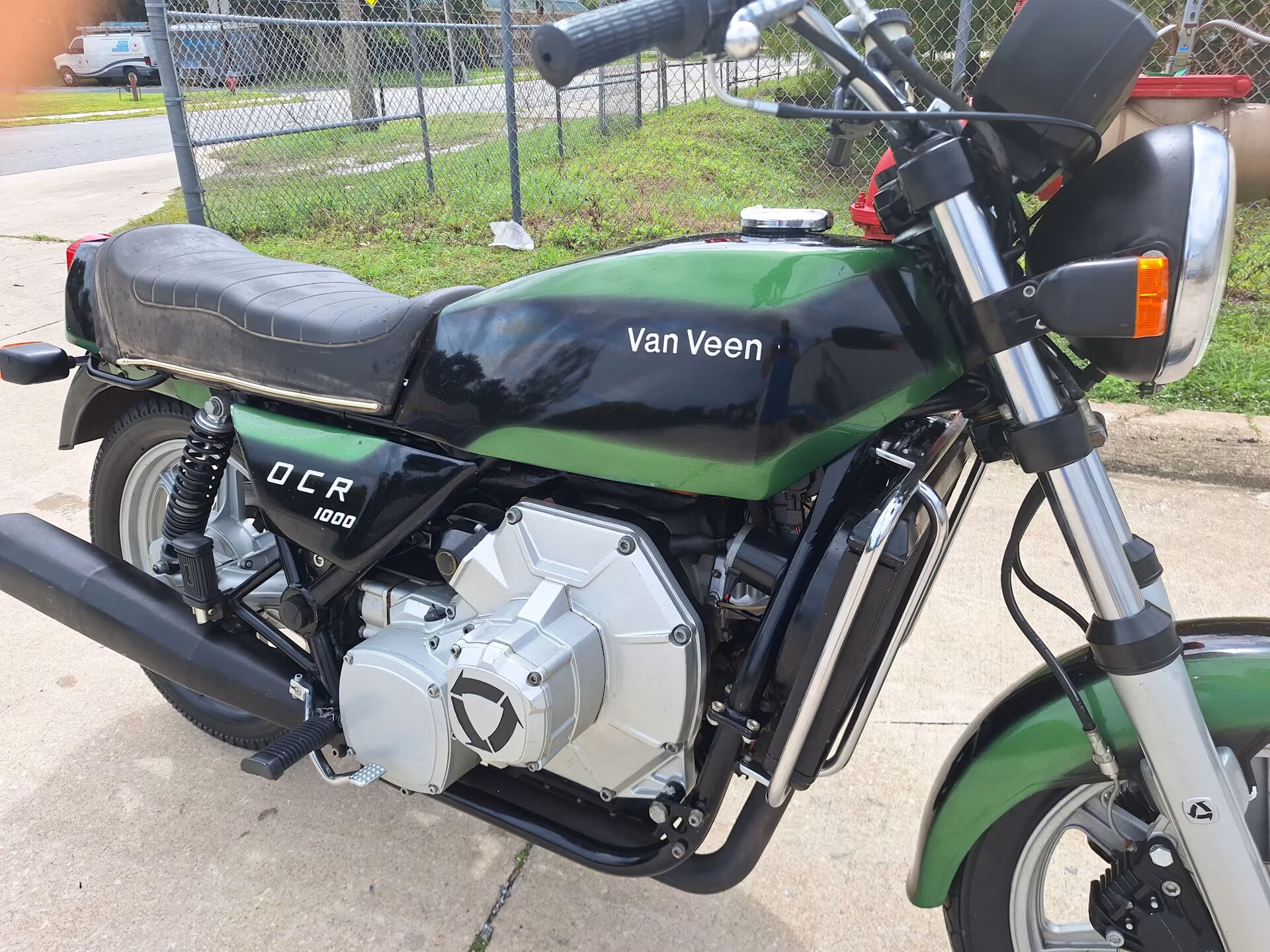
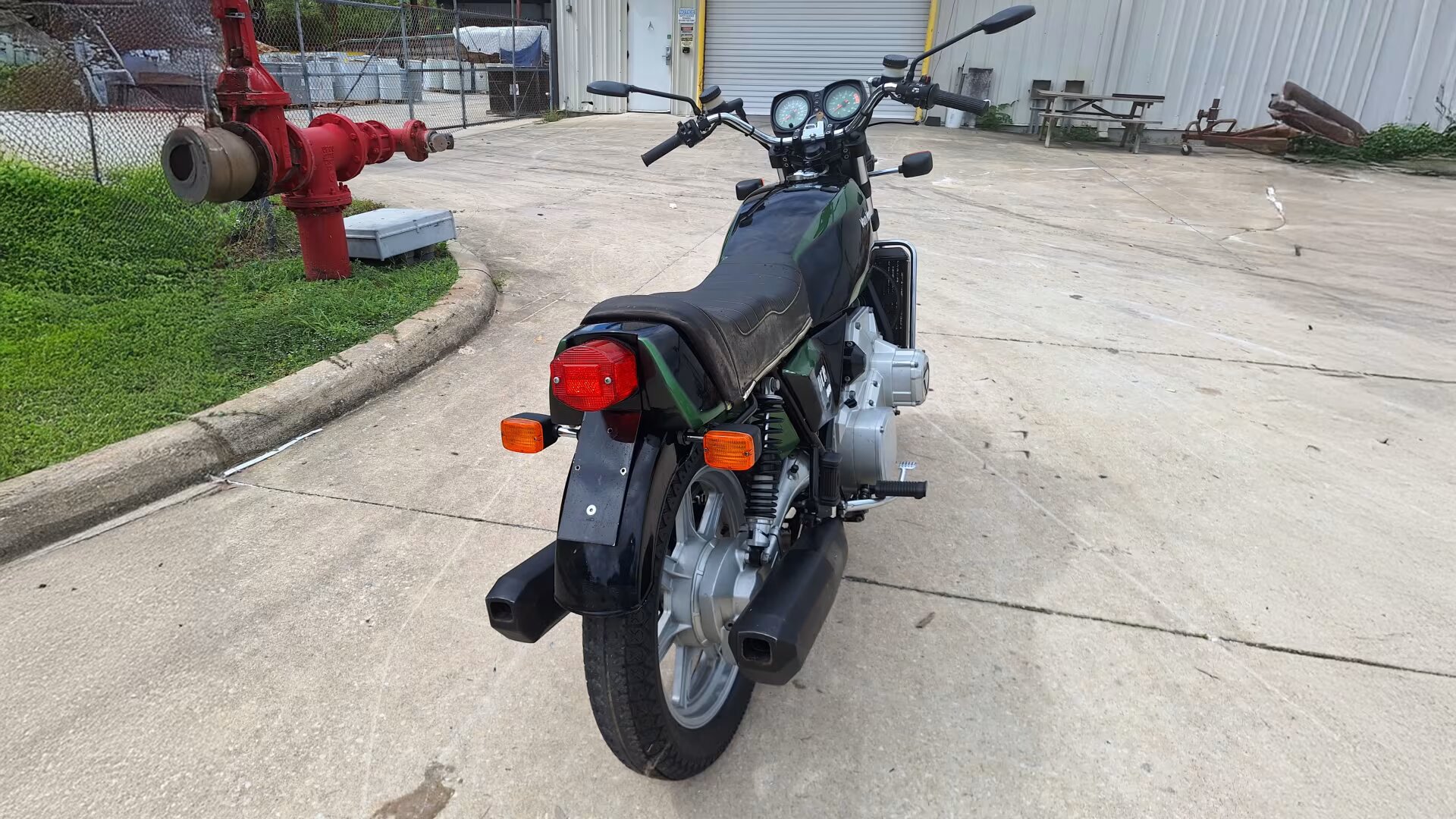
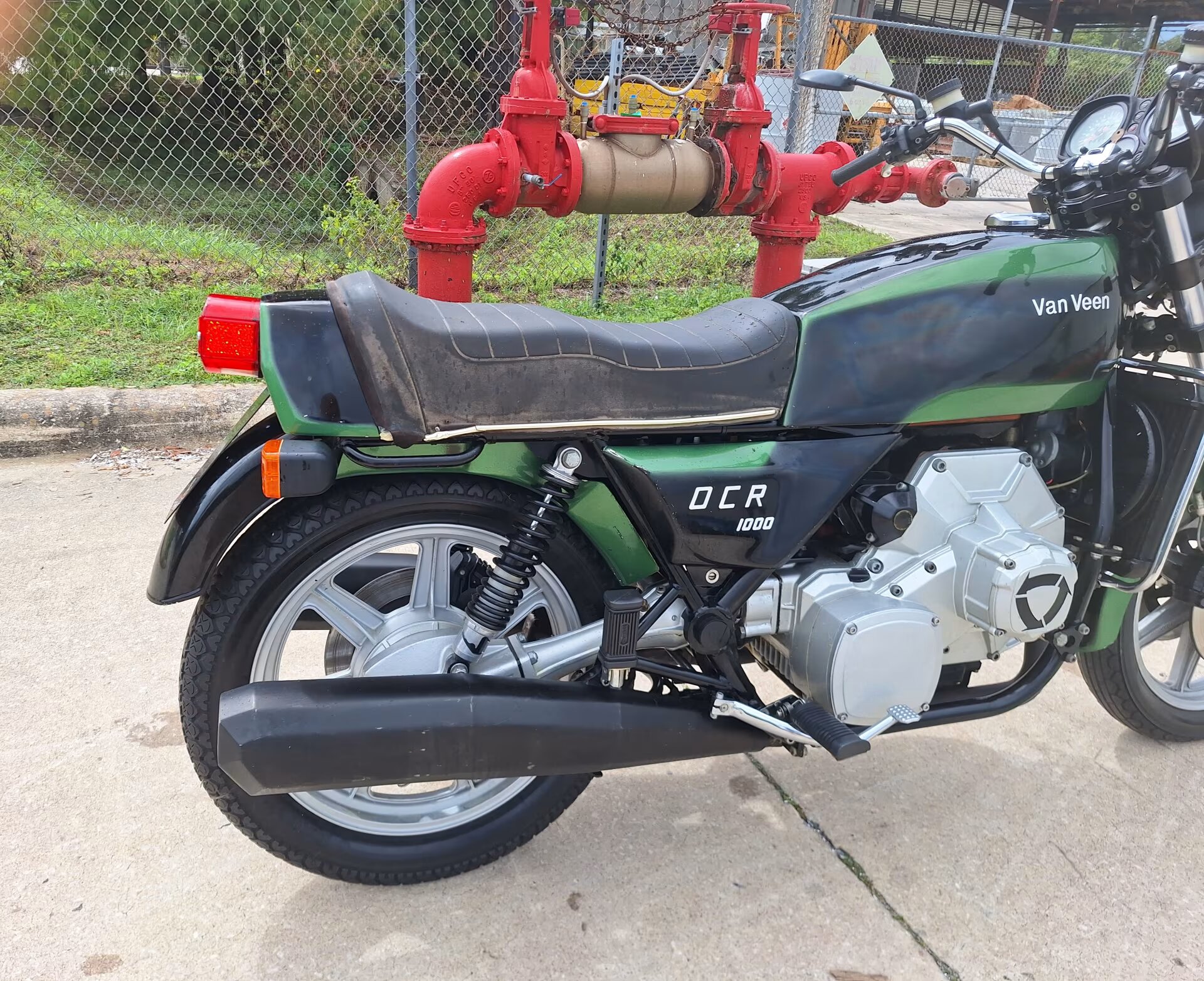
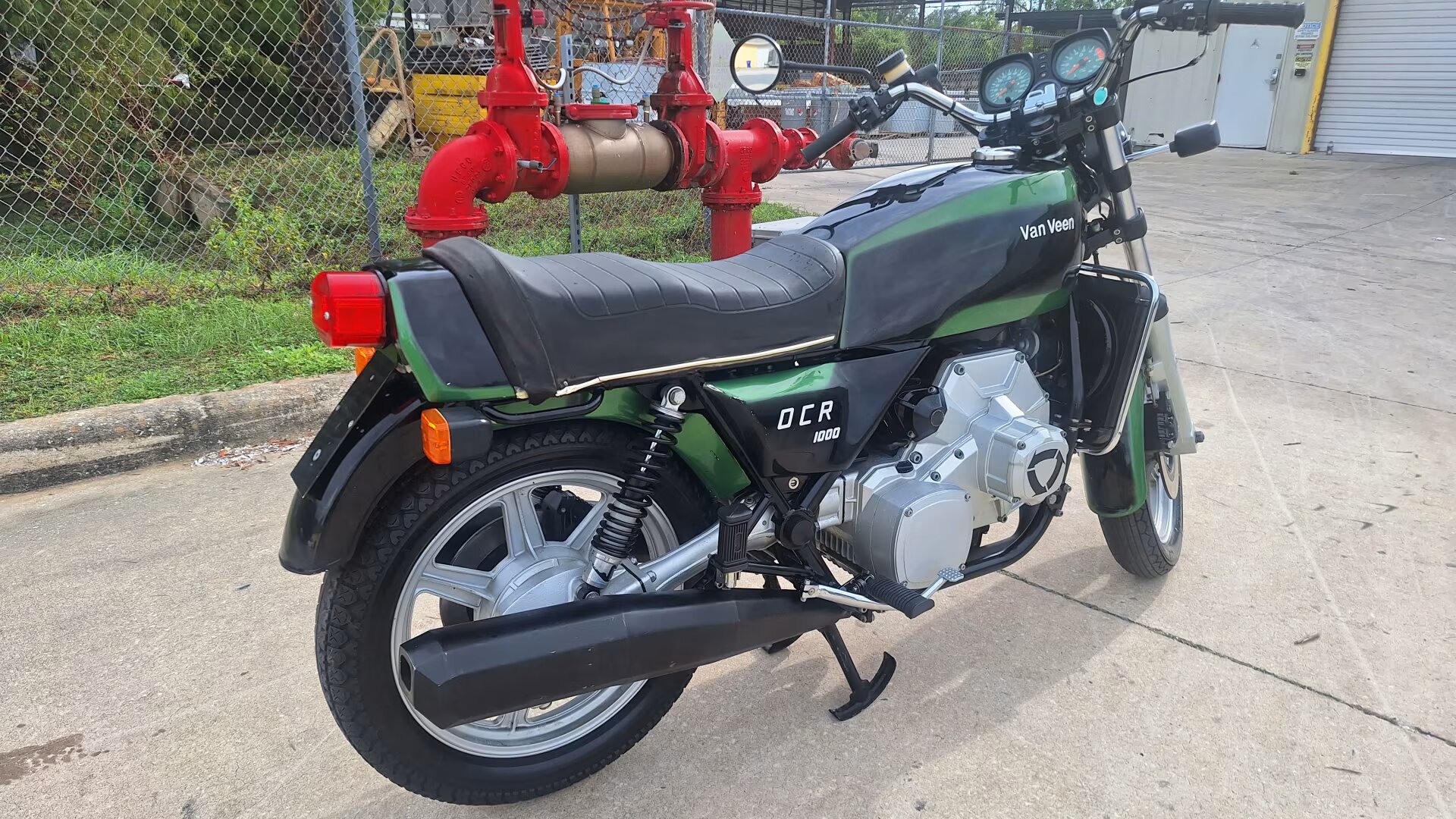
The Van Veen OCR1000 is a motorcycle that few have heard of. It was powered by a 996cc Comotor Wankel rotary engine and it was superbly made with excellence in performance, handling, and build quality.
Fast Facts
- The Van Veen OCR1000 was a rare motorcycle with only 38 being made in the original production run.
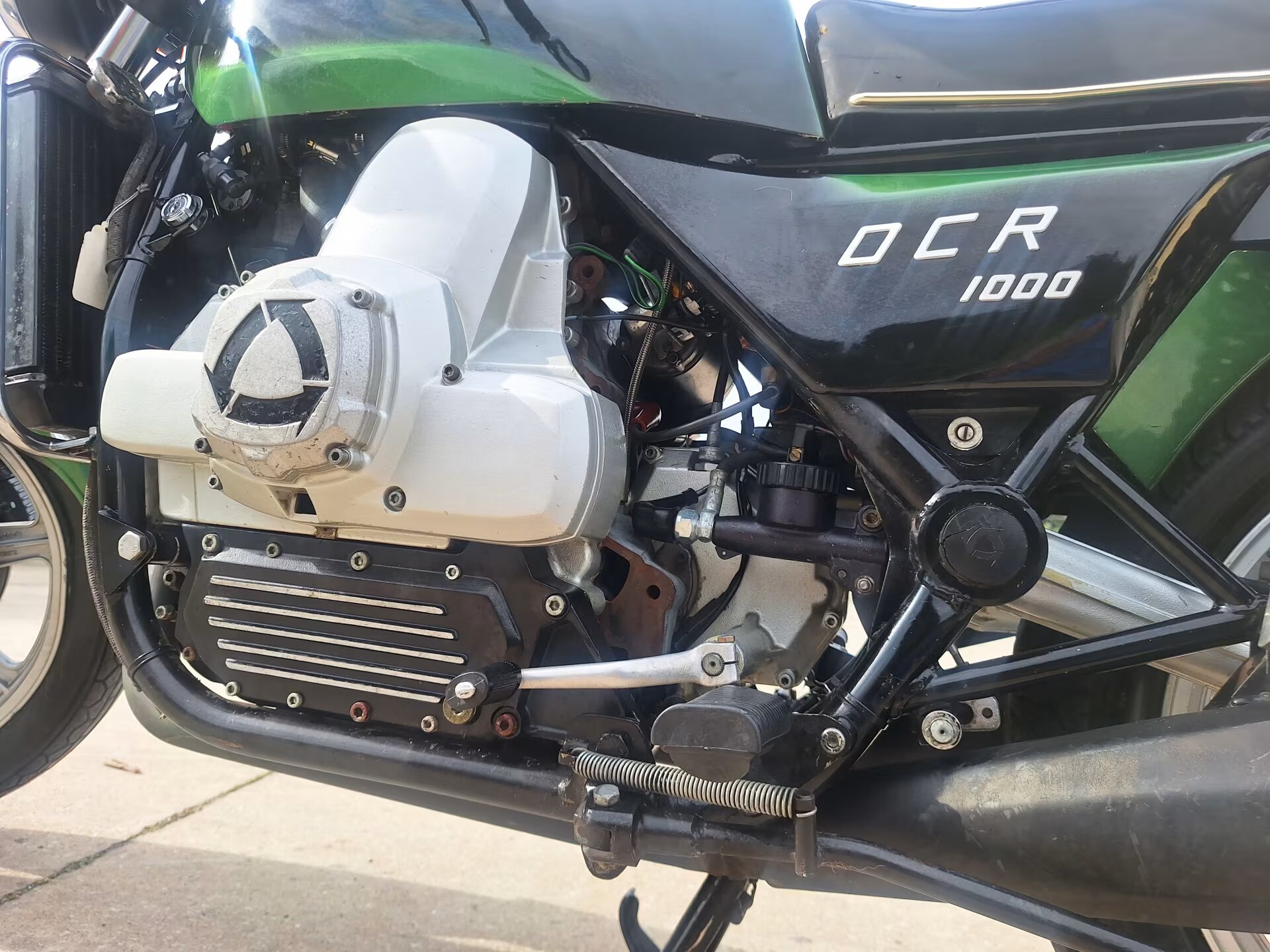
- The OCR was powered by a Comotor twin rotor 996cc Wankel type rotary engine.
- Henk van Veen spared no expense in his creation of this bike and its handling and quality control were second to none – it was truly an elite machine.
- One of these Van Veen OCR1000 motorcycles is coming up for sale by Mecum Auctions at their Las Vegas sale to be held on January 31st, 2026.
The Van Veen OCR1000 was a Dutch motorcycle fitted with an engine whose concept was invented by a German and made by the French.
The original German inventor was Felix Wankel, and his foundational design was improved on by Hanns-Dieter Paschke. The French manufacturer was Citroën.
Felix Wankel’s engine was completely unique – no other quite like it had ever been created and that uniqueness appealed to Citroën who purchased a license to develop and manufacture it.
Automobile maker Citroën had a bit of a Gallic passion for cutting edge design and their DS series of motor cars bear witness to this. The Citroën DS featured unique styling, and an ingenious hydro-pneumatic suspension system that enabled the driver to adjust the car’s ride height from the driver’s seat. Not only that but the driver could cause three wheels to jack up – to enable a flat tire to be changed.
So the idea of an engine that was unique, rotary, and able to deliver whisper smooth power and torque, and very high rpm was a rather attractive idea.
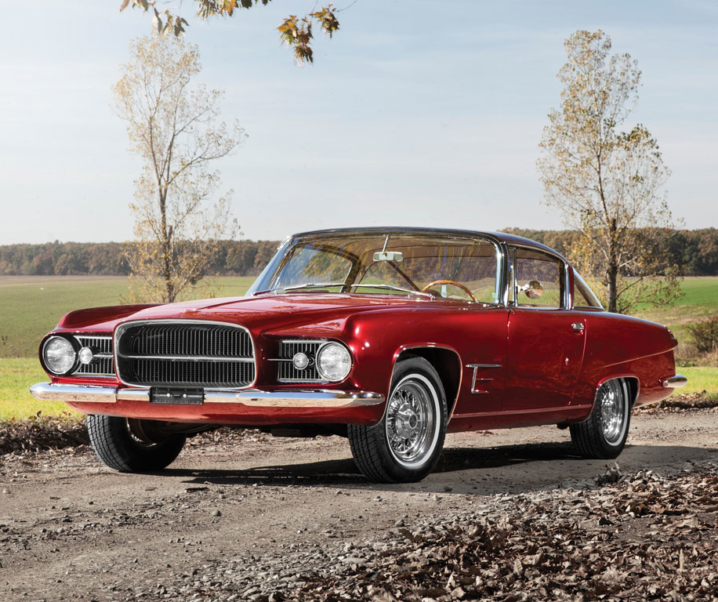
The car that Citroën wanted the Wankel engine for was its upcoming luxury touring car the Citroën SM. This was to be a car that would be a worthy opponent to the iconic Facel Vega with unique Citroën technology to make it a far superior car in every way.
The Wankel/Paschke engine was a piece of engineering brilliance, but with a brow furrowing Achilles Heel in its design which would ultimately be best solved by Japanese engineers at Mazda. That Achilles Heel involved the design and material composition of the tip seals.
The end result of this problem for Citroën was that the Wankel engine could not be developed to the satisfactory level for them to install it in their flagship Citroën SM, and so they finished up using a Maserati engine instead.
Mazda were however able to put the Wankel engine into production and it continued in some of their prestige models for a number of years.
The idea of a smooth and potentially high revving high performance engine was of course not only of interest to automobile makers, but it was of great appeal to the creative motorcycle makers and so a number of them, both small and large, decided to give the Wankel a whirl.
Among the major motorcycle makers was Suzuki who made their RE5. Norton also tried a Wankel engine and created their Norton Classic which was in production from 1987-1988. The Norton Classic used two Fichtel and Sachs rotors for its engine and 100 were made.
The Norton Classic was actually based on another small production bike, the Hercules W-2000 which used a single Fichtel and Sachs rotary engine. Norton purchased the design and tooling from Hercules and then developed their own motorcycle using that technology.
Another small production motorcycle builder to try his hand at a Wankel engine motorcycle was Henk van Veen who was the Dutch importer of the two-stroke Kreidler motorcycles.
Van Veen was well known for his small capacity two-stroke racing motorcycles and he was a man who had an excellent understanding of motorcycle design and construction.
Henk van Veen had experienced good success in racing in the small capacity classes of competition and he really wanted to try his hand in making a large capacity road motorcycle: and to do this he decided to go out on a limb and build a bike using a Wankel rotary engine.
His first prototype was built using a Mazda rotary engine fitted into a Moto Guzzi V7 frame.
This was successful and so Henk van Veen decided to go to the next level and build his own high performance motorcycle.
He decided to use the Comotor version of the Wankel which was the result of the cooperative arrangement between Citroën and German auto maker NSU who had created their Ro80 automobile model fitted with a Comotor Wankel engine while Citroën planned to use the Comotor rotary engine in their Citroën M35 and Citroën GS model.
In 1973 The Citroën/NSU cooperative debuted their new Comotor. It had twin 498cc rotors giving it a capacity of 996cc, and it produced a rather healthy 107hp @ 6,000rpm, with torque of a generous 103 lb/ft. This is of course a respectable power and torque output for a small to medium car, and a rather substantial amount of power for a motorcycle.
The liquid/oil cooled engine breathed via a 32mm Solex carburettor and ignition was by a Borsch Jaeger/Hartig electronic system.
Henk van Veen set about creating his OCR giving it a Porsche designed four speed transmission and shaft drive.
Van Veen spared no expense, and put the effort into design excellence and quality control to create a motorcycle that could have been a world beater.
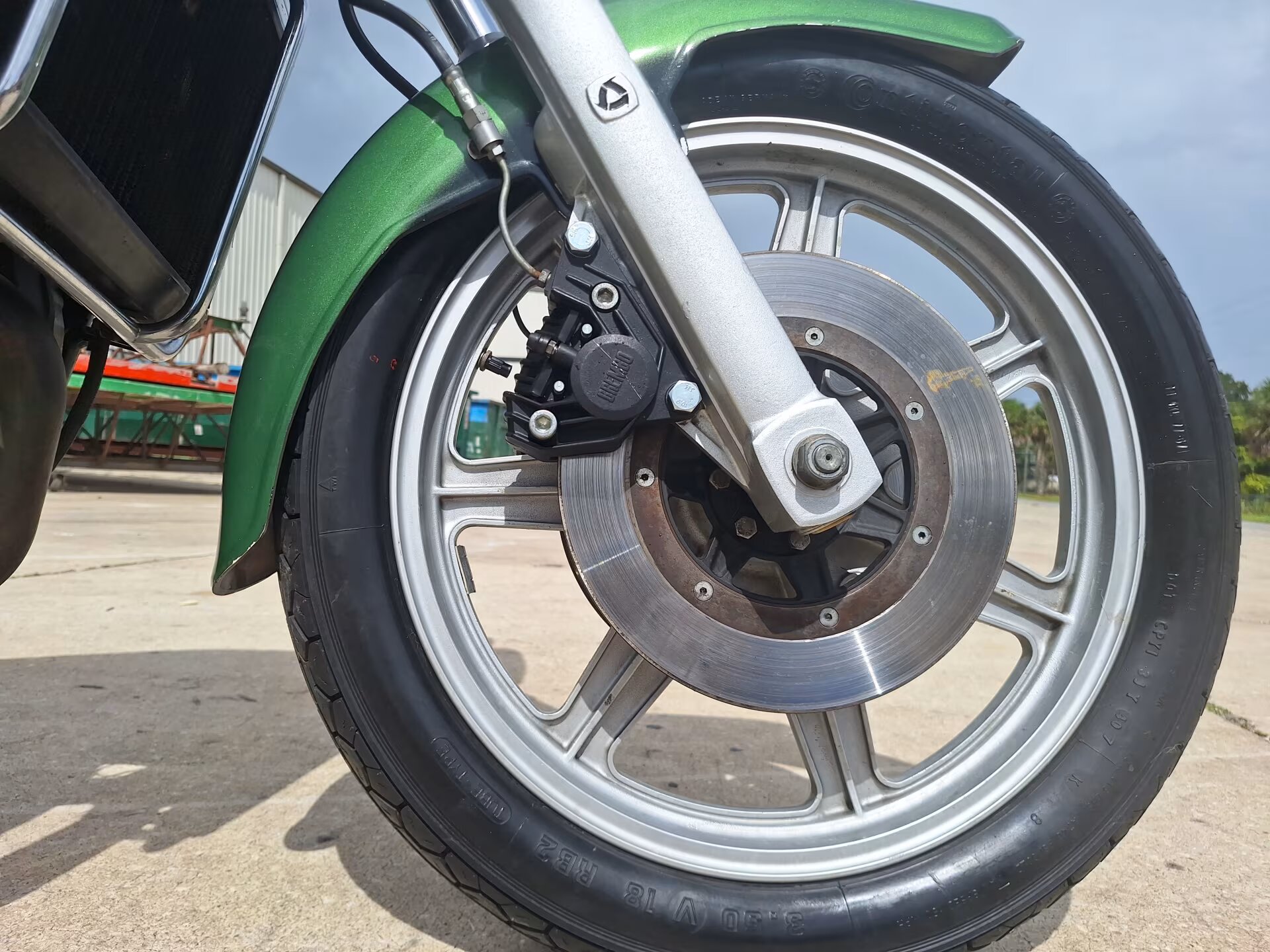
The frame was a tubular double cradle designed by Jaap Voskamp, with Koni 42mm telescopic front forks and twin adjustable gas rear shock absorbers and swing arm.
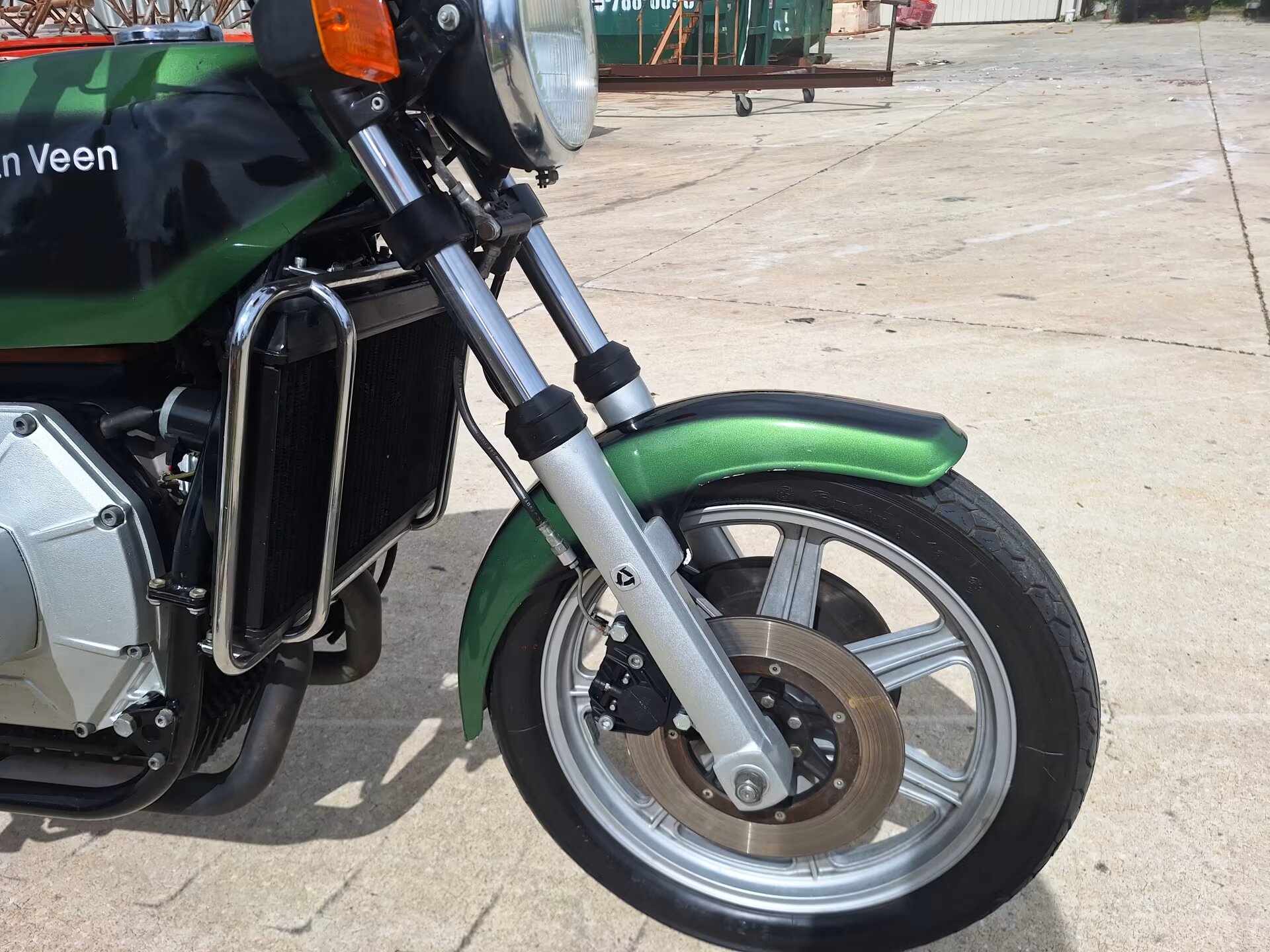
Brakes were hydraulic twin Brembo 280mm discs at the front and a single 280mm disc at the rear.
Wheels were alloy and tires 3.50×18 front and 4.25×18 rear.
Dry weight was 285kg and the fuel tank capacity was 18.2 liters.
Van Veen only built the bike from 1978-1981 and then ceased. Sales were slow primarily because the price of the bike was very high: US15,000 back then was a lot of money.
Of that original production run only 38 OCR1000 were made, with another short run of 10 made by a group of enthusiasts in 2011.
Those who had the opportunity to road test the OCR1000 tended to be very positive. The bike delivering smooth and controlable power and excellent handling despite its weight.
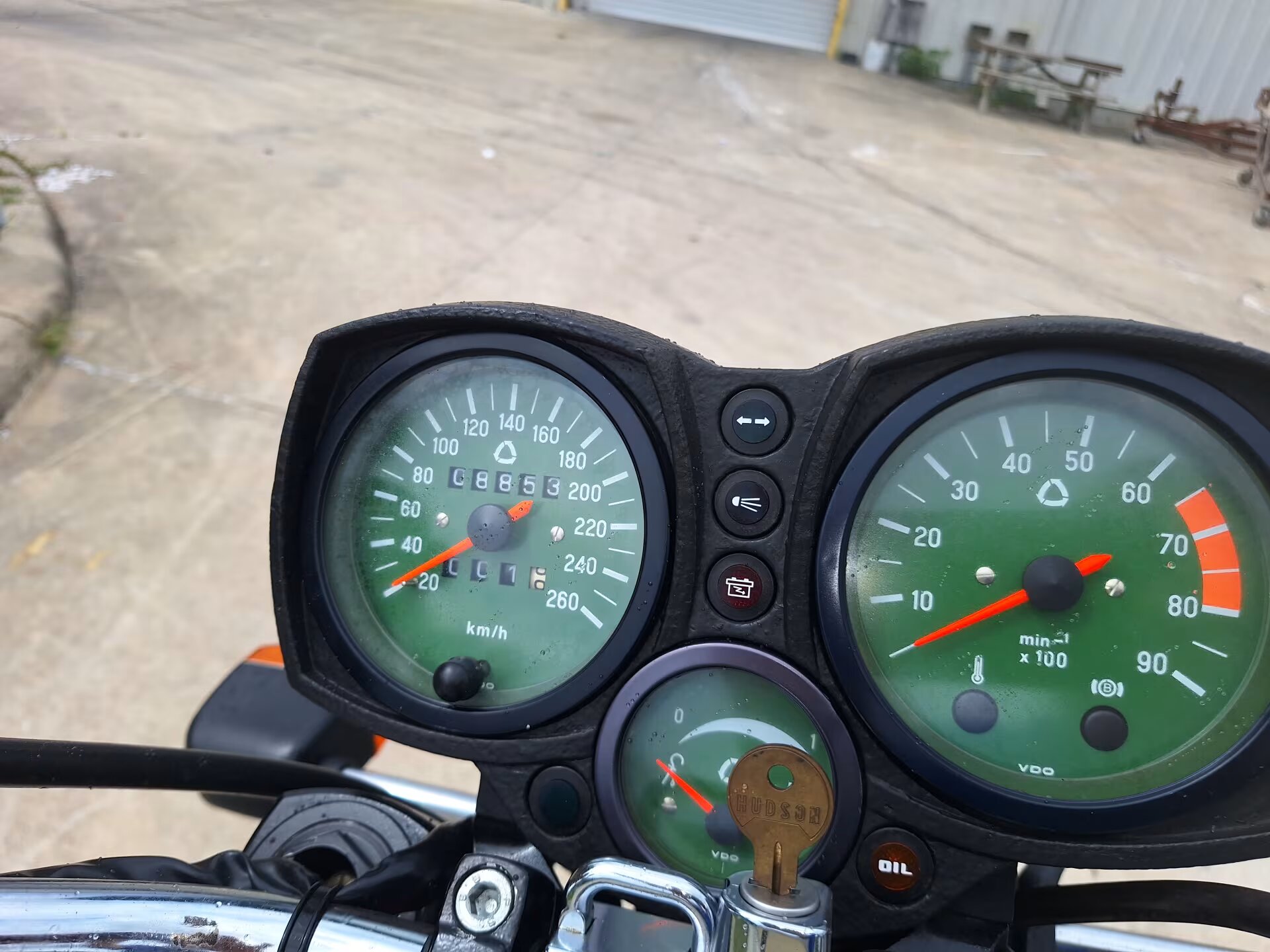
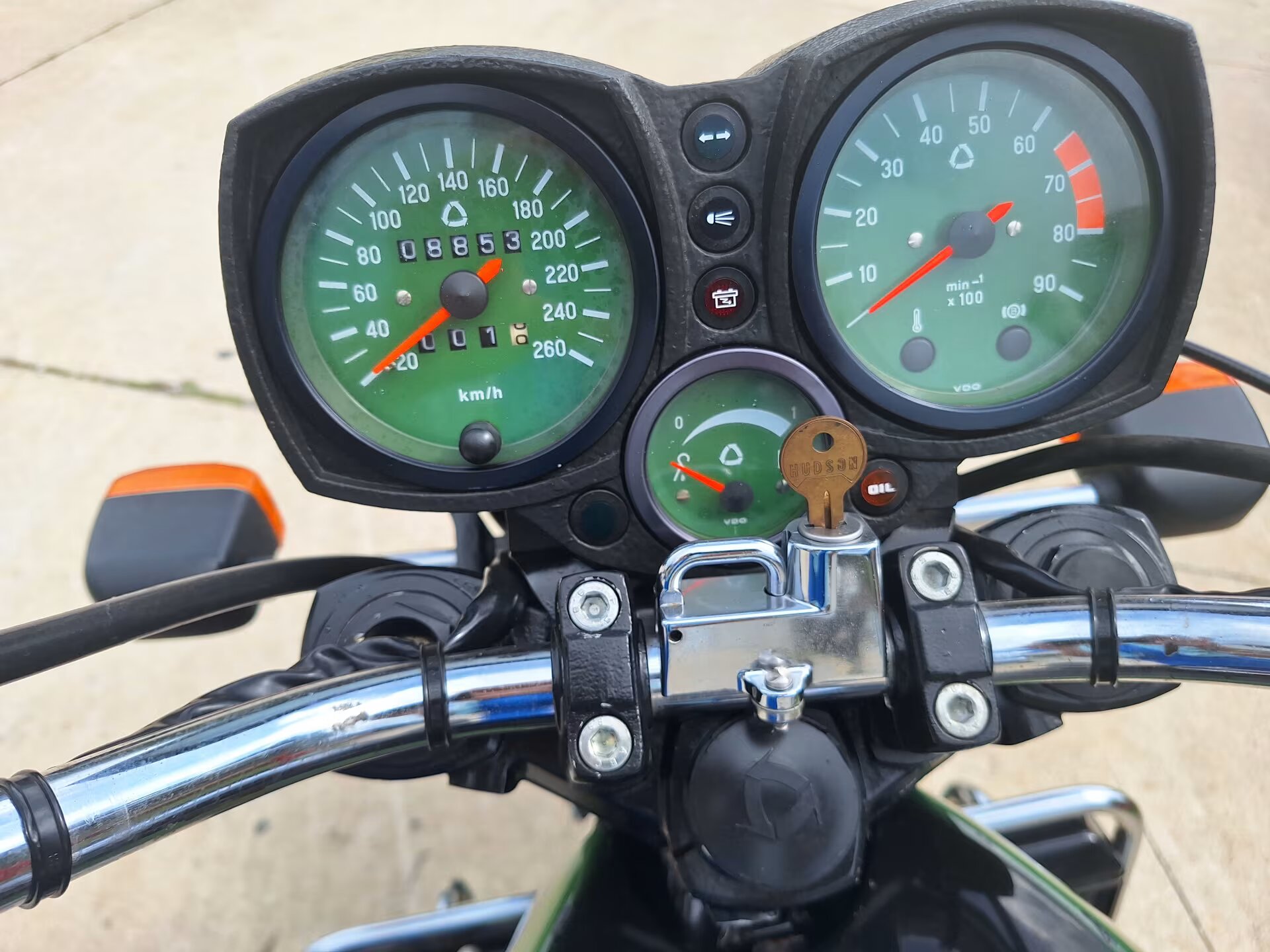
Top speed was somewhere north of 135mph on test.
There are very few of these motorcycles out there and so they don’t often come up for sale. But one is to be offered by Mecum Auctions in Las Vegas on Saturday, January 31st 2026.
You will find the sale page for this rare motorcycle if you click here.
The Van Veen OCR1000 is one of the most outstanding of all the Wankel rotary engine motorcycles the world has ever seen.

Jon Branch is the founder and senior editor of Revivaler and has written a significant number of articles for various publications including official Buying Guides for eBay, classic car articles for Hagerty, magazine articles for both the Australian Shooters Journal and the Australian Shooter, and he’s a long time contributor to Silodrome.
Jon has done radio, television, magazine and newspaper interviews on various issues, and has traveled extensively, having lived in Britain, Australia, China and Hong Kong. His travels have taken him to Indonesia, Israel, Italy, Japan and a number of other countries. He has studied the Japanese sword arts and has a long history of involvement in the shooting sports, which has included authoring submissions to government on various firearms related issues and assisting in the design and establishment of shooting ranges.