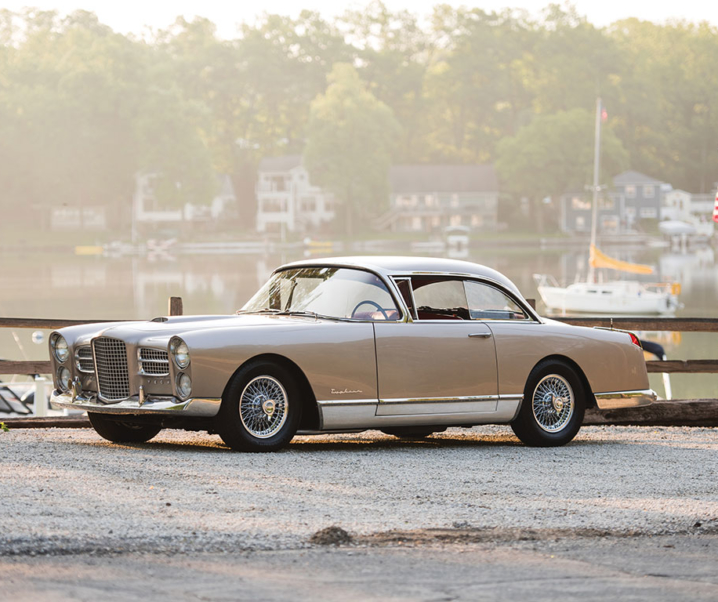
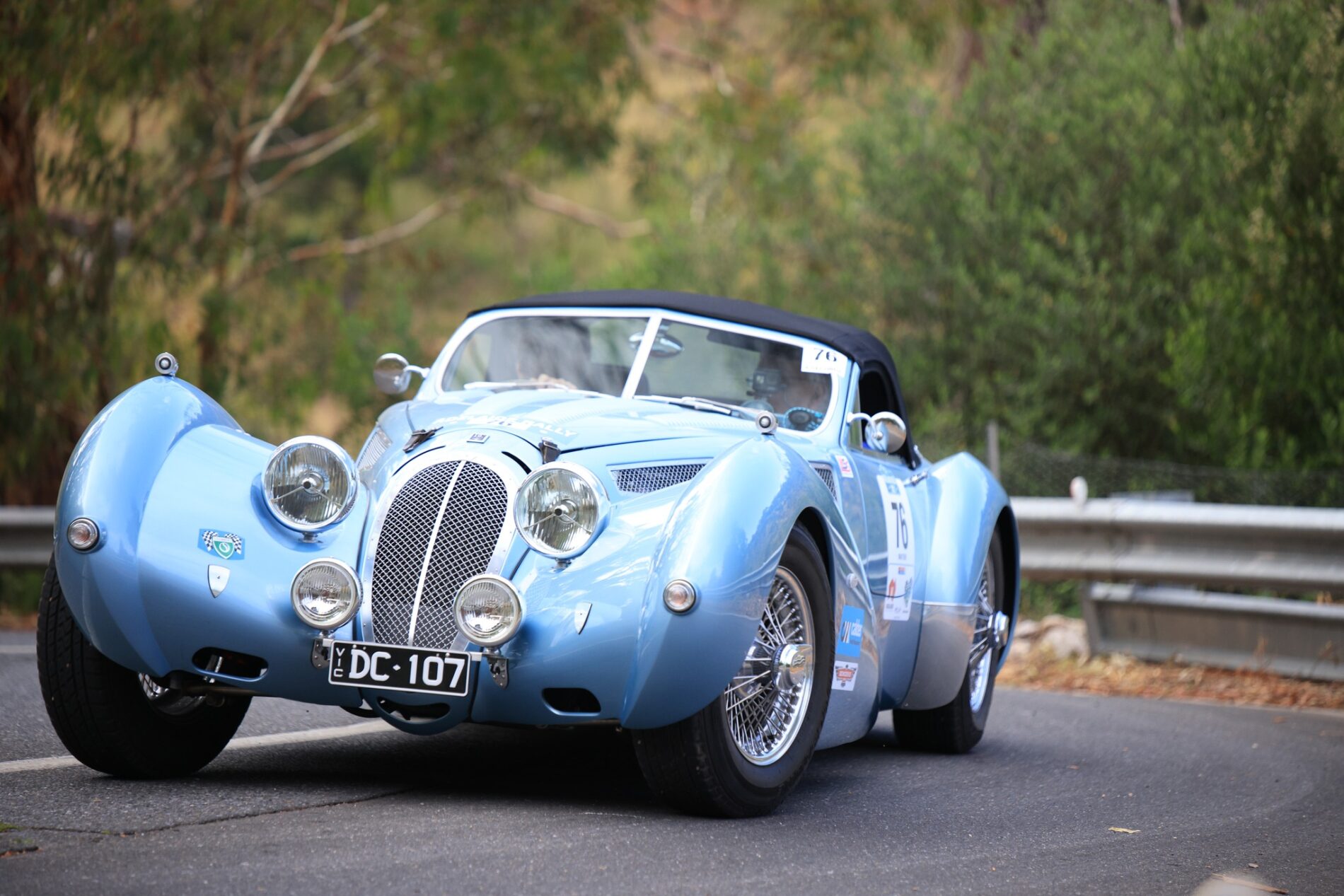
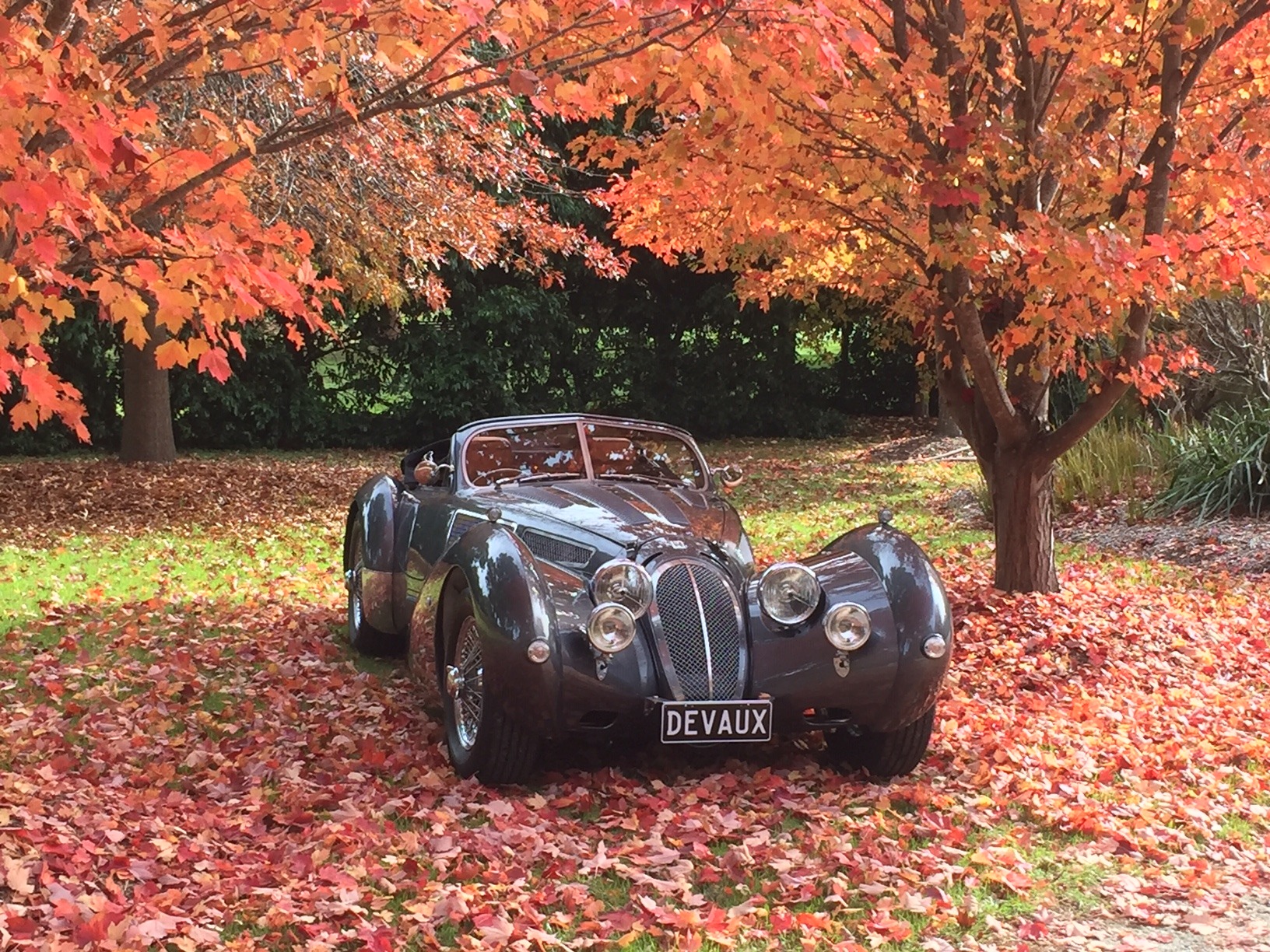
Devaux Cars is an Australian business that has made a number of custom coupés and spyders that combine the best of 1930s classic styling with a restrained use of modern technology. The result is a car that looks like it belongs in the 1930s but has the handling and performance of a 21st century sports car.
Fast Facts
- Devaux Cars began in 1998 as a project David Clash wanted to undertake.
- David’s passion was for the beautiful works of automotive art, especially the designs of Jean Bugatti such as the Aérolithe.
- David’s mother’s maiden name was Devaux and he decided to give that name to his cars.
- Devaux Cars development process went through three stages with an initial prototype, a pre-production development prototype, and finally the production model.
While Australia may not jump into car enthusiast’s minds as a place where fascinating custom cars are created the nation has certainly created some significant automobiles, and it is also a nation that has imported its fair share of classic cars including quite a few Bugattis.
Australians have a history of being quiet achievers, people who put the effort in to achieve excellence in the field they choose to work in. It was Australians for example who won the fabled America’s Cup yacht race in 1983, breaking the American’s 132 year hold on the trophy.
It was in that mode of being a quiet achiever that David Clash decided that he wanted to build a car with the elegance and grace of the best that the classic era of the 1930’s had produced: a work of automotive art, a car that incorporated the best that the 1930’s had created, but with the advantage of some restrained updating of the mechanics and technology.
The cars that David Clash most admired were the French and Italian, especially the iconic Bugatti Atlantic, and Aérolithe which were designed by Jean Bugatti: but also such cars as the Alfa Romeo 6C 2300 Touring of 1934-37: and these were to become the foundational inspiration for a car of his own.
The cars such as the Bugattis were horrendously expensive and essentially too valuable to enjoy as a regular driver.
The Mk I
In David’s quest to create this car of his vision he acquired a Riley 2.5 liter chassis as the foundation and into it he chose to install a Jaguar XK DOHC engine. That engine was designed during the 1940’s while the engineers at Jaguar Cars were on night shift watching over the factory as the Luftwaffe flew overhead looking for their targets to bomb.
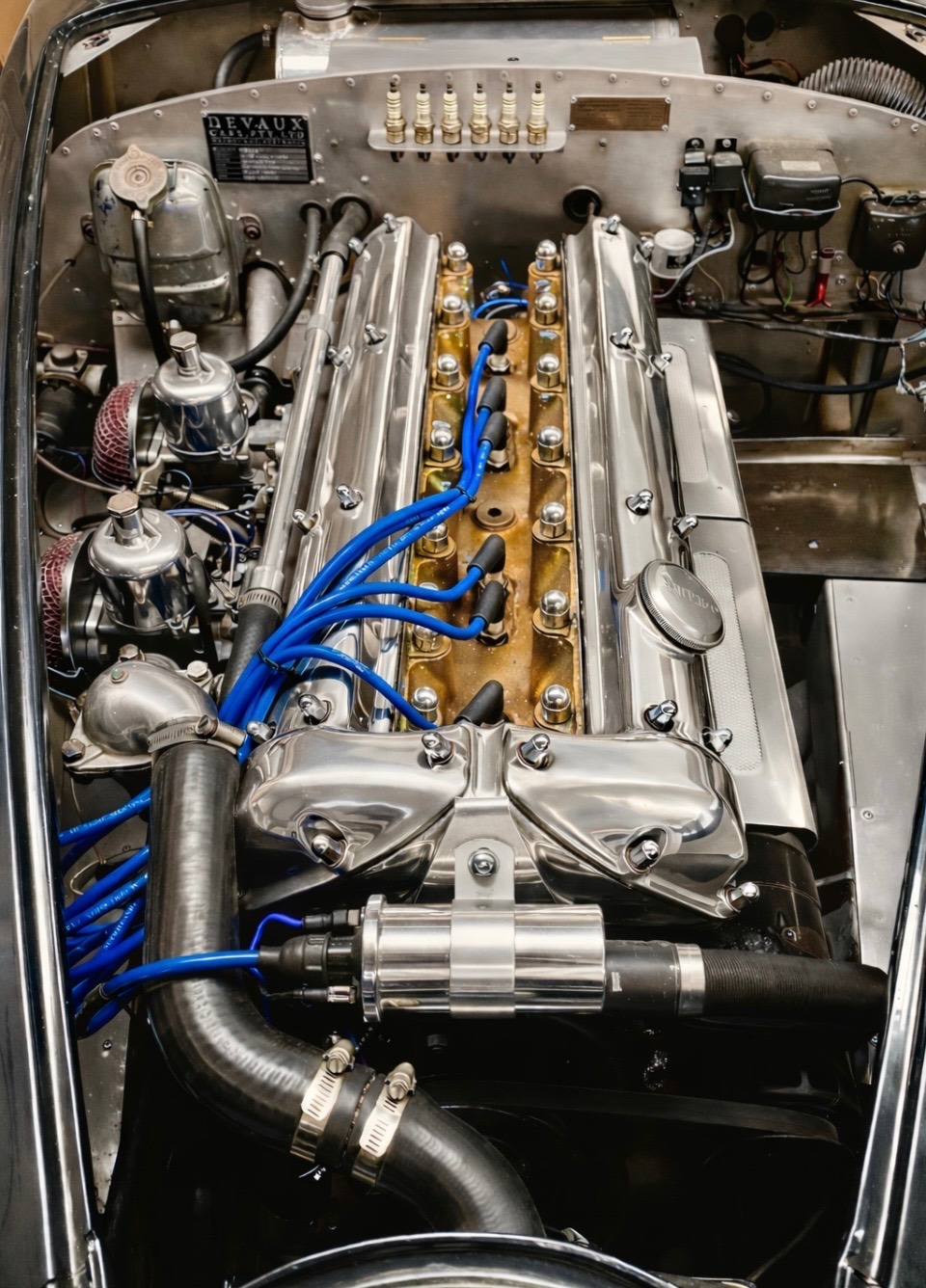
So the XK engine was a historically significant unit and it was one with a proven track record in Jaguar cars and also in military vehicles. It was also an engine that looked 1930’s and 1940’s appropriate, and was an impressive looking engine with which to fill an engine bay.
The Mk I was carefully designed and constructed, not as a replica nor as a pastiche, but an original inspired work of automotive art that drove beautifully and looked gorgeous.
For the bodywork David Clash wisely chose to use GRP for its flexibility in the creation of body panels that required complex shapes, and for its durability. The alternatives, such as aluminium alloy, were much more difficult and expensive to work with, and lacked the durability.
The original Bugatti Atlantic’s bodywork was made of a Magnesium/Aluminum alloy called Elektron which was very lightweight, which was a plus, but which was also rather flammable, which was not a plus. GRP offered light weight, strength, and ease of molding without the flammability of the old tech Elektron.
The Devaux Mk 1 was shown in various places and proved to have the tendency to attract curious car enthusiasts “like seagulls to a chip” to use an Australianism.
From Mk I to the Mk II Pre-Production Development
David Clash and his team decided that the MkI was proof of concept, and that it was time to venture into the creation of a pre-production prototype based on a custom designed chassis.
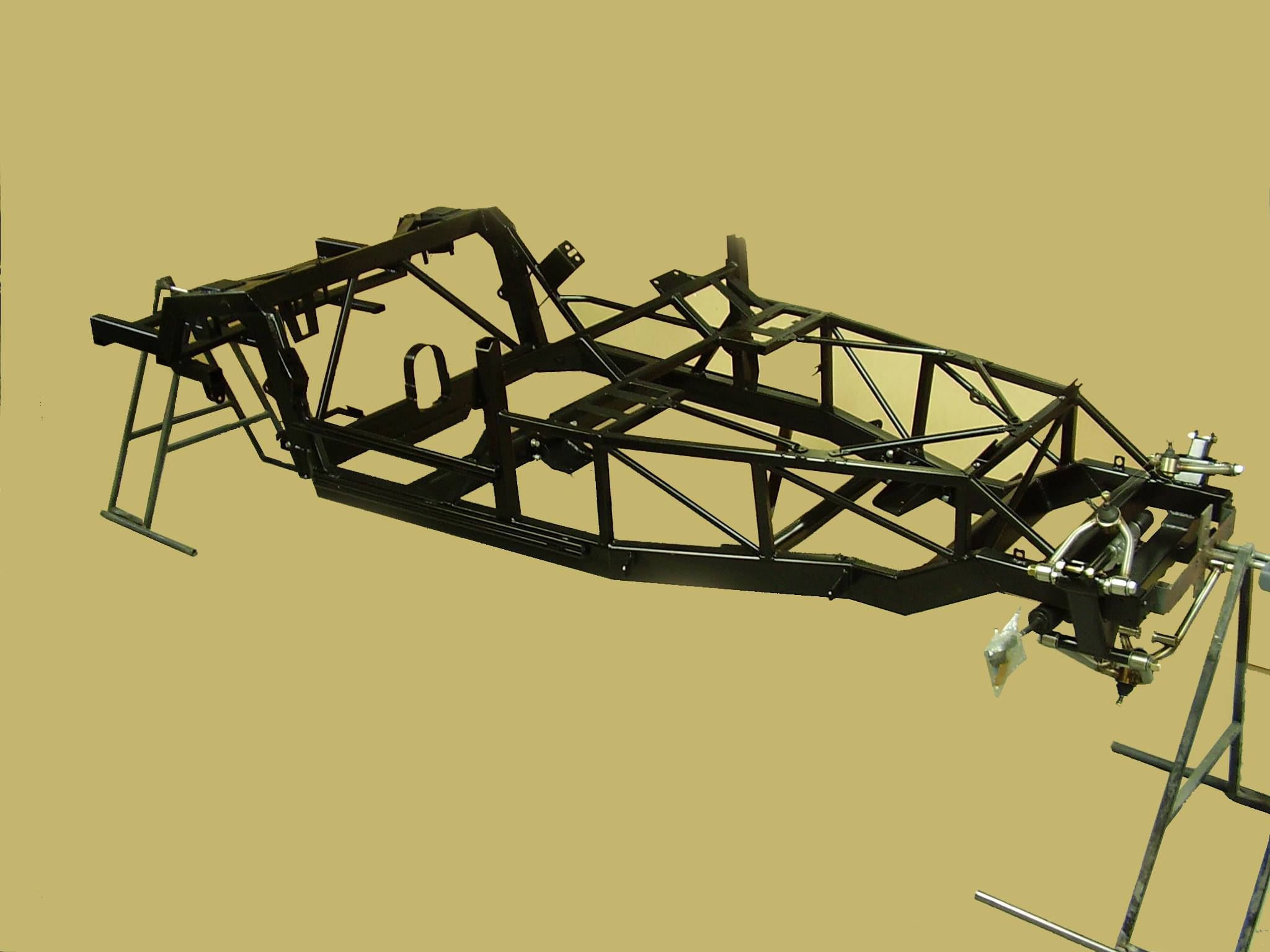
The suspension for the Mk II featured a fully independent front with upper and lower wishbones with coil springs, and telescopic shock absorbers. At the rear the decision was made to use a live axle with four arms and coil springs with telescopic shock absorbers.
With the Jaguar XK engine not being an available or practical option the decision was made to use a six cylinder modern Ford engine which would ensure that the vehicle could meet international emissions regulations, and that it would be serviceable world wide.
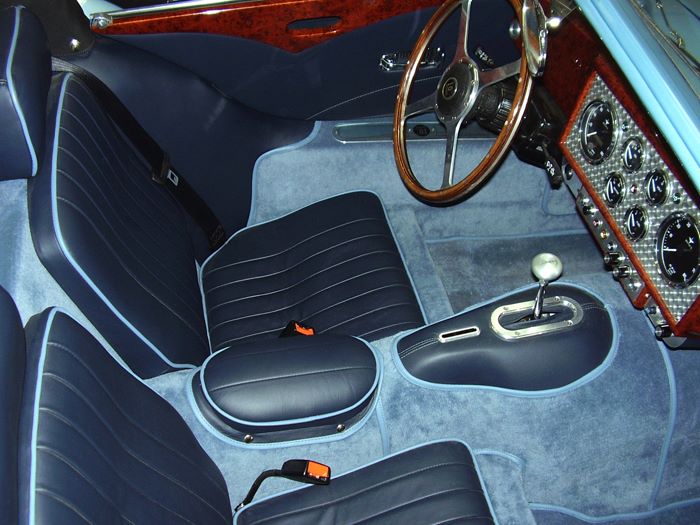
The bodywork and interior followed the original Mk I concept with the instruments and switches in the center of the dashboard to make easy the building of the cars with either left or right hand drive.
The Mk II was completed as a spyder and used for extensive testing, especially road testing.
Once the car had demonstrated stability, durability, and production readiness David Clash and his team moved to making final decisions for the creation of the production car, the Mk III.
The Devaux Cars Mk III: The Production Model
In the planning for the final production model David was privileged to have some input from Jay Leno. Jay Leno was provided with drawings and photographs and was highly enthusiastic about the project. As a highly respected collector of automobiles, including many from the classic 1920s and 1930s, Leno’s affirmation of the Devaux Cars project served as a significant indicator of the car’s potential future success.
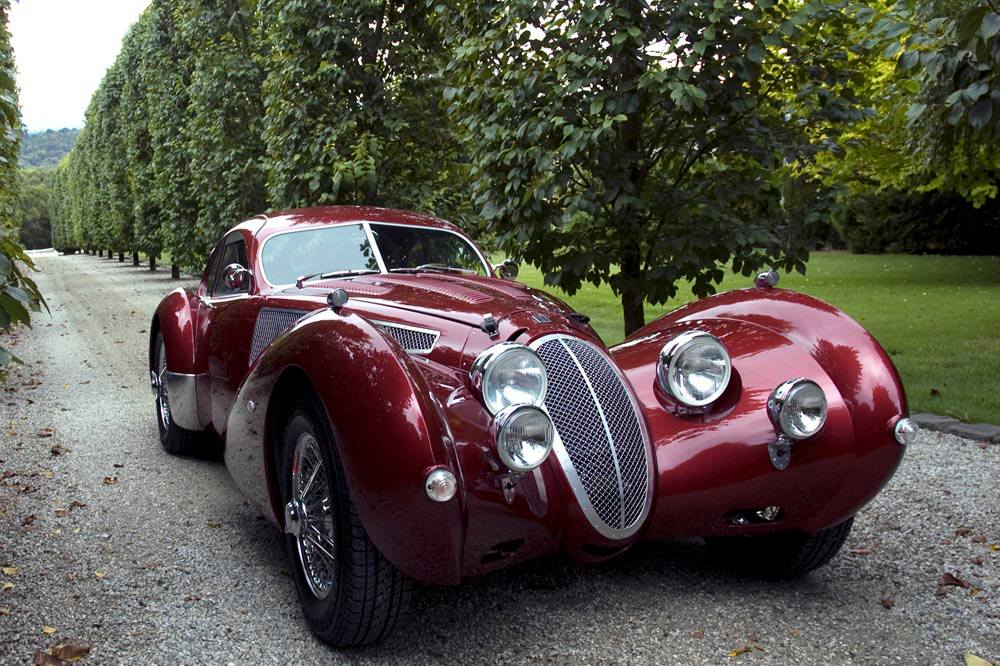
The Devaux Cars Mk III was indeed a perfect blending of classic style made with 21st century roadworthiness, performance, handling, and ergonomics.
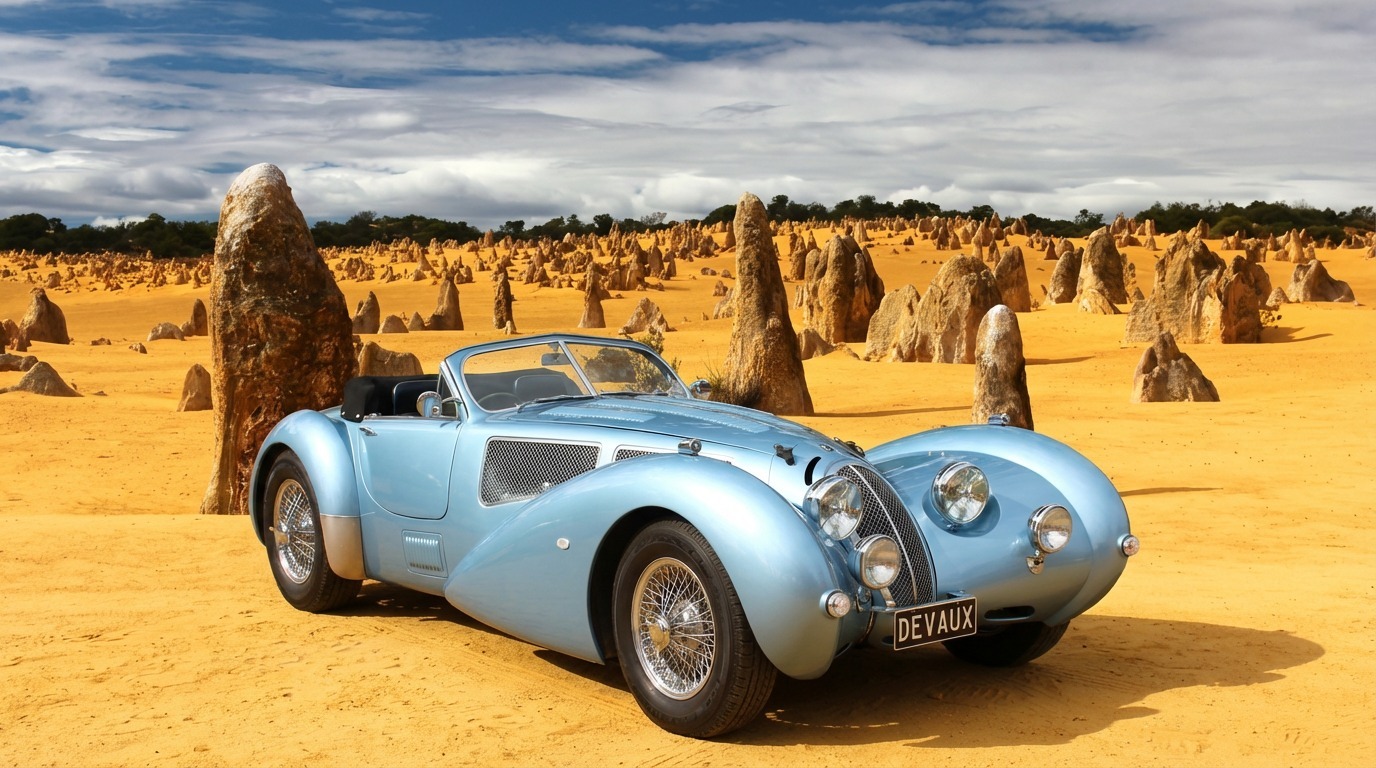
The Devaux Cars Mk III has an impressive set of specifications. The engine chosen for the full production model is the General Motors LS1 all alloy 350 cu. in. V8 mated with a four speed automatic gearbox and driving the rear wheels via a Borg Warner 3.45:1 differential.
Wheels are 6″ x 16″ 60-spoke wire wheels with central locking shod with 215/70HR x 16 tires. Brakes are 300mm discs to all four wheels, with the front discs ventilated.
Front suspension is by fully adjustable stainless steel double wishbones with coil-over dampers while at the rear is a live axle with 4-bar links and Panhard rod with coil-over dampers. Steering is by rack and pinion.
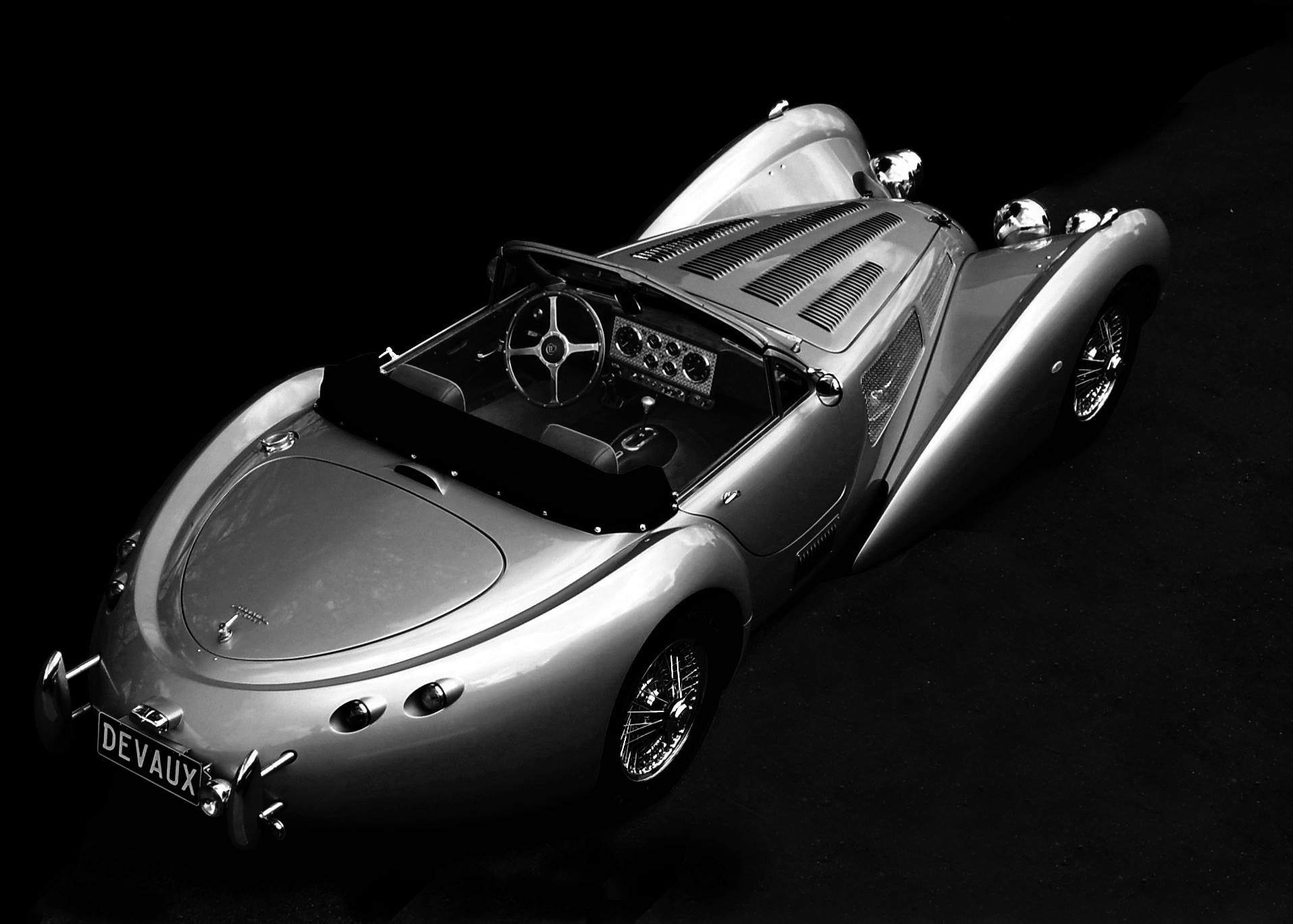
Over the RHS steel jig welded chassis the bodywork is hand laminated GRP. The Devaux is offered in either spyder or coupé body styles. The interior is subject to customer requests and can be leather or fabric. The dashboard is faux timber with traditional instrumentation set on an engine turned aluminum central panel and the cars are provided with air-conditioning.
The split windscreen is laminated, with safety glass and acrylic side and rear screens.
The fuel tank is aluminum and has a 65 liter capacity and the radiator is an aluminum high-flow unit incorporating a transmission oil cooler.
Length of the car is 4,800mm (15’9″), width 1,612mm (5’3 1/2″), wheelbase 2,794mm (9’2″), front and rear track 1,385mm (54 1/2″), and kerb weight is 1,125kg (2,486lb).
Devaux Cars website is a goldmine of information and includes descriptions of the production cars made, complete with quality photographs.
You will find the Devaux Cars website if you click here.
This looks to be one of the most outstanding projects aimed at combining the style of the 1930s automobiles with 21st century technology successfully.
Picture Credits: All pictures courtesy Devaux Cars.

Jon Branch is the founder and senior editor of Revivaler and has written a significant number of articles for various publications including official Buying Guides for eBay, classic car articles for Hagerty, magazine articles for both the Australian Shooters Journal and the Australian Shooter, and he’s a long time contributor to Silodrome.
Jon has done radio, television, magazine and newspaper interviews on various issues, and has traveled extensively, having lived in Britain, Australia, China and Hong Kong. His travels have taken him to Indonesia, Israel, Italy, Japan and a number of other countries. He has studied the Japanese sword arts and has a long history of involvement in the shooting sports, which has included authoring submissions to government on various firearms related issues and assisting in the design and establishment of shooting ranges.