Ferrari are often thought of as makers of high performance cars but they have a history of also making luxurious and exciting touring cars, of which the 412 GT is a prime example.
Fast Facts
- The Ferrari 412 GT was the final refinement of a series of models that began with the 365 GT4 2+2
- The 412 GT was made to be a refined and luxurious touring car, a car to be enjoyed by the driver, and providing comfort for the passengers.
- This series of Ferrari models were in production for a full seventeen years: a sure indication that they delivered significant buyer appeal.
- A 1987 Ferrari 412 GT fitted with the 5-speed manual transaxle and limited slip differential is for sale on Bring a Trailer at time of publication.
The Ferrari 412 was the final iteration of a series of cars that began with the 365 GT4 2+2 of 1972-1976, then the Ferrari 400 of 1976-1979, the Ferrari 400i of 1979-1985, and the finale, the Ferrari 412 of 1985-1989.
So this model family was in production for a full seventeen years – which would indicate that this design had a lot of customer appeal: so Ferrari was onto a winner with this car family.
The first model, the 365 GT4 2+2 was created to replace the 365 GTC/4, which was a 2+2. The coachwork was designed by Leonardo Fioravanti of Pininfarina. The new 365 GT4 2+2 was based on a re-designed tubular space frame steel chassis of its predecessor and using many of the superseded model’s mechanical components.
The chassis was lengthened by 200mm (7.9 inches) to a total length of 2,700 mm (106.3 inches) to allow more room in the passenger compartment, and to make the car a practical day-to-day automobile with a decent amount of room for people and luggage.
While many favor the notion that Ferrari were makers of performance cars they were also makers of luxurious cars with enviable performance, and the 365 GT4 2+2 family were created to fit that bill: and fit that bill they did so well that they managed a seventeen year production, passing through four development phases in the process.
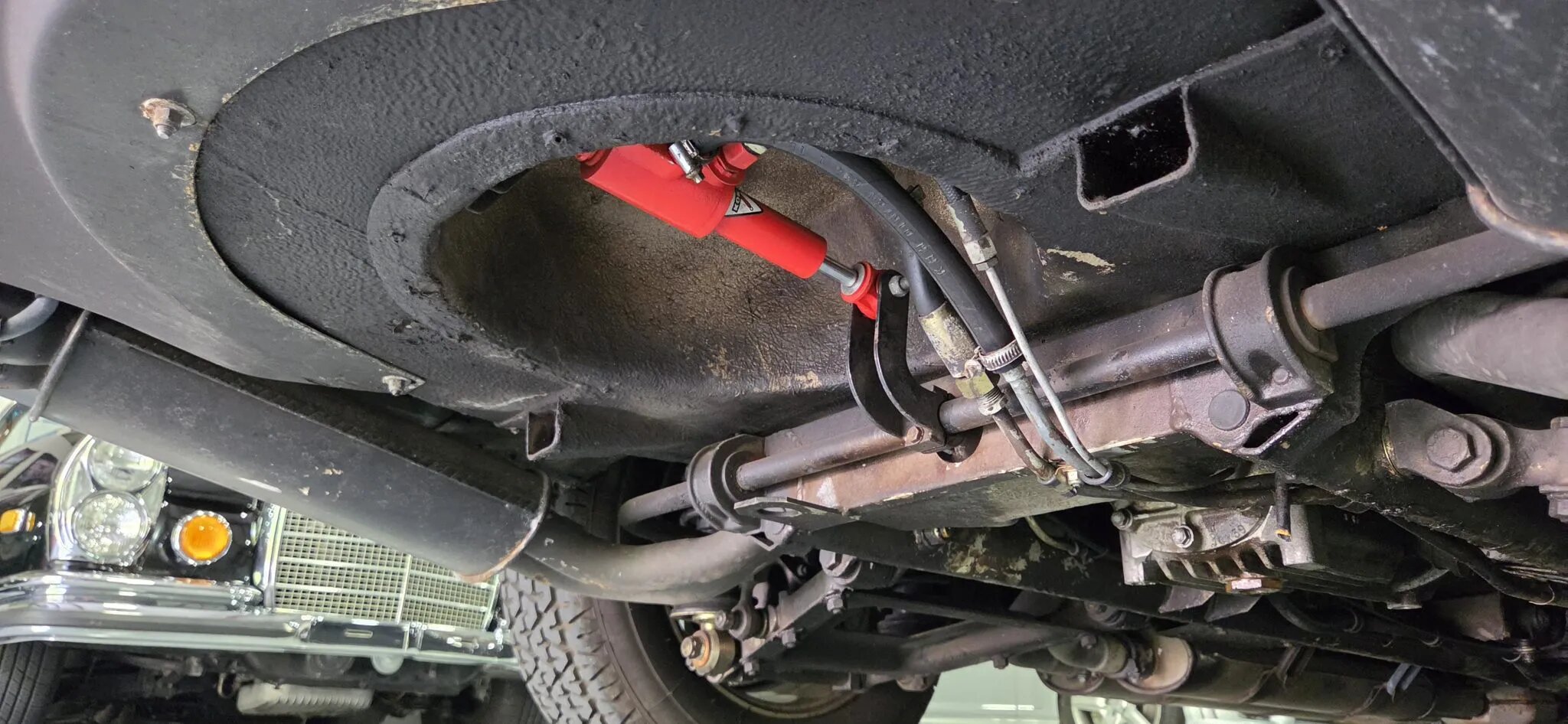
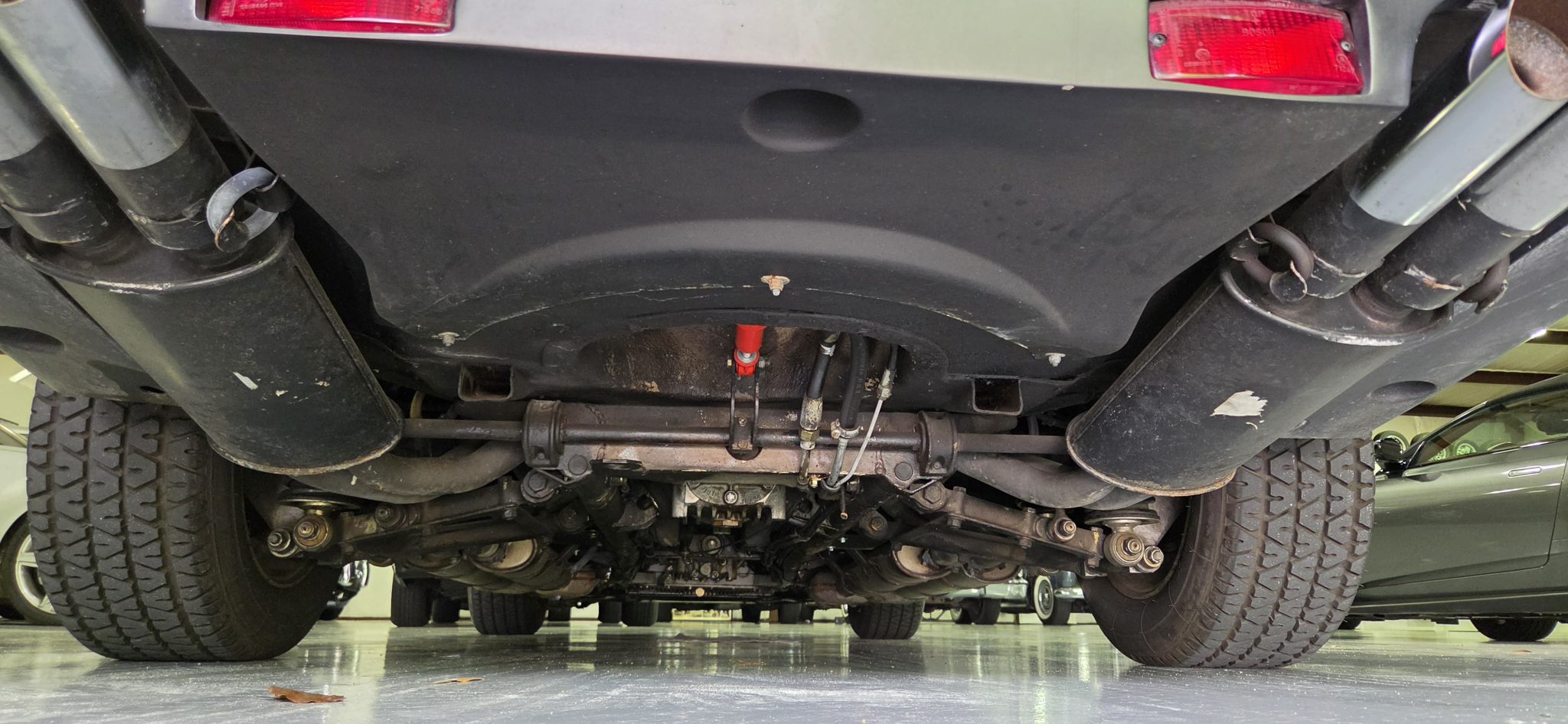
The cars were equipped with fully independent suspension all around via upper and lower “A” arms with coil springs and coil over shock absorbers, this complimented with anti-roll bars and a self-leveling hydraulic system to keep the car sitting level regardless of load distribution.
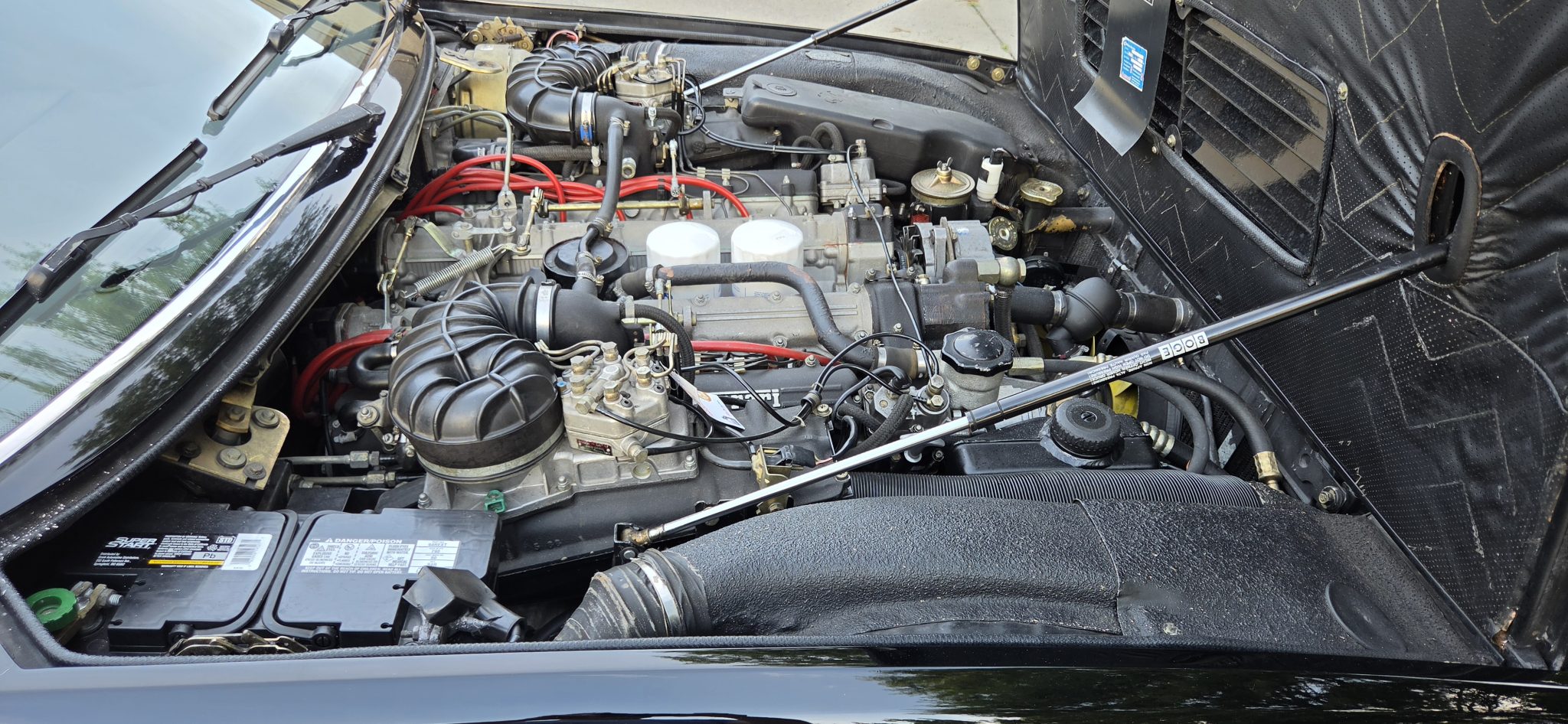
The 365 GT4 2+2 was powered by a 4.4 liter (4,390.35 cc) Colombo V12 engine breathing via carburetors and delivering 335 hp @ 6,200 rpm.
For the 400 series the engine’s stroke was increased from 71 mm to 78 mm giving it a capacity of 4.8 liters (4,823.16 cc) with power remaining the same at 335 hp.
Following on from the carburetor 400 GT came the fuel injected 400 GTi which was fitted with Bosch Jetronic fuel injection. This resulted in a slight drop in power to 306-311 hp @ 6,500 rpm.
At this model Ferrari began offering an automatic transmission version, the 400 Automatic i, which was Ferrari’s first car offered with an automatic transmission.
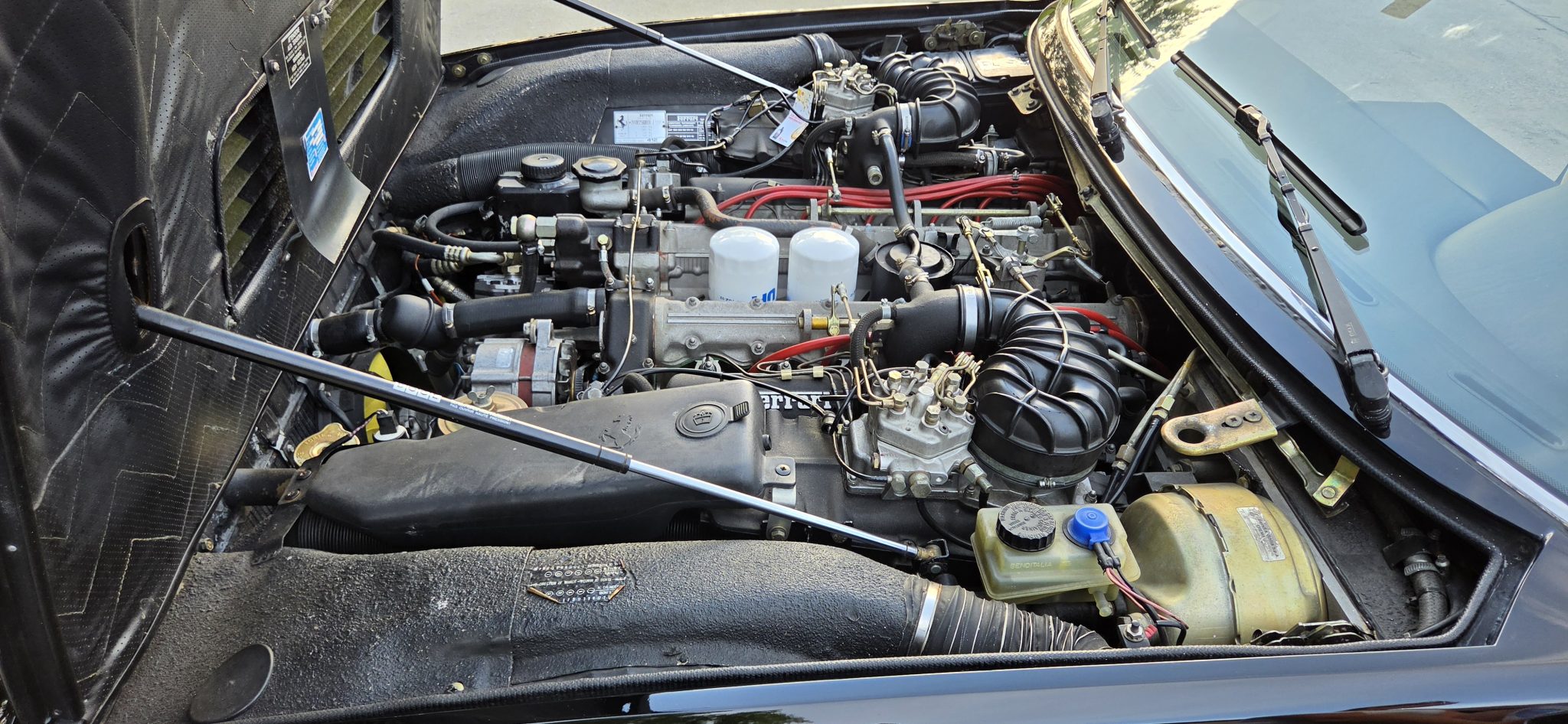
The crowning glory of this series came in 1985 as the 412. This final model saw the engine capacity increased again to 4.9 liters (4,943.03 cc): this being accomplished by increasing the bore size from 81 mm to 82 mm. This engine was fuel injected and brought the power back up to the 335 hp of the 365 GT4 2+2, but at a lower 6,000 rpm.
The 412 was offered with either 5-speed manual or automatic transmissions. In the interest of ensuring as close as possible 50/50 weight distribution front to rear Ferrari had used a transmission transaxle to drive the rear wheels.
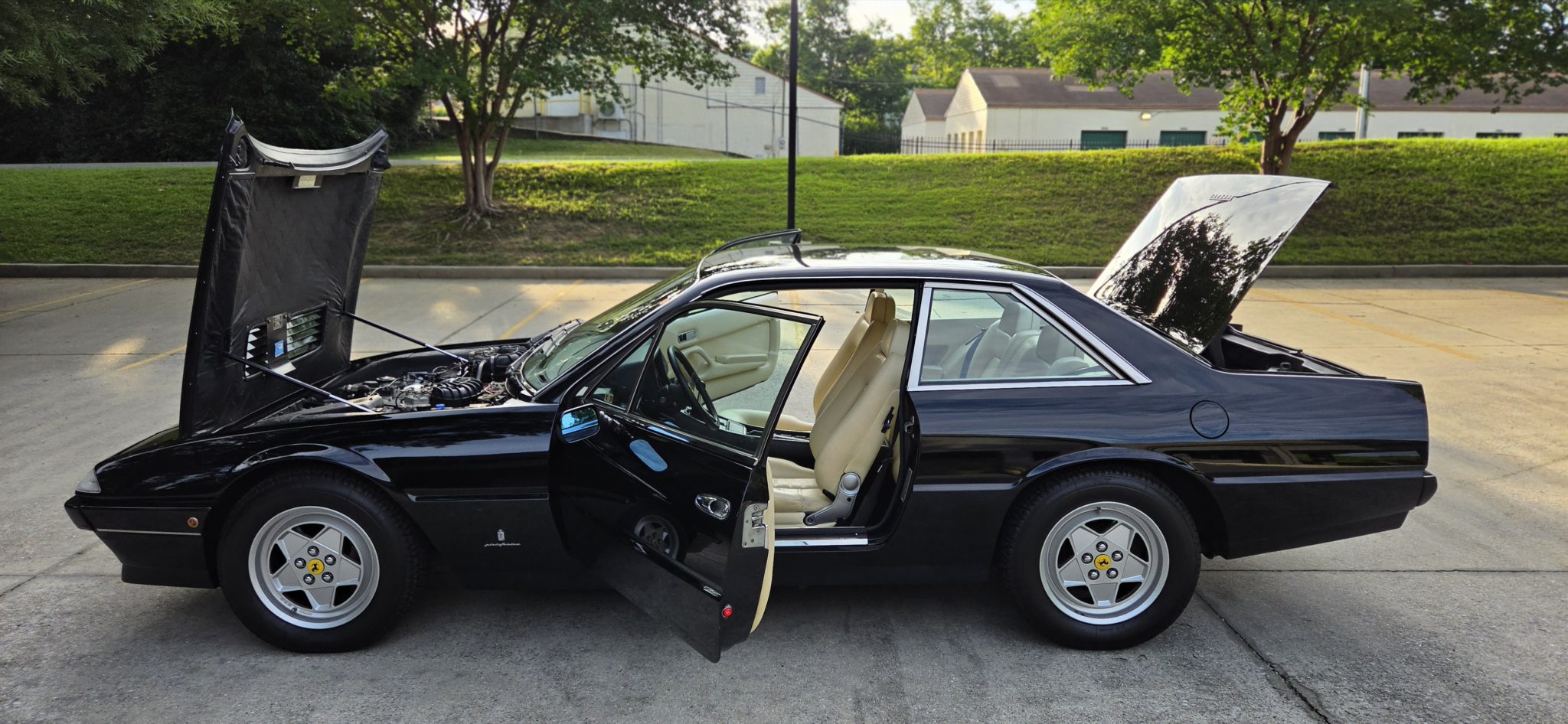
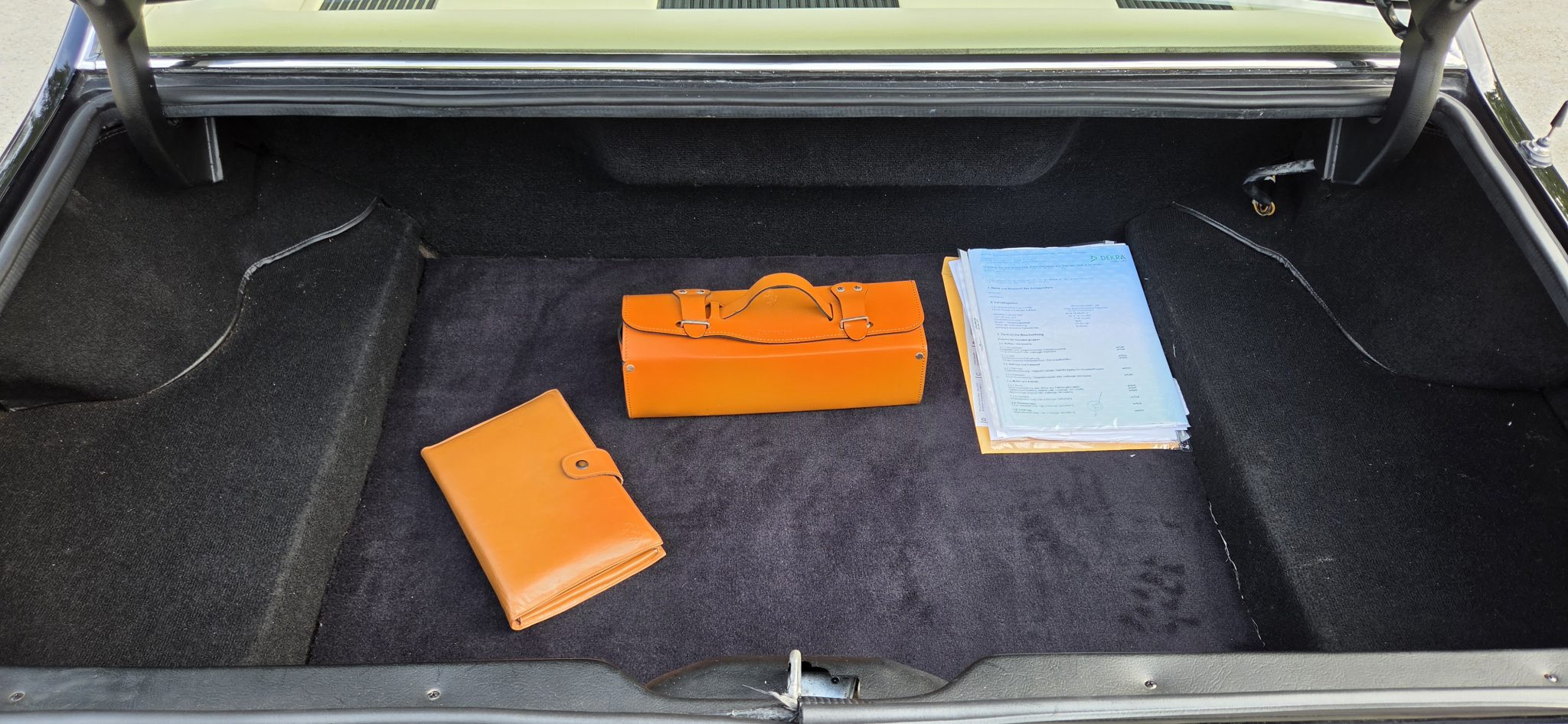
The 412 featured other improvements, of note being the offering of Bosch ABS, which was a first for Ferrari. The bodywork was altered by the raising of the rear deck in order to increase the luggage space. The bumpers became body color, side window trim was changed from chrome to black, and the car’s wheels were of a new flat style, and fitted with Michelin TRX tires.
These Ferrari models were never intended for the United States market. Ferrari had evaluated the regulations both for vehicle standards and highway speed limits, and decided that the United States would not be suitable for a luxurious performance car such as this. Some cars were independently imported to the United States, but the design remains uncompromisingly European.
A Ferrari 412 GT 5-speed Manual for Sale
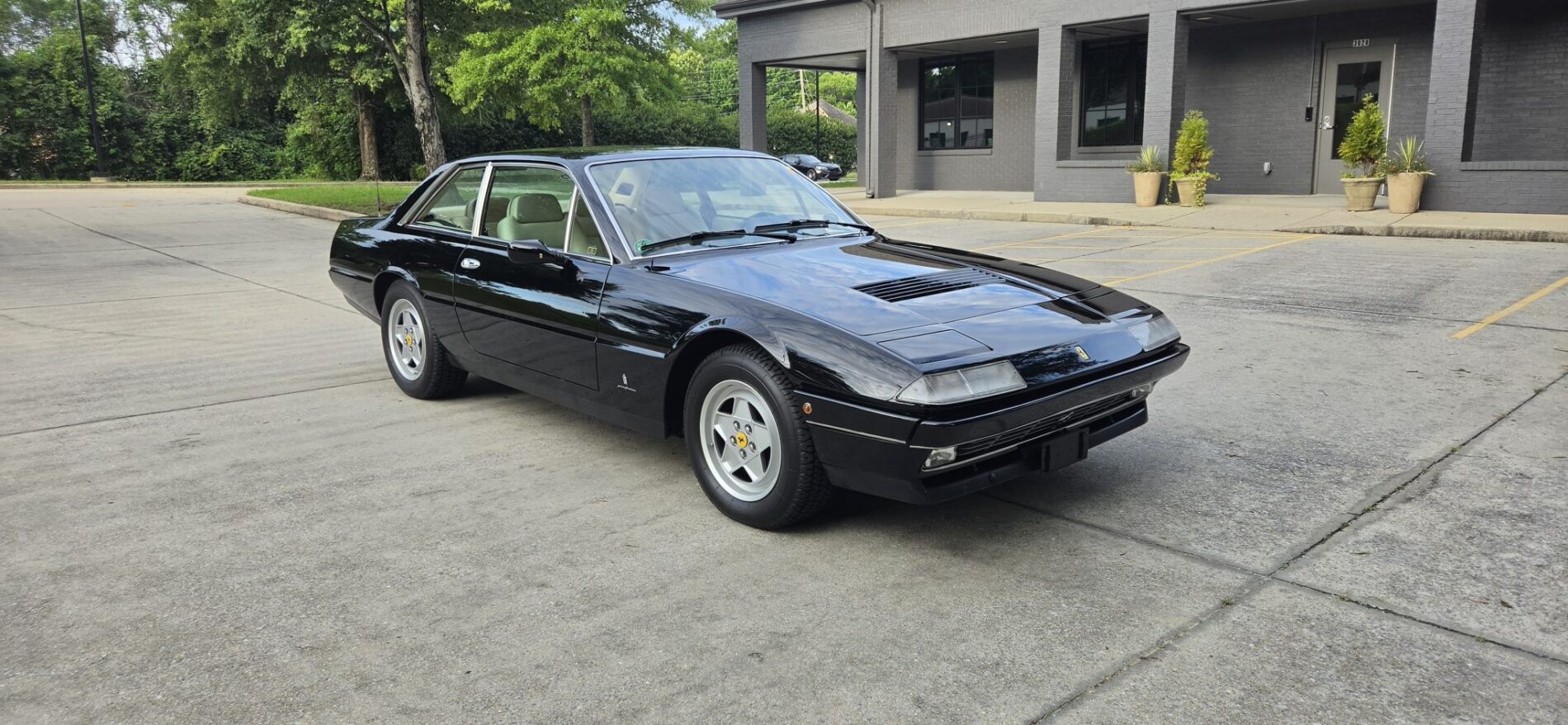
At time of publication there is a Ferrari 412 GT fitted with the 5-speed manual transmission and limited slip differential for sale on Bring a Trailer.
You will find the sale page for this car if you click here.
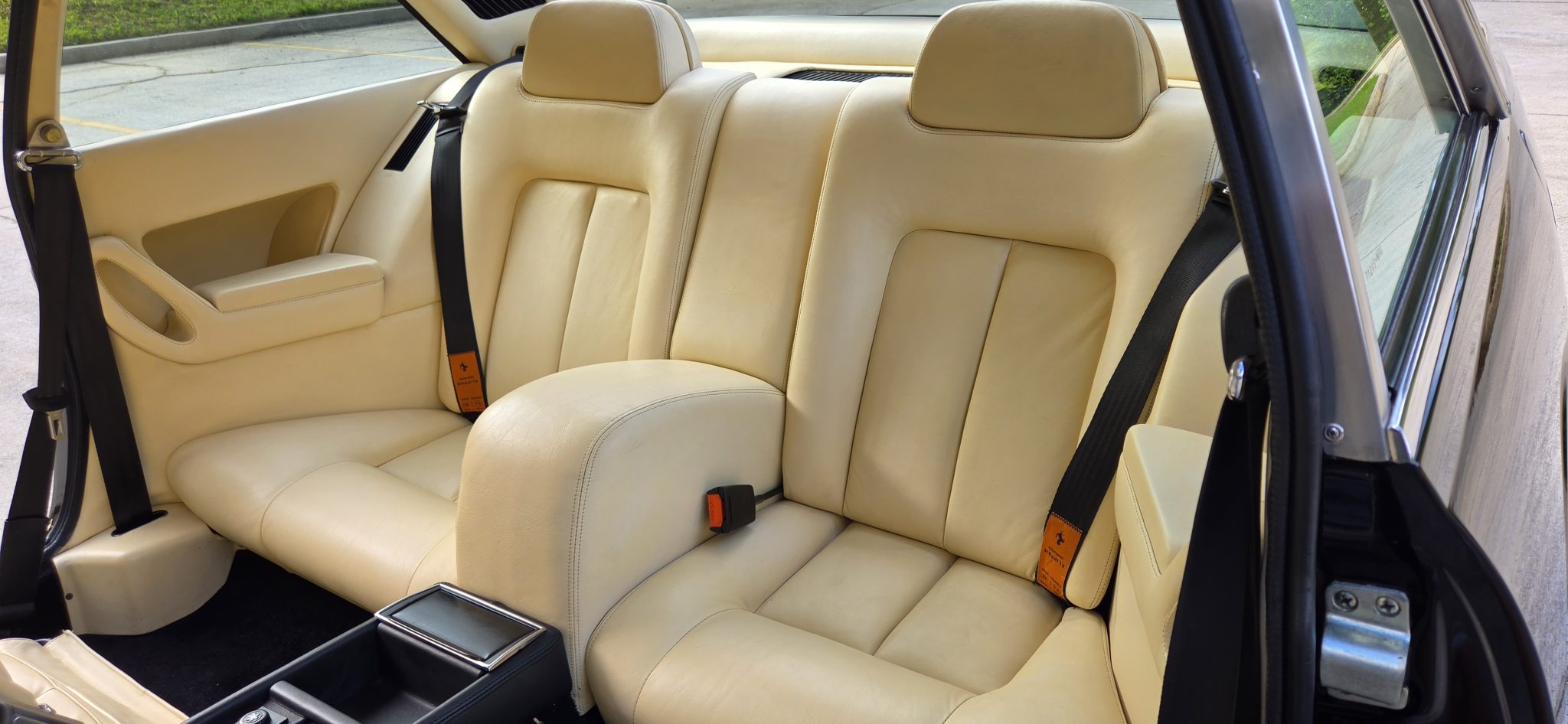
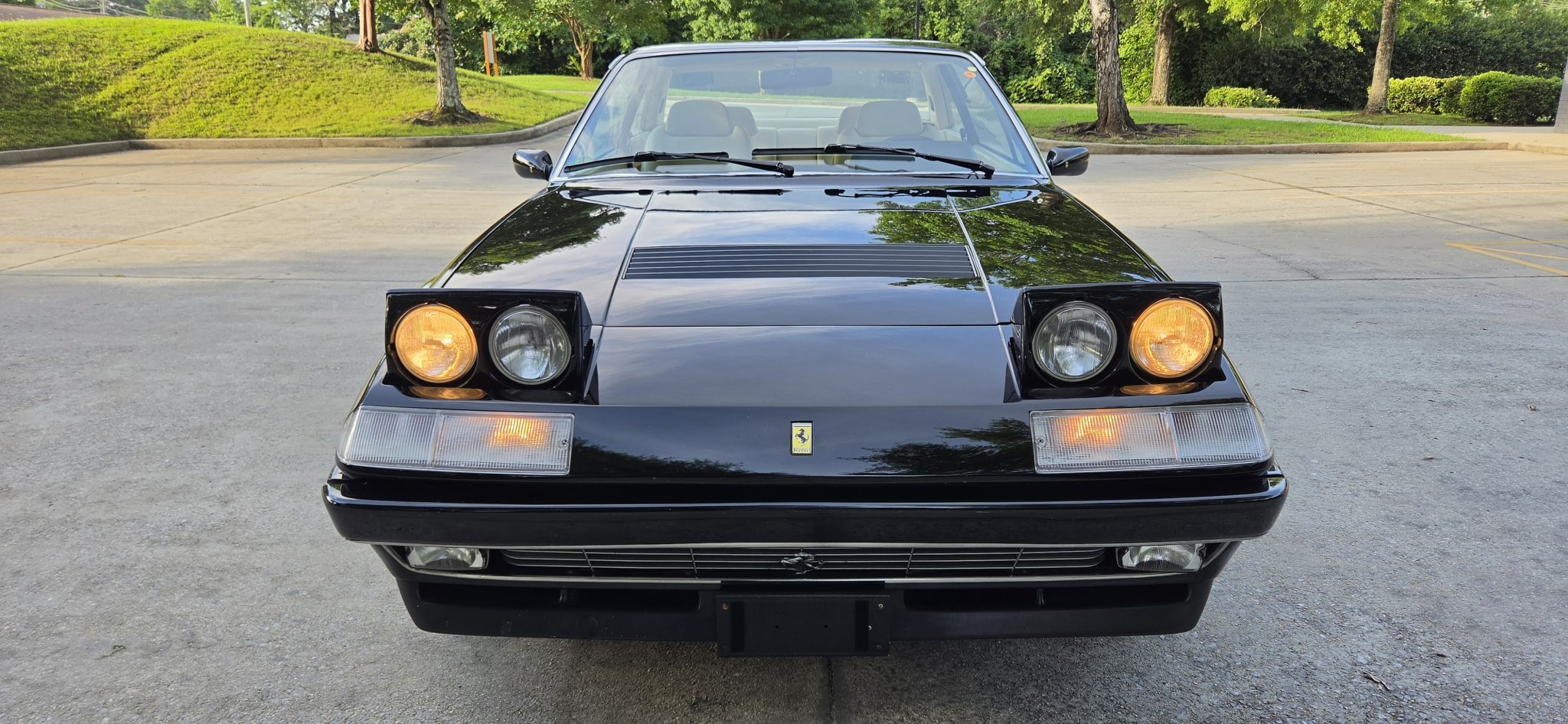
The car for sale is a 1987 model and is painted black with cream leather trim. It is fitted with anti-lock disc brakes all around and features pop-up quad headlights, fog lights, and hood louvers, and four round tail lights.
Bodywork has Pininfarina badging and the engine exhausts via quad outlets.
Mileage is listed as showing 67,000 kilometers on the odometer.
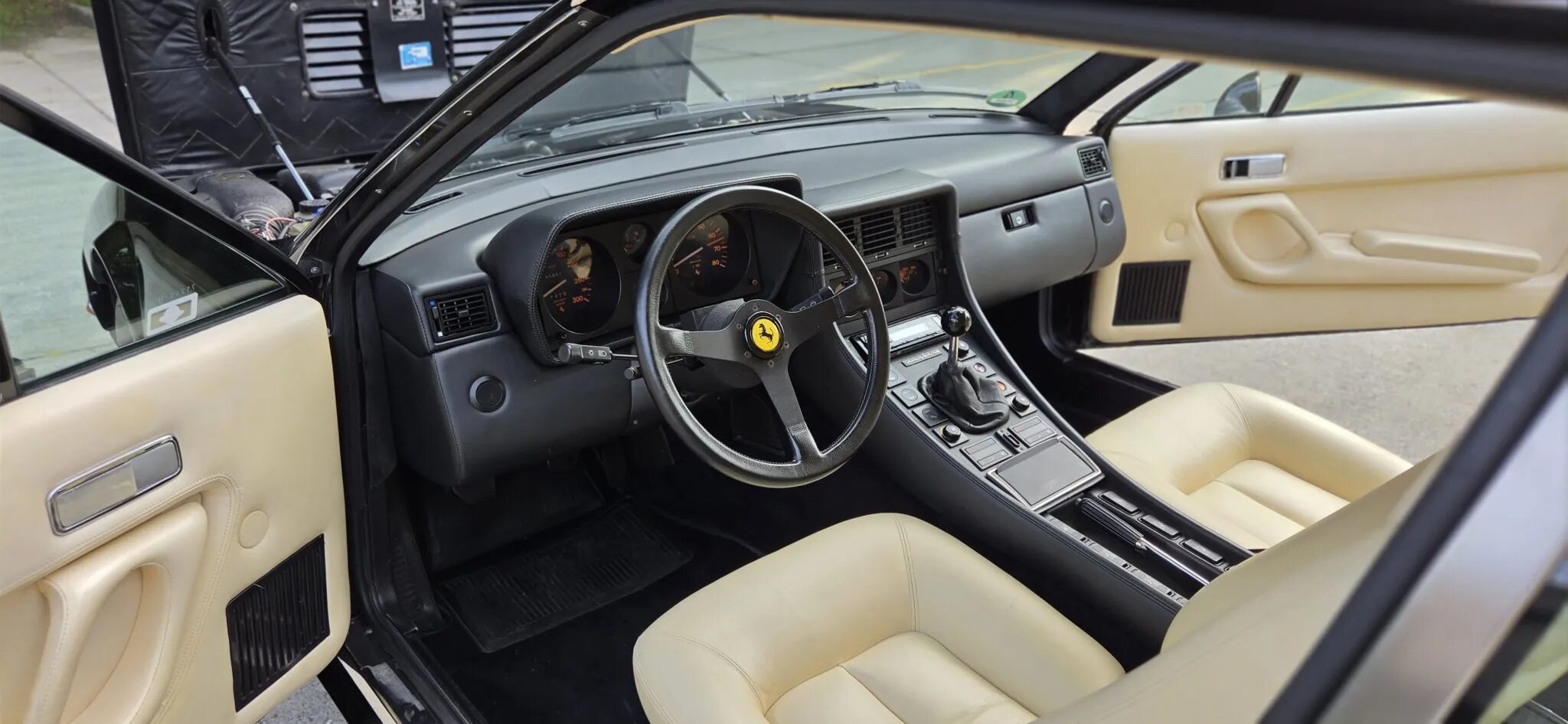
Front seats are power adjustable, there is a rear center arm rest, on the dashboard is Veglia Borletti instrumentation including an 8k-rpm tachometer accompanied by a 300-km/hr speedometer and gauges for oil pressure and coolant temperature. A quartz clock and gauges for fuel level and oil temperature are mounted in the center. Also fitted is a Kenwood stereo, electric windows, and air conditioning.
The Ferrari 412 is one of the quality car models that was made to be a spirited luxurious point to point car that provided both driver and passengers a comfortable and satisfying experience. It is a driver’s car par excellence.
Picture Credits: All pictures courtesy Bring a Trailer.

Jon Branch is the founder and senior editor of Revivaler and has written a significant number of articles for various publications including official Buying Guides for eBay, classic car articles for Hagerty, magazine articles for both the Australian Shooters Journal and the Australian Shooter, and he’s a long time contributor to Silodrome.
Jon has done radio, television, magazine and newspaper interviews on various issues, and has traveled extensively, having lived in Britain, Australia, China and Hong Kong. His travels have taken him to Indonesia, Israel, Italy, Japan and a number of other countries. He has studied the Japanese sword arts and has a long history of involvement in the shooting sports, which has included authoring submissions to government on various firearms related issues and assisting in the design and establishment of shooting ranges.