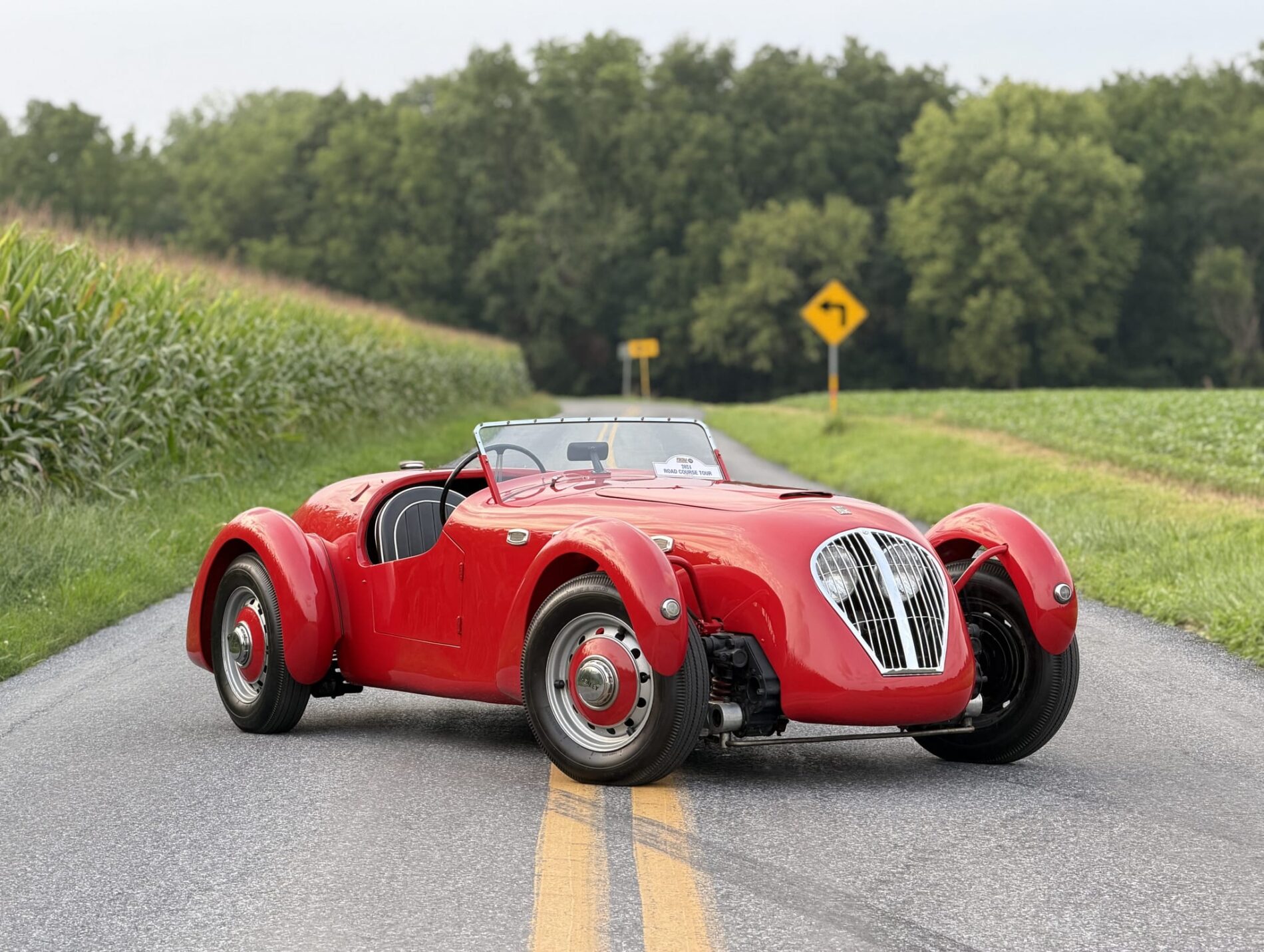
The Healey Silverstone was created in 1949 as the sports/racing model among the Warwick Healeys. These cars attained competition success and were priced to be affordable for a motor-sport amateurs.
Fast Facts
- The Healey Silverstone was a sports/racing car that was created so that its owner could drive it to the race-track, compete in it, and then drive home.
- The Silverstone was one of a family of cars known as the Warwick Healeys, because they were made in Donald Healey’s Warwick workshop.
- The Silverstone was made in two model series. The first was the D-type made from 1949-1950, followed by the E-type from 1950 until end of production.
- The E-type was made with a slightly wider chassis and with the engine set further forward to accommodate taller drivers and passengers.
- A 1950 Healey Silverstone D-type is for sale on Bring a Trailer at time of publication.
Donald Healey’s name is most commonly associated with his most famous sports cars: the “Big Healeys” the Austin-Healey 100, 100/6 and 3000 series of cars. But his story and achievements are far more complex than this.
As a teenager Healey had studied engineering before being given an apprenticeship with the Sopwith Aviation Company – makers of the famous World War I aircraft the Sopwith Camel. And as the First World War began in 1914 he volunteered for the Royal Flying Corps at the age of sixteen and saw active service.
At the war’s end Healey did studies in automotive engineering and opened his own garage and car hire business in 1920. But this was not to be enough for him, he was bitten by the speed bug like so many young men and he was able to use his resources to enter the exciting and expensive world of motor sport.
His motor sport career really took off in 1931 when he won the prestigious Monte Carlo Rally and capped that off by achieving second place in 1932. He was initially recruited to British car maker Riley and sold his garage business to stake everything on that opportunity. But then he was able to move to Triumph taking the role of “experimental manager”, which sounds like a young man’s dream job.
1939 saw Britain enter the Second World War and during the war years Donald Healey dreamed of starting his own car company: and in 1946 at the war’s end he turned that wartime dream into reality in an aircraft hanger in Warwick.
He launched the Donald Healey Motor Company in collaboration with engineer Achille Sampietro and industrial designer Ben Bowden. Their first car was the Healey Elliot, what the British call a “saloon” and which Americans call a “sedan”. This car was based on a chassis designed by Sampietro with bodywork designed by Bowden and made by Elliot.
While the Healey Elliot was a sedan it was by no means sedate, it became the world’s fastest closed car at the time and proved to be capable of 110 mph.
This led to a series of cars commonly called the “Warwick Healeys” with the next being an open top model based on the same chassis and engine called the Healey Westland, with the bodywork being made by Westland.
Donald Healey believed that there would be a good market for a car that could be driven to the racetrack or motor sport event, raced, and then driven home. Such a car needed to be a proven performer, based on the existing Warwick Healey chassis and mechanicals, and priced within reach for people who aspired to try their hand at motor sport. This new model would become the Healey Silverstone, named after Britain’s Silverstone race track, and made to be a racing car you could drive every day on the road.
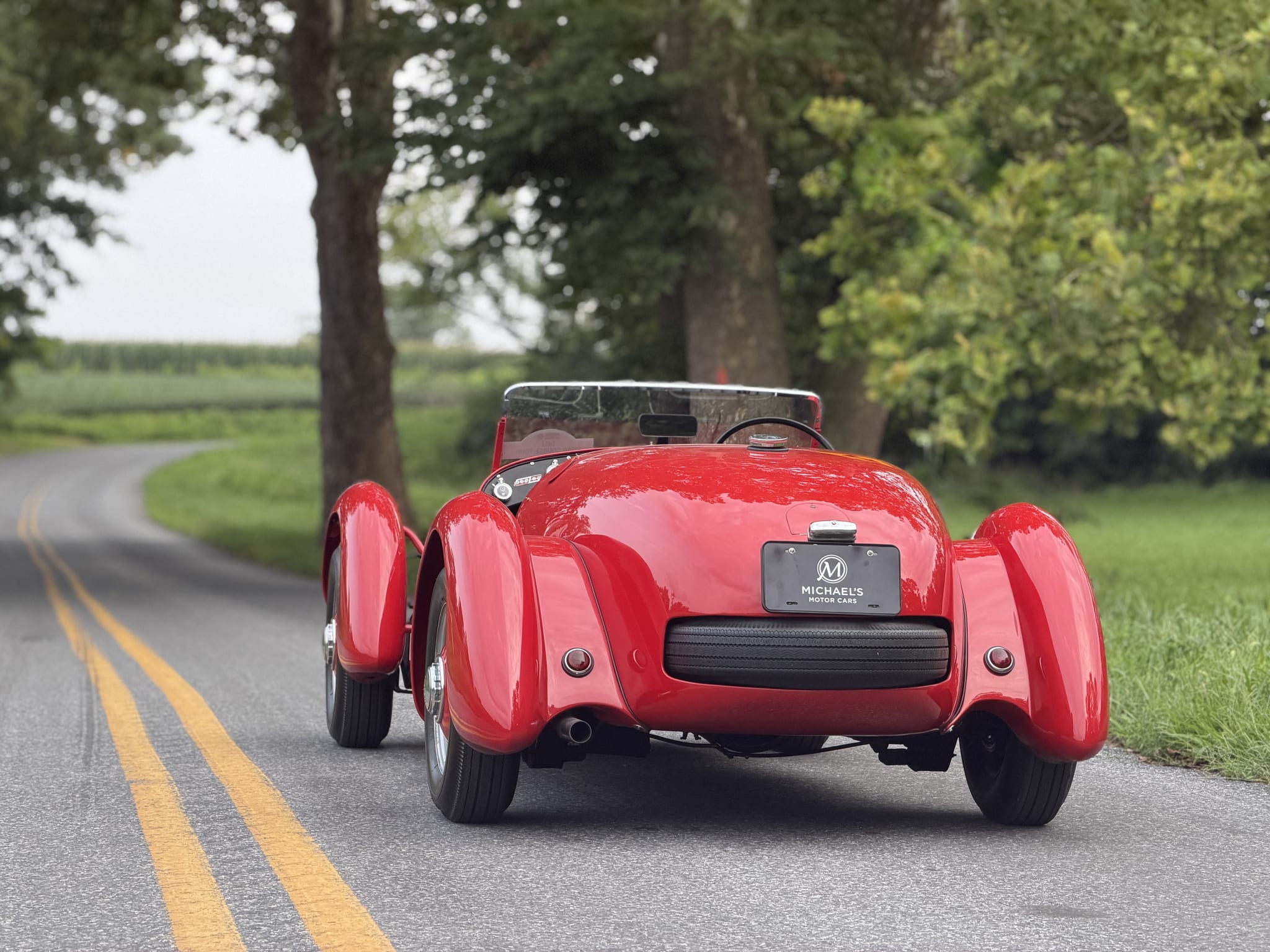
The new roadster bodywork for the Healey Silverstone was designed by Len Hodges who gave the car rounded aerodynamic curves and removable bicycle style mudguards/fenders.
The chassis was modified to shorten it by removal of its rear extensions, and the Silverstone was made in two versions: the D-type which was the original design, and the later E-type. The D-type had the engine and gearbox located eight inches rearward so it was behind the front axle line for optimal weight distribution. The D-type of 1949 was followed by the E-type of 1950 which was made a bit wider, and which had the engine and gearbox moved forward to provided more leg room for tall customers.
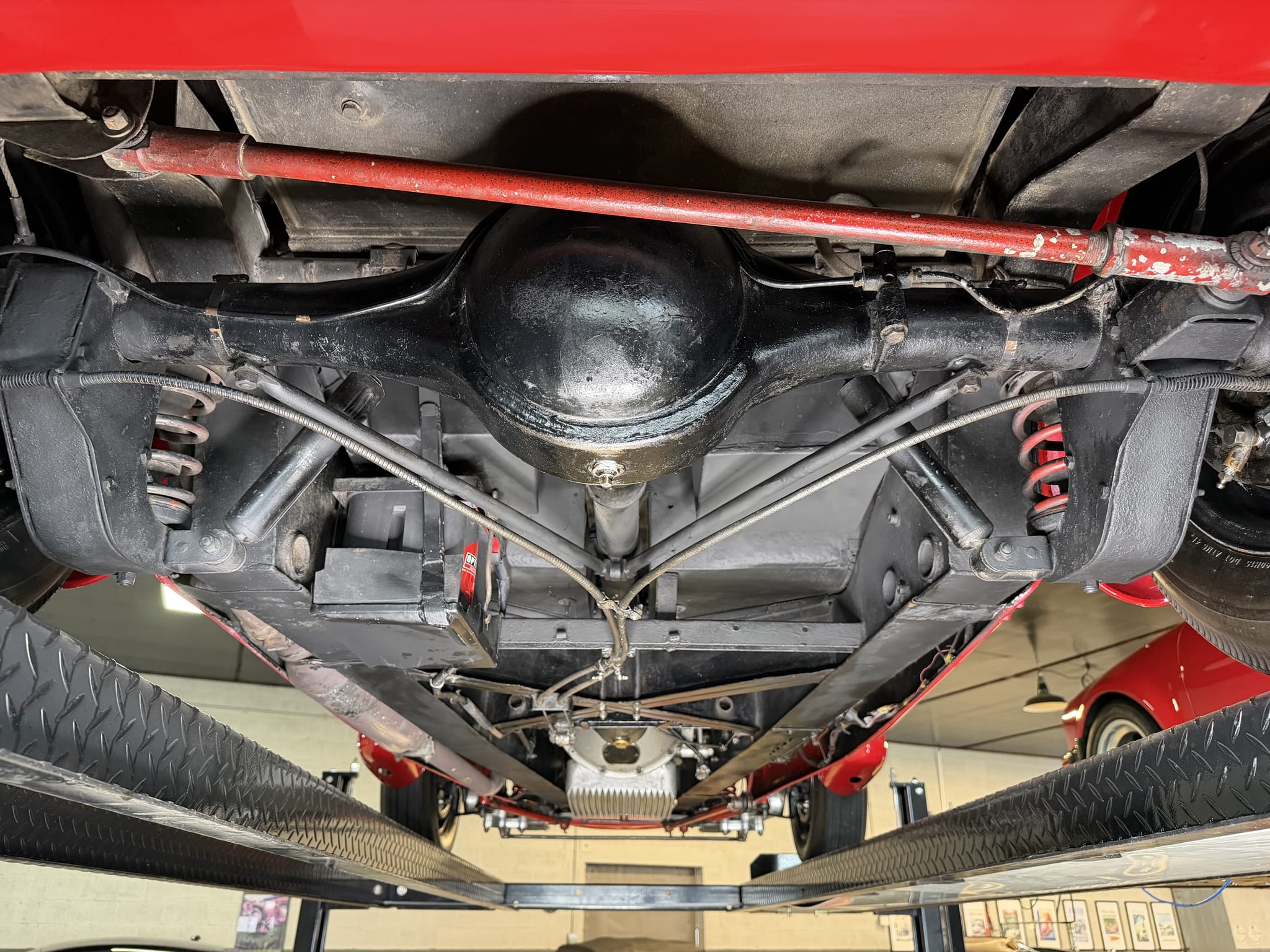
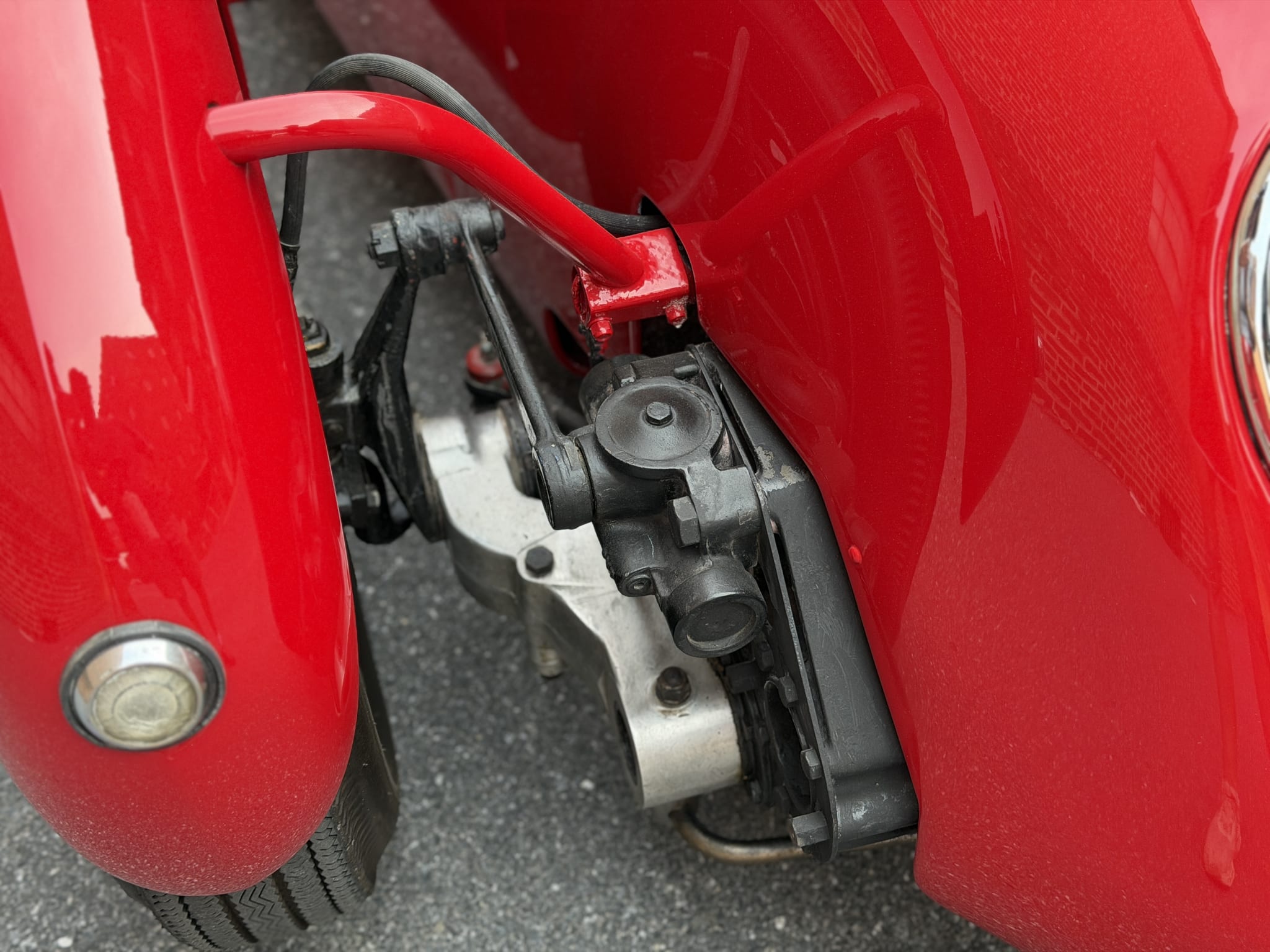
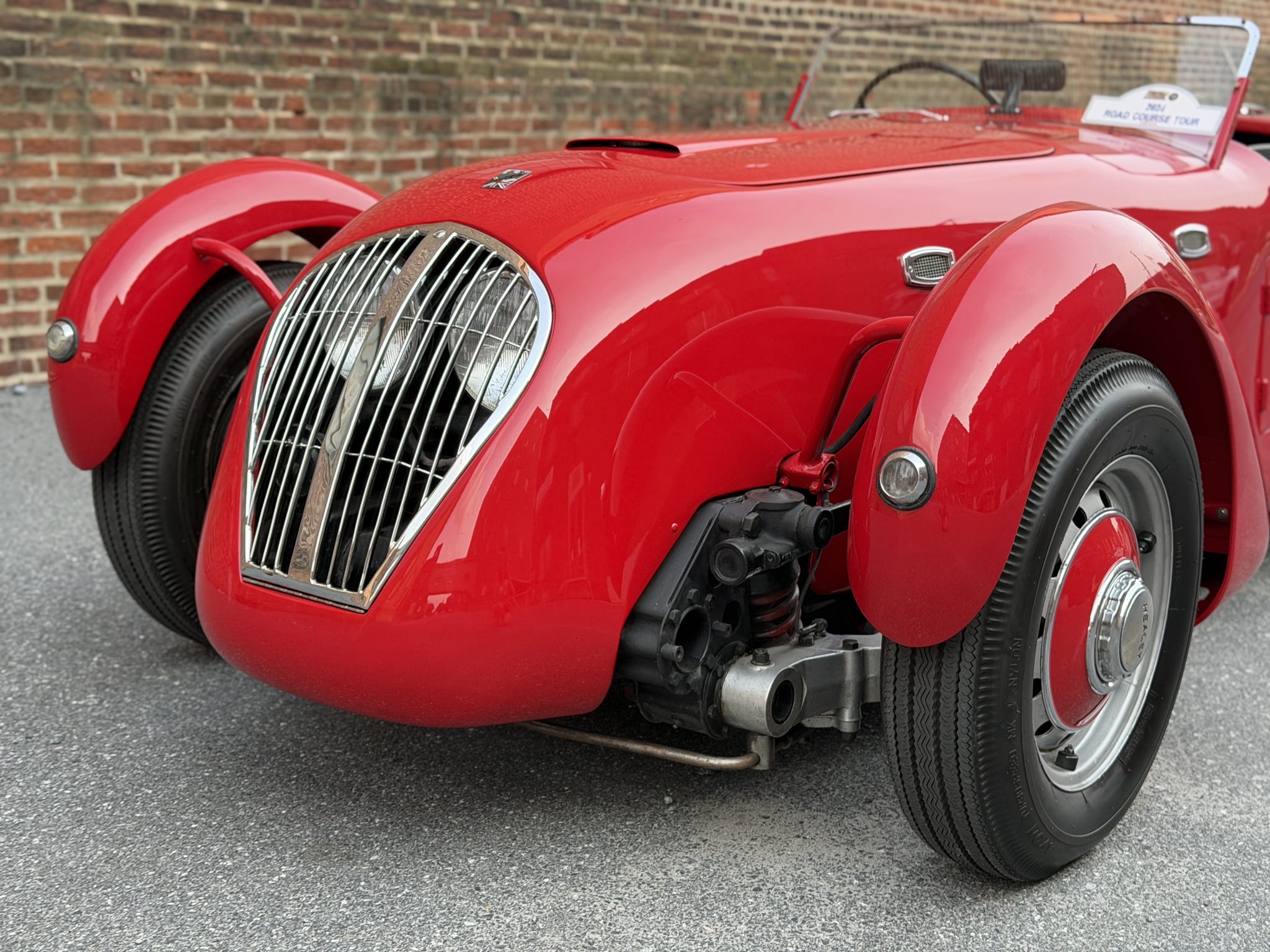
The front suspension for the Silverstone used alloy trailing arms with coil springs and lever-arm shock absorbers and anti-roll bar. At the rear were a torque tube leading to a live axle with radius rods, a Panhard rod, coil springs and telescopic shock absorbers.
Brakes were drums all around. Steering was by Donald Healey’s rotating plate and rods design.
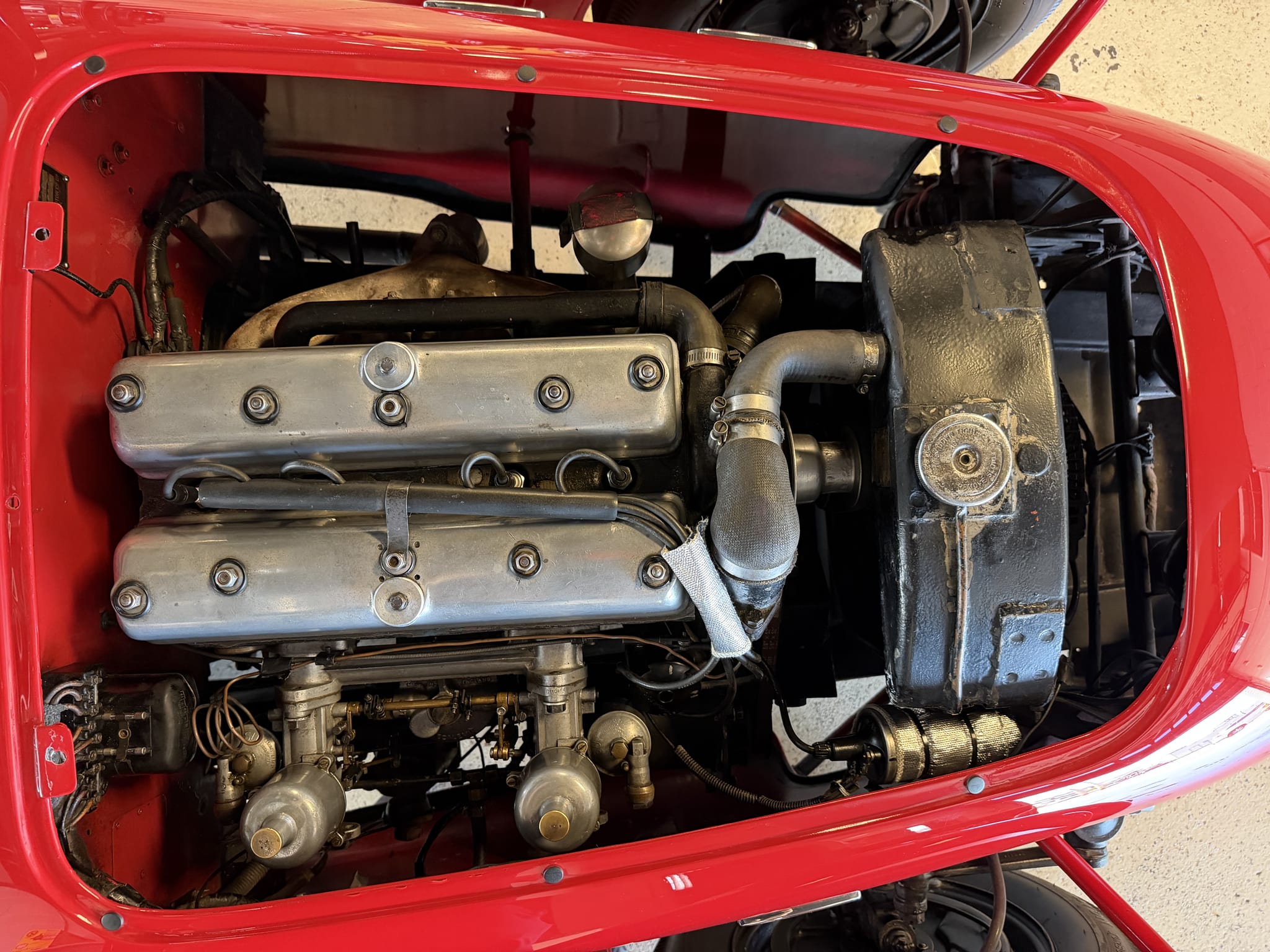
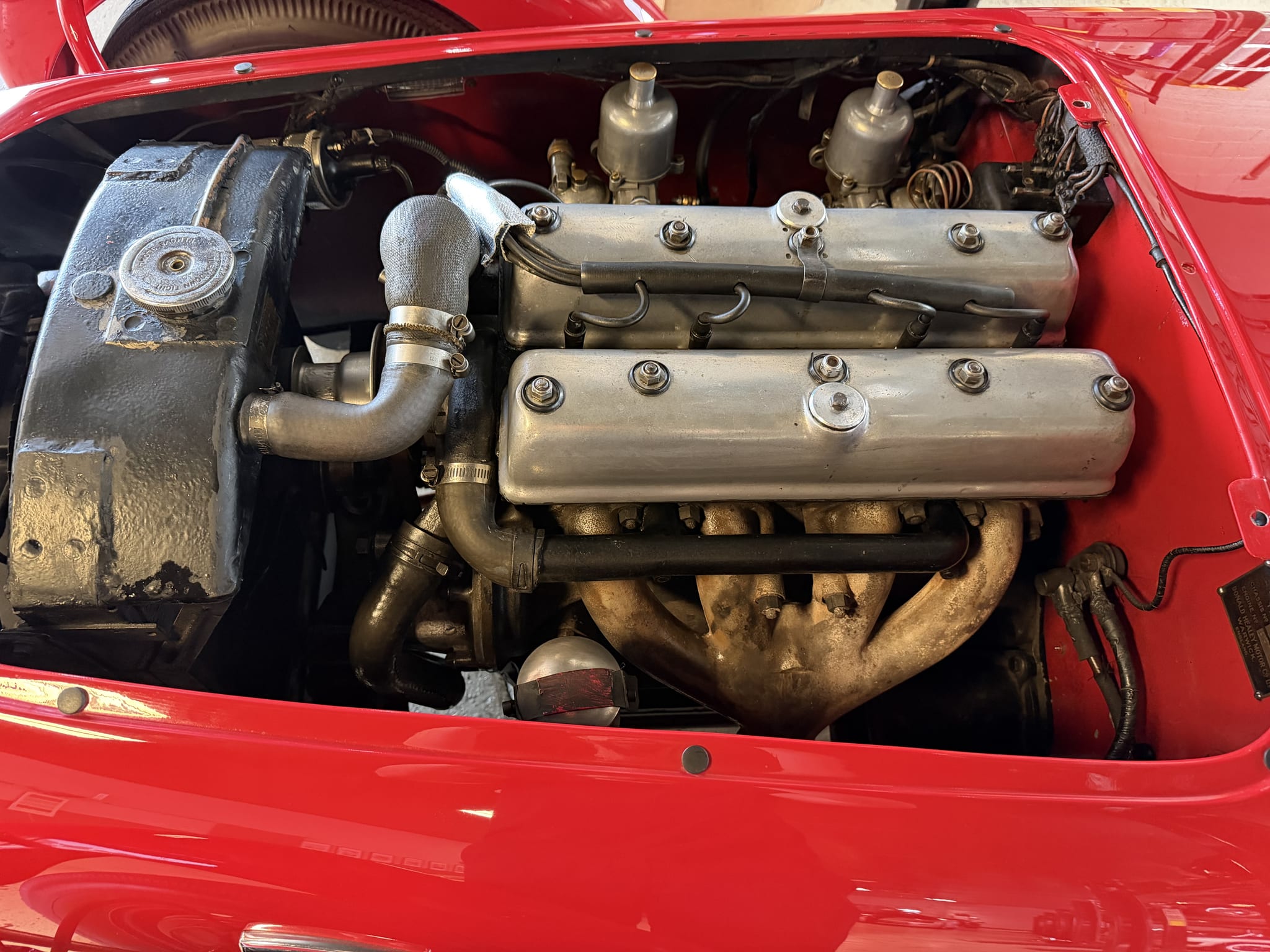
The engine was a 2.4 liter (2,443 cc/149.1 cu. in.) Riley featuring twin camshafts which are mounted high in the engine block. This design provides short pushrods to minimize reciprocal mass. The engine had hemispherical combustion chambers.
The engine breathed via a Donald Healey designed manifold with twin SU H4 side-draft carburetors. Thus equipped the engine delivered 104 hp.
For those seeking a tad more power Healey offered a factory fitted Wade Ventor supercharger as an option.
Conventionally aspirated cars had the headlights mounted behind the front grill while supercharged cars had the headlights mounted externally on either side.
The gearbox was a four speed Riley unit.
When the Healey Silverstone D-type was introduced Healey kept the price below £1,000 before purchase tax. This helped ensure the car would become a sales success.
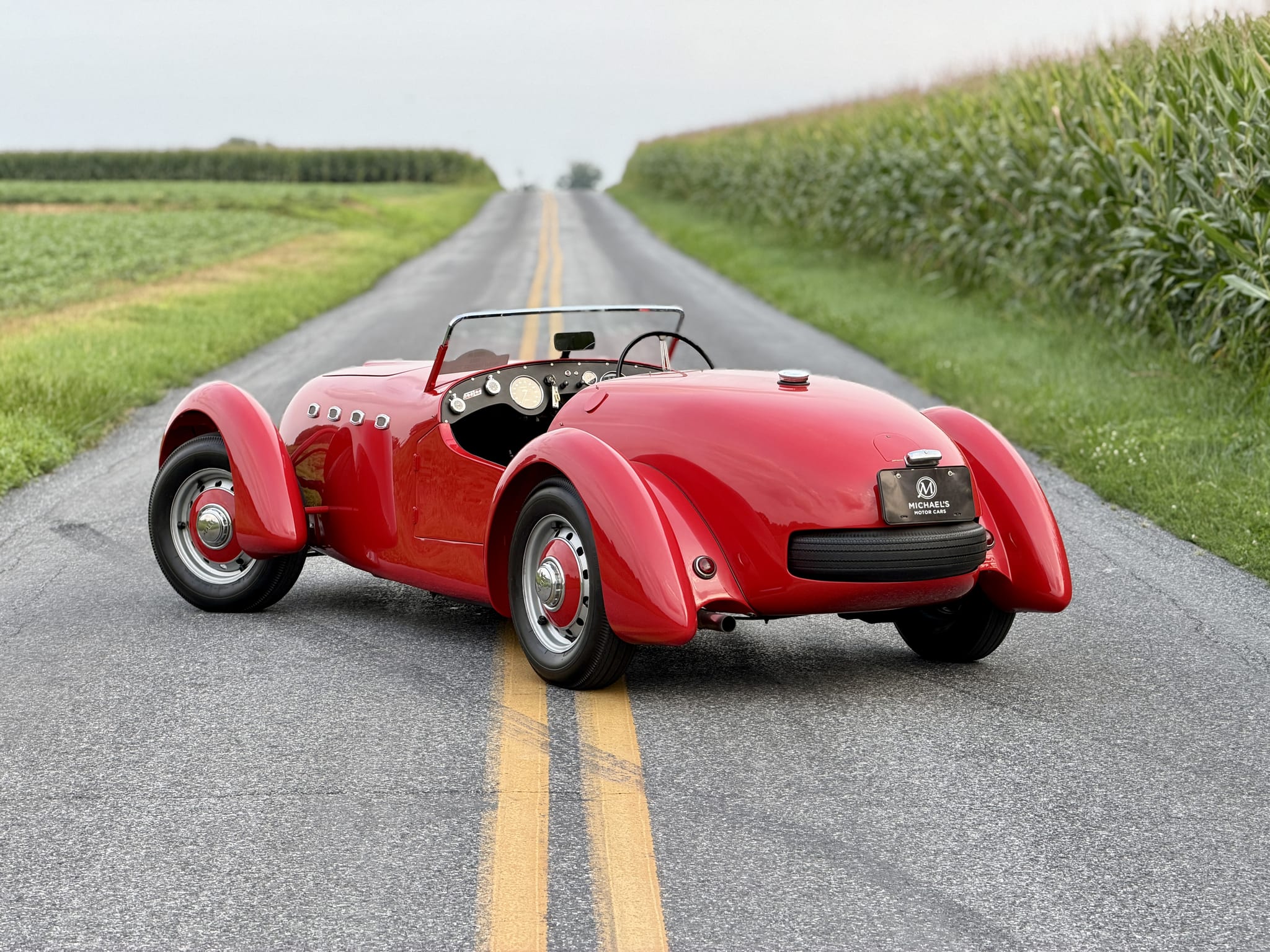
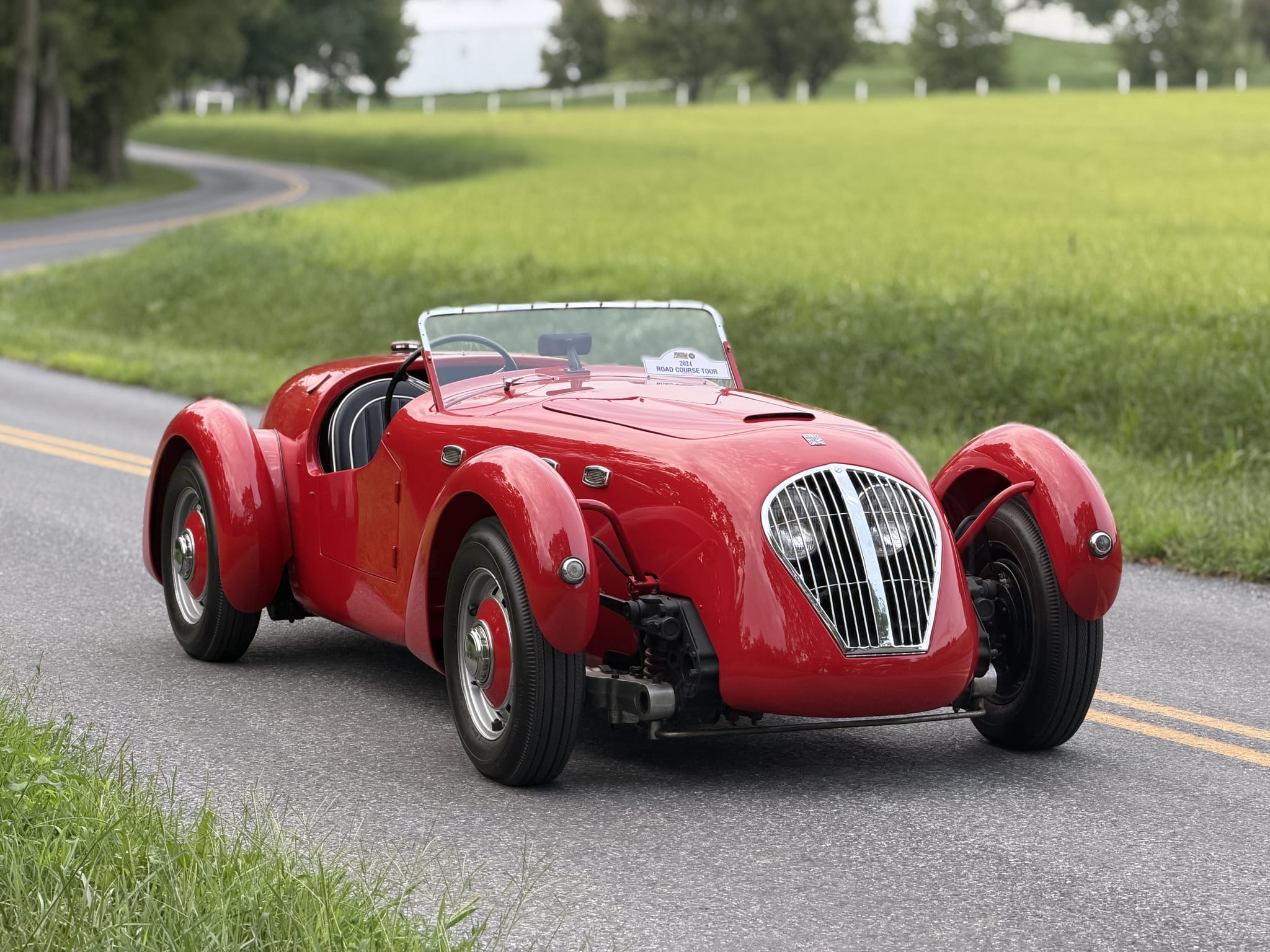
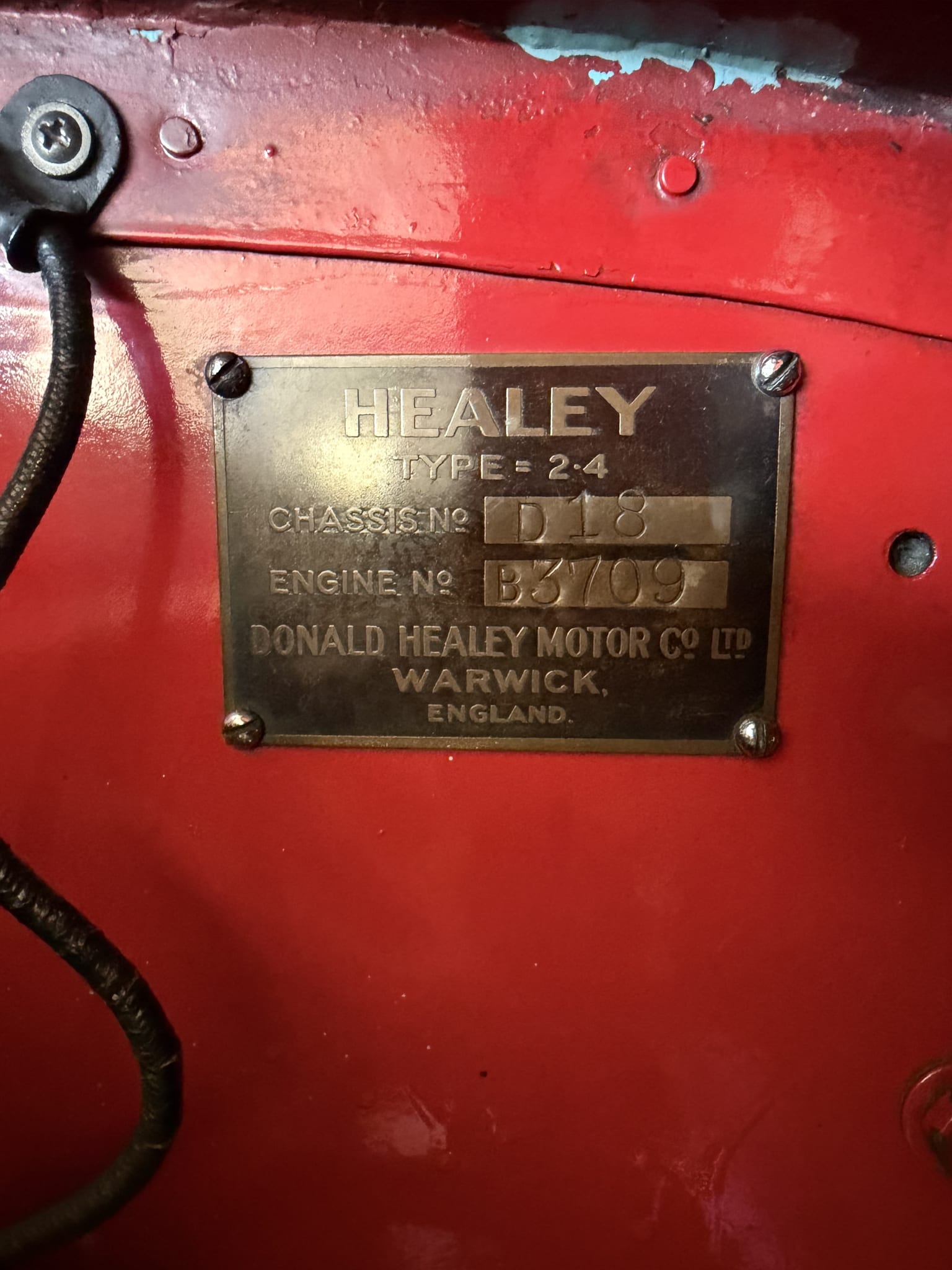
An example of a Healey Silverstone D-type is for sale on Bring a Trailer at time of publication. The sale car has chassis number D-18.
The summary of details for this car are as follows:
- Chassis: D18
- Body: B3709
- One of a Claimed 105 Produced
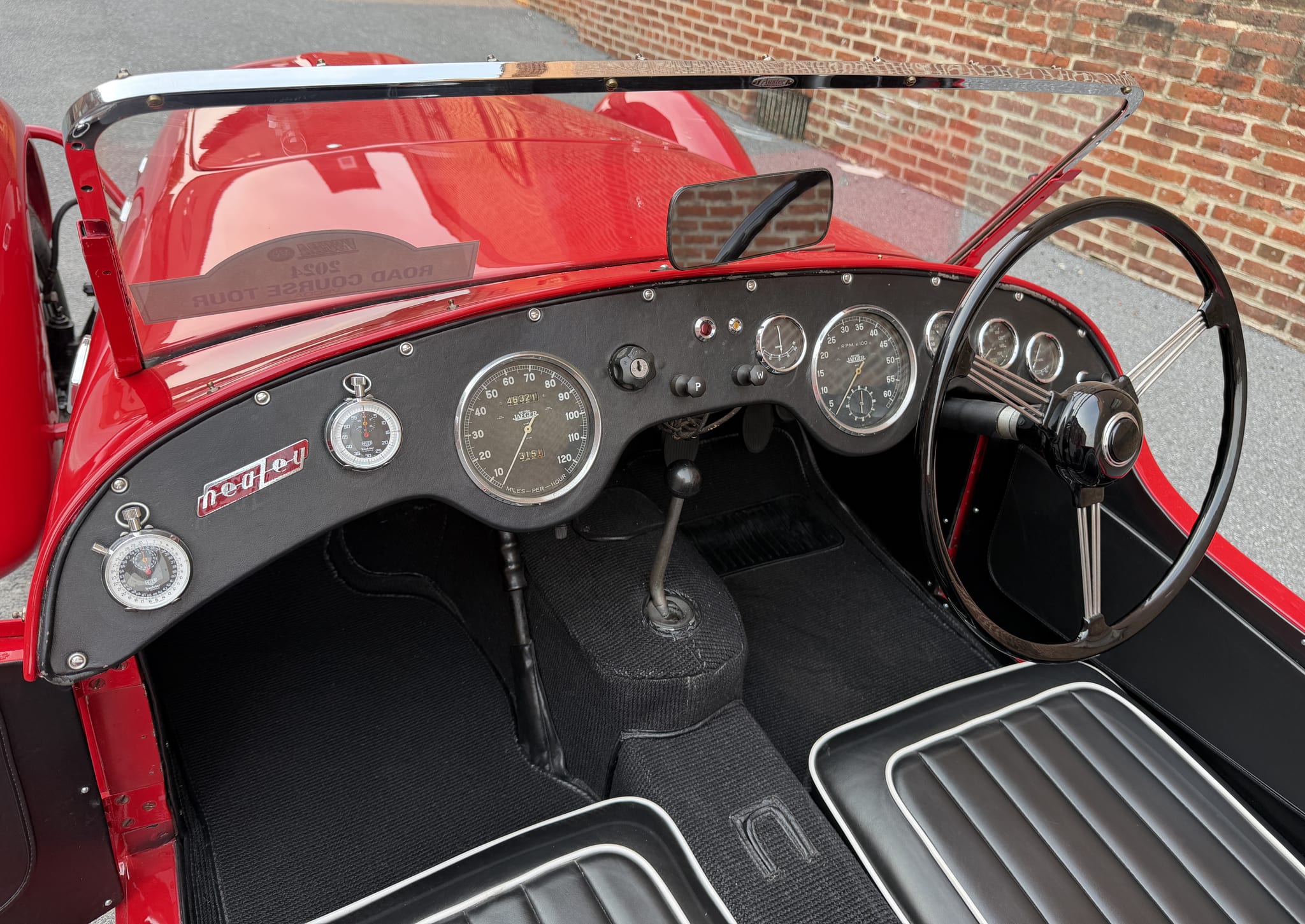
- 46k Miles Shown
- 2,443cc Riley Twin-Cam Inline-Four
- Four-Speed Manual Transmission
- Alloy Bodywork
- Red Paint
- Retractable Windscreen
- 15″ Wheels with 5.9″ Avon tires
- Black Leather Upholstery
- Jaeger & Smiths Instrumentation
- TAG Heuer Stopwatches
- Historical Documents & Photos
This car was repainted in 2024 and had a bonnet/hood scoop added at some point in its history. Hood scoops were a feature of the E-type Healey Silverstones.
Also in 2024 the seats were re-upholstered in Relicate black leather with white piping.
You will find the sale car with more details if you click here.
This is a car for someone who is looking for a truly authentic 1950 British sports car driving experience.
Picture Credits: All pictures courtesy Bring a Trailer.
Jon Branch is the founder and senior editor of Revivaler and has written a significant number of articles for various publications including official Buying Guides for eBay, classic car articles for Hagerty, magazine articles for both the Australian Shooters Journal and the Australian Shooter, and he’s a long time contributor to Silodrome.
Jon has done radio, television, magazine and newspaper interviews on various issues, and has traveled extensively, having lived in Britain, Australia, China and Hong Kong. His travels have taken him to Indonesia, Israel, Italy, Japan and a number of other countries. He has studied the Japanese sword arts and has a long history of involvement in the shooting sports, which has included authoring submissions to government on various firearms related issues and assisting in the design and establishment of shooting ranges.