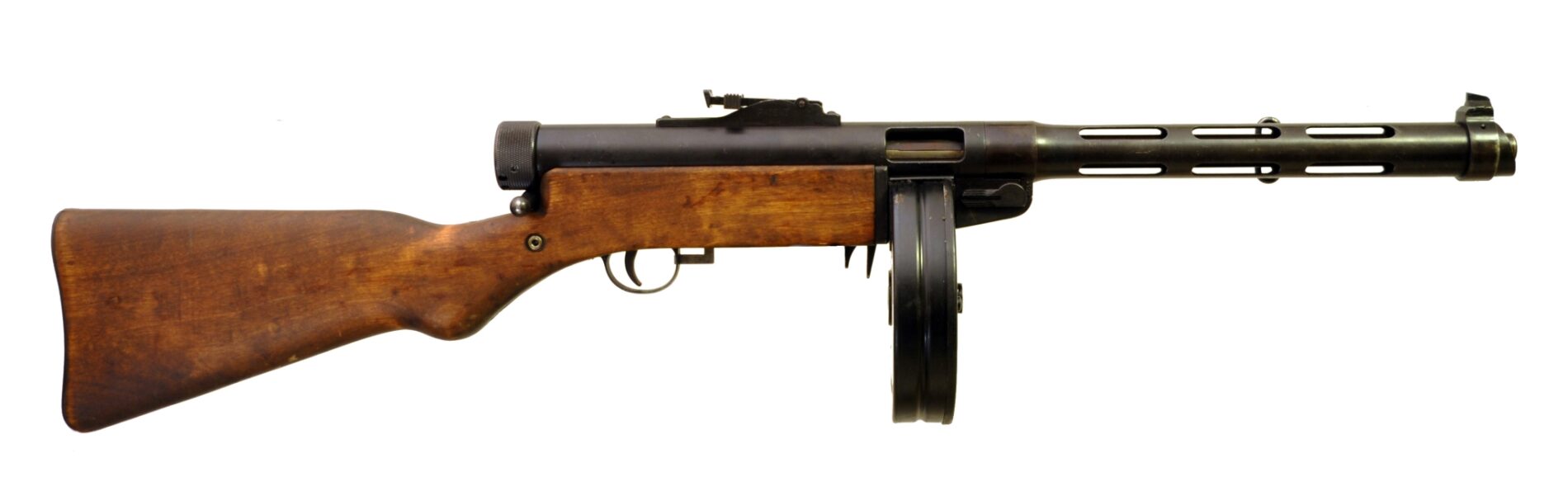
The Suomi KP/-31 proved to be one of the greatest sub-machine guns of the Second World War. These guns were used to great effect by Finnish armed forces in the Winter War and Continuation War against the Russian Soviet Union military.
Fast Facts
- Aimo Lahti was one of Finland’s most famous gun designers and the most famous of his about fifty designs was the Suomi KP/-31 sub-machine gun.
- The KP/-31 sub-machine gun was chambered for the 9mm Parabellum cartridge and with its compact dimensions and control-ability in full auto fire it proved to be an ideal weapon for the winter forest warfare that characterized the Winter War and Continuation War.
- The KP/-31 used a simple blow-back action and fired from an open bolt. Its effectiveness and reliability made it a national icon for Finland.
- American company TNW purchased parts kits of these sub-machine guns when they became available on the surplus market. They modified these kits to change these arms into semi-automatic only rifles and sold them to American enthusiasts.
- Two of these TNW rifles are for sale by Rock Island Auction at time of publication.
The Suomi KP/-31 (aka Suomi M-31) was the brainchild of Finnish arms designer Aimo Lahti, a creator of approximately fifty designs including the Lahti L-35 pistol.
Lahti created most of his designs in an environment of pressing need, because the political situation between Finland and Russia was rather volatile. Finland was under Russian control until 1917 when it gained its independence as Russia underwent two revolutions that year: The February Revolution which ended the reign of the Tsar, and the October Revolution in which the radical communist bolsheviks under Vladimir Lenin took power.
The result for Finland was that the effects of these events also manifested themselves in Finland in the form of a civil war between the communist Finnish Red Guard and the anti-communist Whites, which resulted in the defeat of the communists and their escape to Russia.
The flow-on effects of these events would re-emerge in Russia, under the name of the Soviet Union, attempting to force Finland back into Russian control in the Winter War of 1939-1940, and the Continuation War of 1941-1944.
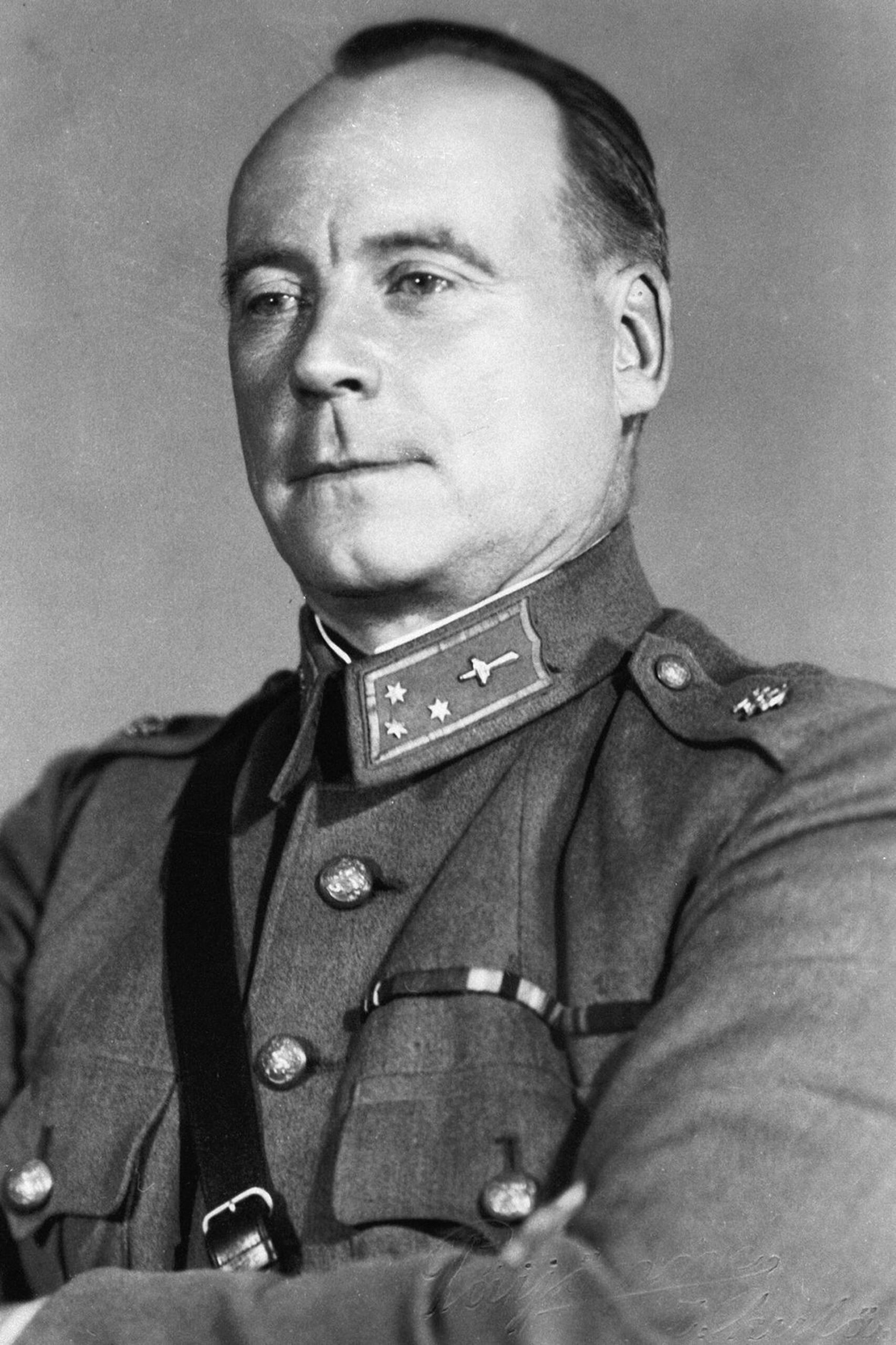
Aimo Lahti’s contribution to his nation’s victory against the numerically much stronger Russian Soviet Union were his arms designs which were used to great effect by the soldiers of the Finnish Armed Forces.
The most famous of these arms is the Suomi KP/-31 (Suomi M-31), a heavy sub-machine gun, and the tactics it enabled the Finnish military to deploy against their communist foes with great effect.
Aimo Lahti had begun work on his prototype sub-machine guns by the early 1920’s and debuted his KP/-26 model in 1925. His work to refine and improve on this design led to the creation of his KP/-31, which entered service with the Finnish military in 1931: a time when Finland was intelligently wary of their Russian neighbor.
Finland had understood her need to be able to be able to supply her people and defense forces independently of foreign entities and so she had arms factories, and these were capable of making very high quality arms.
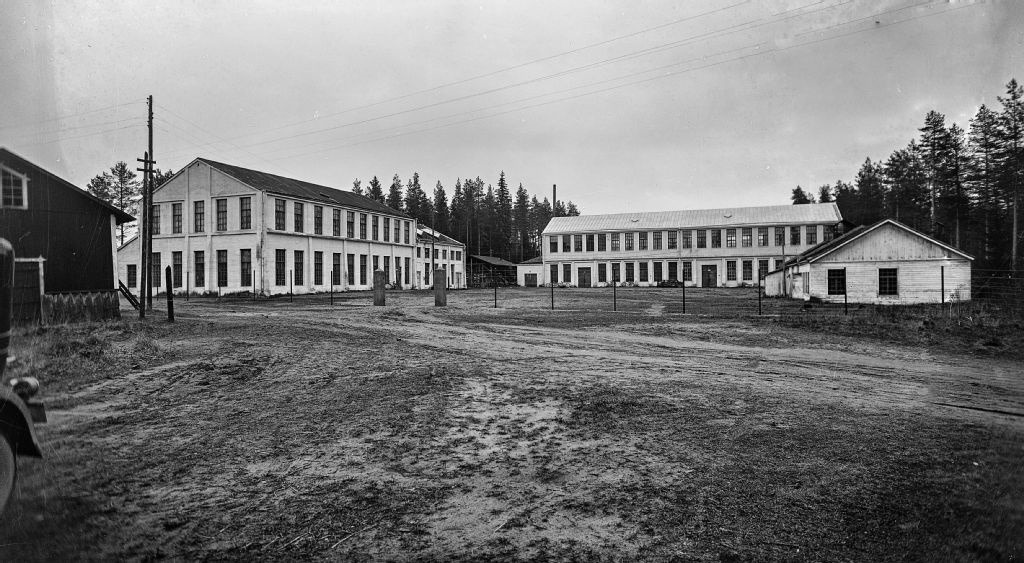
The task of manufacturing the KP/-31 was given to Oy Tikkakoski Ab, whose name still appears on Finnish sporting rifles under the Tikka brand name.
The Suomi KP/-31 was designed as a straight blow-back action chambered for the 9mm Parabellum cartridge. The rifle fired from an open bolt and instead of having the charging handle on the side of the action – which would require a long slot to be cut – the charging handle was located at the back of the action. Eliminating that side slot made the action much more closed – and so mud, dirt, snow etc. was much less likely to foul the action: the slide slot was actually contained at the bottom of the action inside the stock, a perfect place for keeping the crud out.
Given the power of the 9mm Parabellum cartridge a fairly heavy breech block was needed, which on a pistol would have been unwieldy but in a sub-machine gun was fine. That being said the KP/-31 was no lightweight tipping the scales around 10.4 lb empty, and much heavier with a fully loaded 71 round drum magazine.
While that weight was not an advantage to the serviceman carrying it, it became an advantage when the gun was fired, recoil was very light, and controlled fully automatic fire was not challenging.
That being said inexperienced recruits did find the recoil in full auto mode to be a learning curve and so for later versions of the KP/-31 a 50 mm long muzzle brake was added: something that Lahti was not in agreement with.
The action and bolt were made from machined steel and the precision was excellent. In fact the fit of the bolt into the receiver was so close that venting holes were needed at the rear of the end cap of the action. There were eight vent holes in the end cap which directed the trapped air to five drilled in the bottom of the end cap so nothing went back into the shooter’s face.
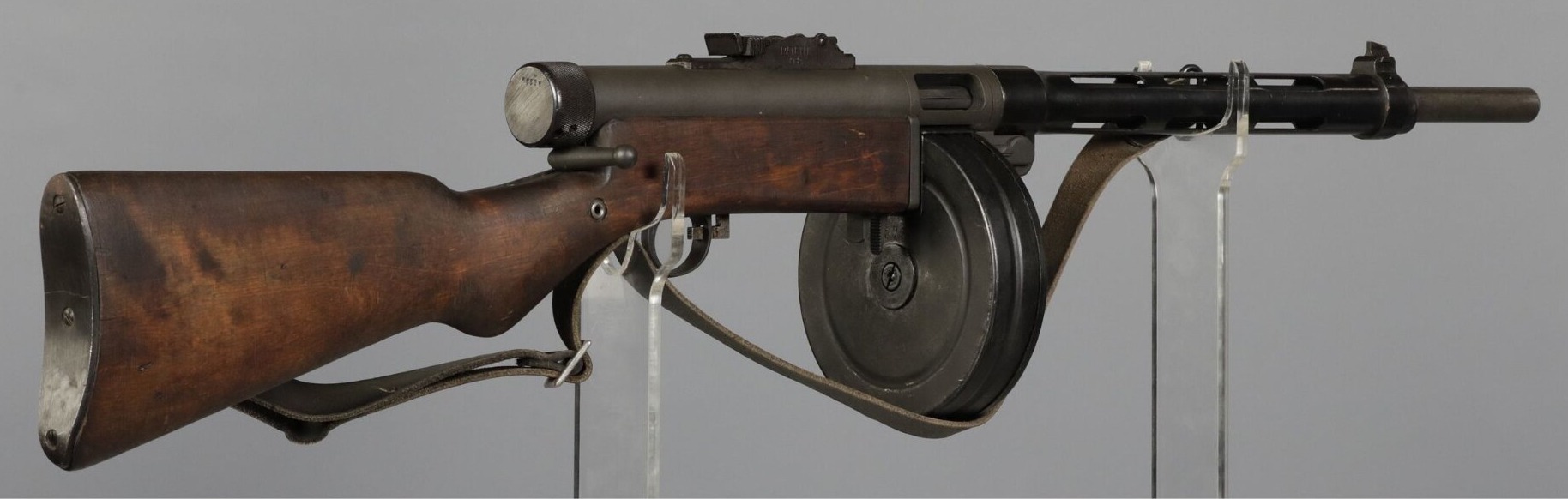
There were four magazine types created for the KP/-31 during its wartime service. The first was a simple 25 round double-stack box magazine which in field use proved only to be reliable if loaded with 20 rounds. Given that the rate of fire for this gun is north of 750 rpm, with some sources stating 900 rpm, a fully automatic burst would empty 20 rounds in very short order.
The other original magazine was a 40 round drum. This was difficult to reload: the backplate had to be taken off and then the cartridges inserted tip down – which was just plain fiddly.
By the time of the Continuation War the Fins were using a 50 round “coffin” magazine – so called because of its shape. This unusual design used twin dual-stack columns. Suffice to say it also was not easy to reload. This magazine was designed by Schillstrom.
These were then superseded by a 71 round drum magazine designed by Lahti’s associate Lieutenant Y. Koskinen in 1936. This was very reliable, especially if downloaded to 70 rounds capacity: and easier to reload.
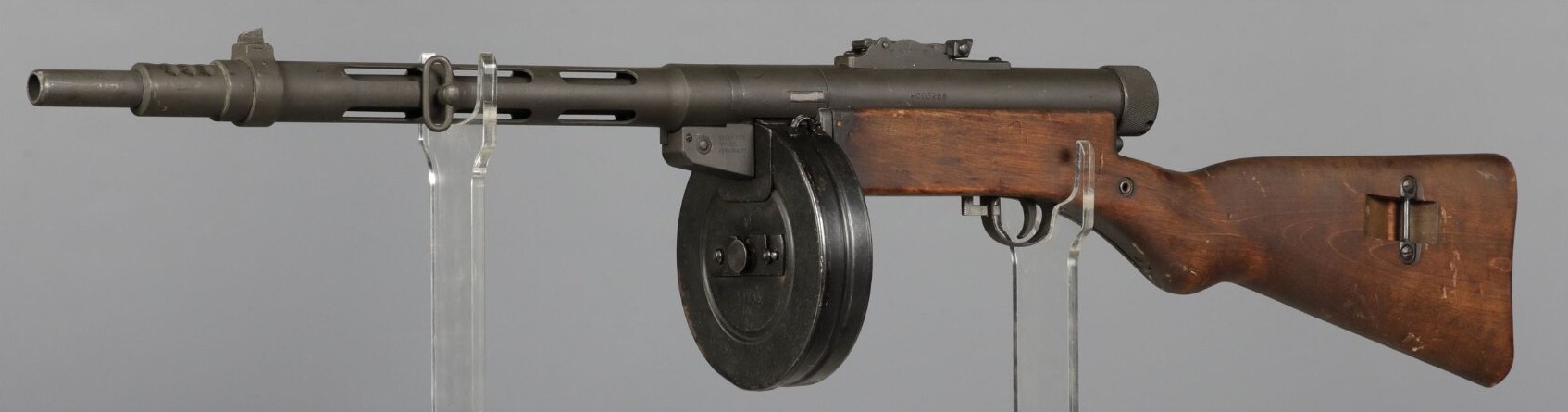
The KP/-31 was created with a quick change barrel system and the guns were issued with two barrels both regulated to the gun. To remove the barrel shroud there was a catch located ahead of the magazine well. Rotating this downward allowed the barrel shroud to be removed by rotating it a quarter turn and then pulling it out. The barrel could then be taken out by pulling it out of the action.
The Suomi KP/-31 proved to be an excellent arm ideally suited to the very cold ice and mud conditions of the war in Finland.
Finnish soldiers devised tactics to go with the characteristics of these guns. They would for example ski in near enemy soldiers and deliver fire upon them before vanishing into the misty forest. It is no wonder that the Russians called them “White Death”, which was the color of their uniforms during the snow season.
Interestingly Finland’s most famous sniper Simo Häyhä used a KP/-31 as one of his weapons in addition to his SAKO M/28-30.
The TNW Version of the KP/-31 (M31)
When the KP/-31 (aka Suomi M-31) was withdrawn from service Oregon company TNW bought a quantity of the surplus guns which they purchased as parts kits. These guns could not simply be assembled and sold to US shooters because of the legal restrictions on the possession of sub-machine guns.
To be able to sell these guns TNW changed the firing mechanism so the gun could not be converted to full automatic, and replaced the original twelve inch barrel with a sixteen and a half inch barrel, so these became semi-automatic rifles.
TNW finished these rifles by applying a Parkerized coating which was applied to external and internal surfaces.
These can make a rather fun plinking rifle, and a useful item for small game that can be humanely taken with the 9mm Parabellum cartridge.
There are a couple of these rifles for sale by Rock Island Auction at time of publication and you will find the sale pages if you click the links below:-
Picture Credits: Feature image at the head of this post courtesy Wikipedia. All others as individually credited.
Jon Branch is the founder and senior editor of Revivaler and has written a significant number of articles for various publications including official Buying Guides for eBay, classic car articles for Hagerty, magazine articles for both the Australian Shooters Journal and the Australian Shooter, and he’s a long time contributor to Silodrome.
Jon has done radio, television, magazine and newspaper interviews on various issues, and has traveled extensively, having lived in Britain, Australia, China and Hong Kong. His travels have taken him to Indonesia, Israel, Italy, Japan and a number of other countries. He has studied the Japanese sword arts and has a long history of involvement in the shooting sports, which has included authoring submissions to government on various firearms related issues and assisting in the design and establishment of shooting ranges.