The 1960’s was a period of imaginative innovation in the field of sporting rifle design and one of the most outstanding of these was the Champlin: a rifle that exemplified the best of American custom rifle making of that era.
Fast Facts
- Champlin Firearms was established in Enid, Oaklahoma, in 1966 by Doug Champlin.
- A new bolt action rifle was designed for the company by Jerry Haskins who would later go out on his own to create the Haskins Rifle Company in 1971.
- The Champlin rifle’s action featured three front locking lugs, three rear locking lugs, and had the bolt handle root acting as a seventh safety lug.
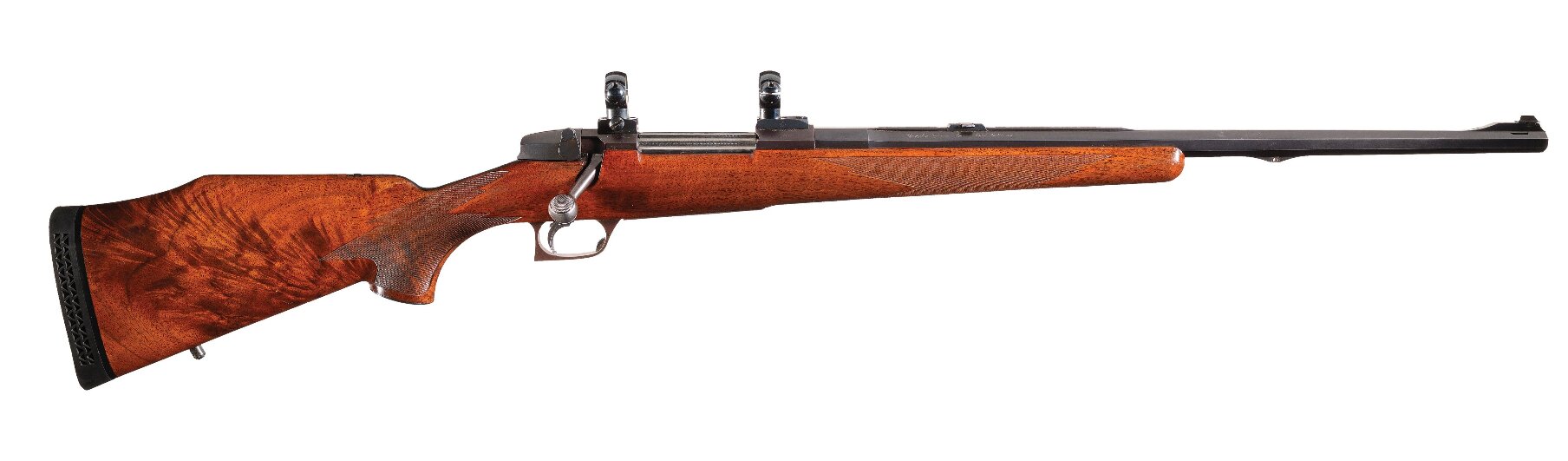
- One of the famous owners of a Champlin rifle was Bill Jordan, author of “No Second Place Winner” and his Champlin in 338-378 KT is for sale by Rock Island Auction at the time of publication of this post.
Back in the 1960’s and 1970’s there was quite a bit written in the shooting press regarding the advantages of front locking bolt action rifles, and the disadvantages of rear locking actions. Some of the most respected rifle actions were the Mauser ’98, Winchester Model 70, and Remington 700. These all provided two front locking lugs and the 90° bolt lift that these designs necessitated, and each provided its own backup rear lugs that were non-bearing but there to keep the shooter from injury in case of a catastrophic event.
This was a time however when some manufacturers wanted to try to create and market rear locking actions. This was done for a number of reasons both in order to reduce manufacturing complexity, and to tempt the shooting public with new and novel designs: a bit like automobile makers wanting to bring out a new model car every year despite the fact that the original model was just fine.
German maker Mauser commissioned famous shooter Walter Gehmann to design a new rifle action for them, which resulted in the front locking two lug telescoping action of the Mauser 66. Then for 1977 they released the Mauser 77 which was a rear locking design with three fixed lugs and a 60° bolt lift.
J.P. Sauer created their Sauer 90 which was aesthetically beautiful and featured a three lug bolt action whose lugs retracted into the bolt body when the bolt handle was lifted. This was the rifle Colt adopted and marketed as the Colt Sauer.
Steyr: makers of the famous Mannlicher-Schönauer rifles came up with a new rear locking multi-lug action for their Steyr Mannlicher series of rifles which had the bolt handle and locking lugs as one piece that was sleeved onto a non-rotating bolt.
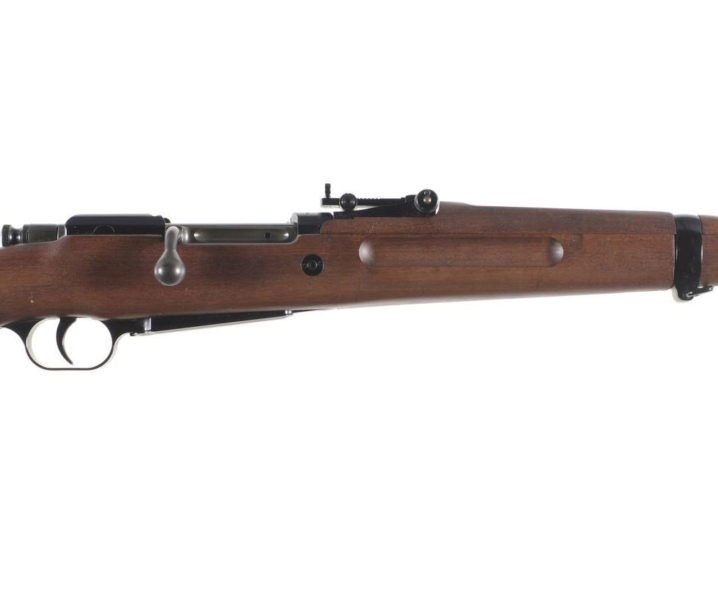
Given all that innovation that was going on there was an American rifle maker who reckoned he could do better than all of them by creating a bolt action sporting rifle that provided three locking lugs at the front, three locking lugs at the rear, and a 60° bolt lift so the riflescope could be mounted as low as practicable on the action. His name was Doug Champlin and he established his custom rifle shop in Enid, Oaklahoma, in 1966, in the early days of the bolt action revolution.
Doug Champlin’s vision for his bolt action rifle design did not call for complexity, it is actually a sensible design that follows the K.I.S.S. principle (i.e. Keep It Simple Stupid). Champlin’s concept was built around providing three ribs the length of the bolt body with a channel machined out to create the three front locking lugs, with the ribs continuing to the rear to be machined to create the three rear locking lugs.
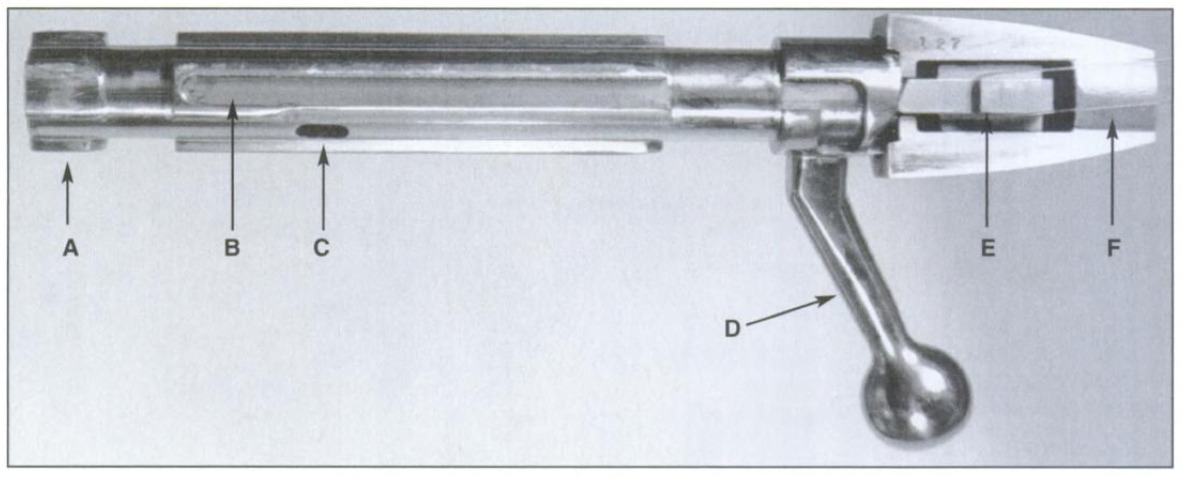
The three locking lug ribs were made to act as anti bind guide rails and ran in channels in the action body. This provides stability for the bolt when it is unlocked and opened/closed and makes for a smooth functioning action.
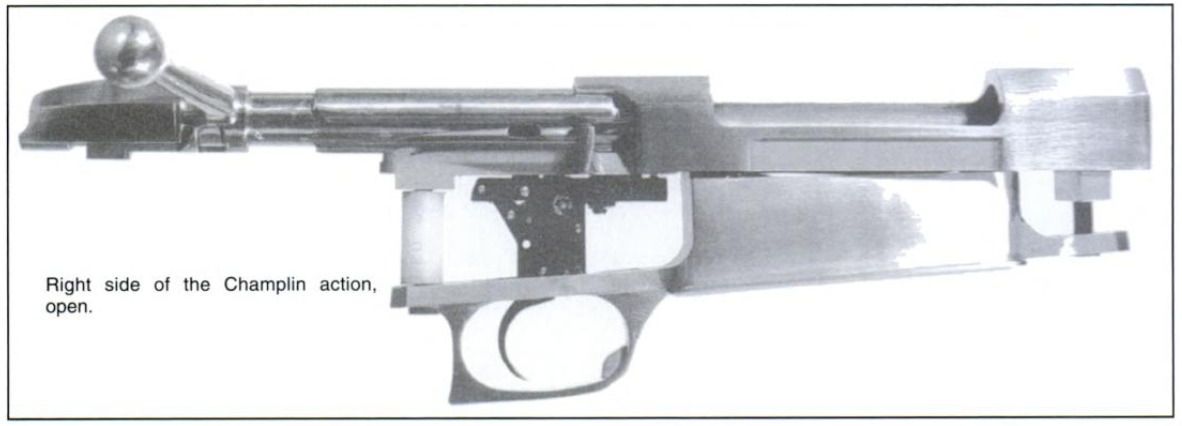
You can find the book Bolt-Action-Rifles” by Frank De-Haas and Wayne Zwoll if you click here.
The trigger unit was custom made for Champlin by Canjar and could be either a single stage or single set type. The Champlin rifle featured either a safety catch mounted on the bolt rear shroud, or a tang safety catch which necessitated an extension to connect it to the trigger unit.
The Champlin rifle was primarily designed by Jerry Haskins who worked with Champlin for a period of years before setting up his own business, Haskins Rifle Company, in 1971.
A Champlin Rifle Owned By Bill Jordan For Sale
Bill Jordan was a man who was highly influential in firearms development and innovation. He is credited with being a driving force in Smith & Wesson’s decision to create a .357 Magnum chambered K frame revolver – giving birth to the Smith & Wesson Model 19 and its stainless steel sibling the Model 66.
Jordan served with the US Border Patrol on the US/Mexico border for twenty eight years where he experienced the practical dangers and necessary solutions to them. He was the designer of the “Jordan” or “Border Patrol” style of revolver holster.
Bill Jordan also served in the United States Marine Corps Reserve for both the Second World War and the Korean War and retired from that service with the rank of Colonel.
After his retirement Bill Jordan was able to pursue his passion for firearms and authored three books: “No Second Place Winner“, “Mostly Huntin‘”, and “Tales of the Rio Grande“. He was the Shooting Editor for the “Shooting Times” magazine and active in the NRA.
He was awarded the Presidential Medal of Freedom by President Ronald Reagan.
Given his deep knowledge of firearms and appreciation of brilliant design it is no surprise that he had a Champlin rifle custom made to his specifications.
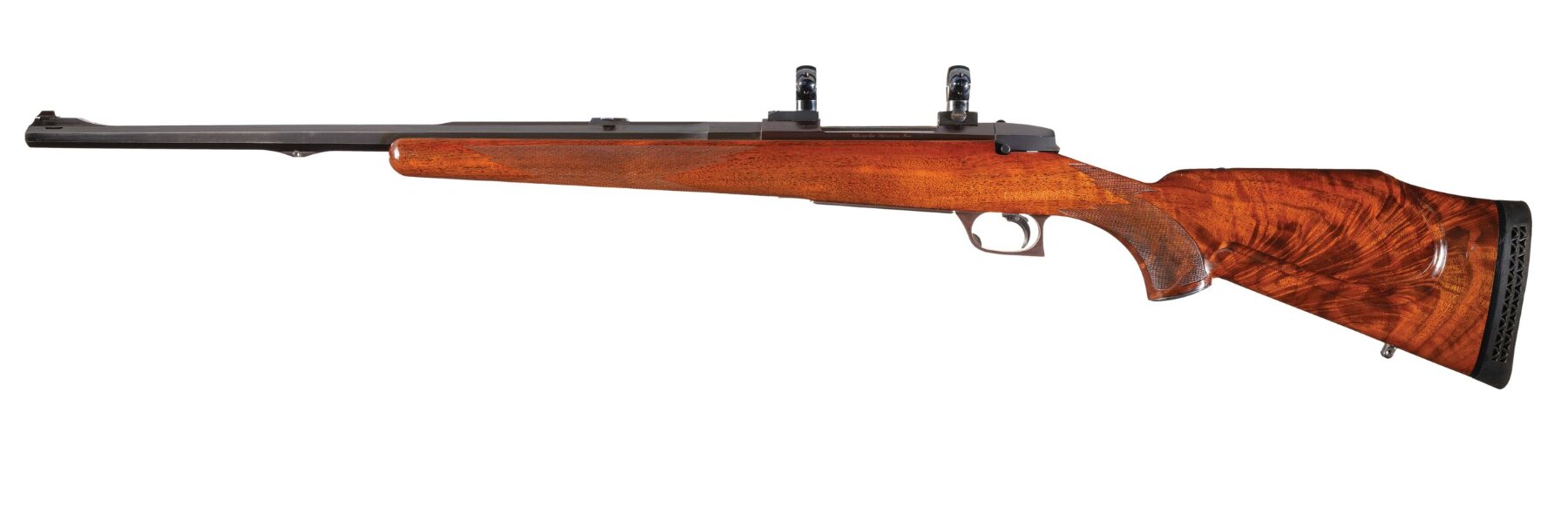
This rifle was made with Africa in mind and it was chambered for the wildcat 338-378 KT, which had been created by Elmer Keith and Bob Thompson in 1966. This cartridge was the direct inspiration for Roy Weatherby in the creation of the 338-378 Weatherby. The two have some dimensional differences so are not interchangeable.
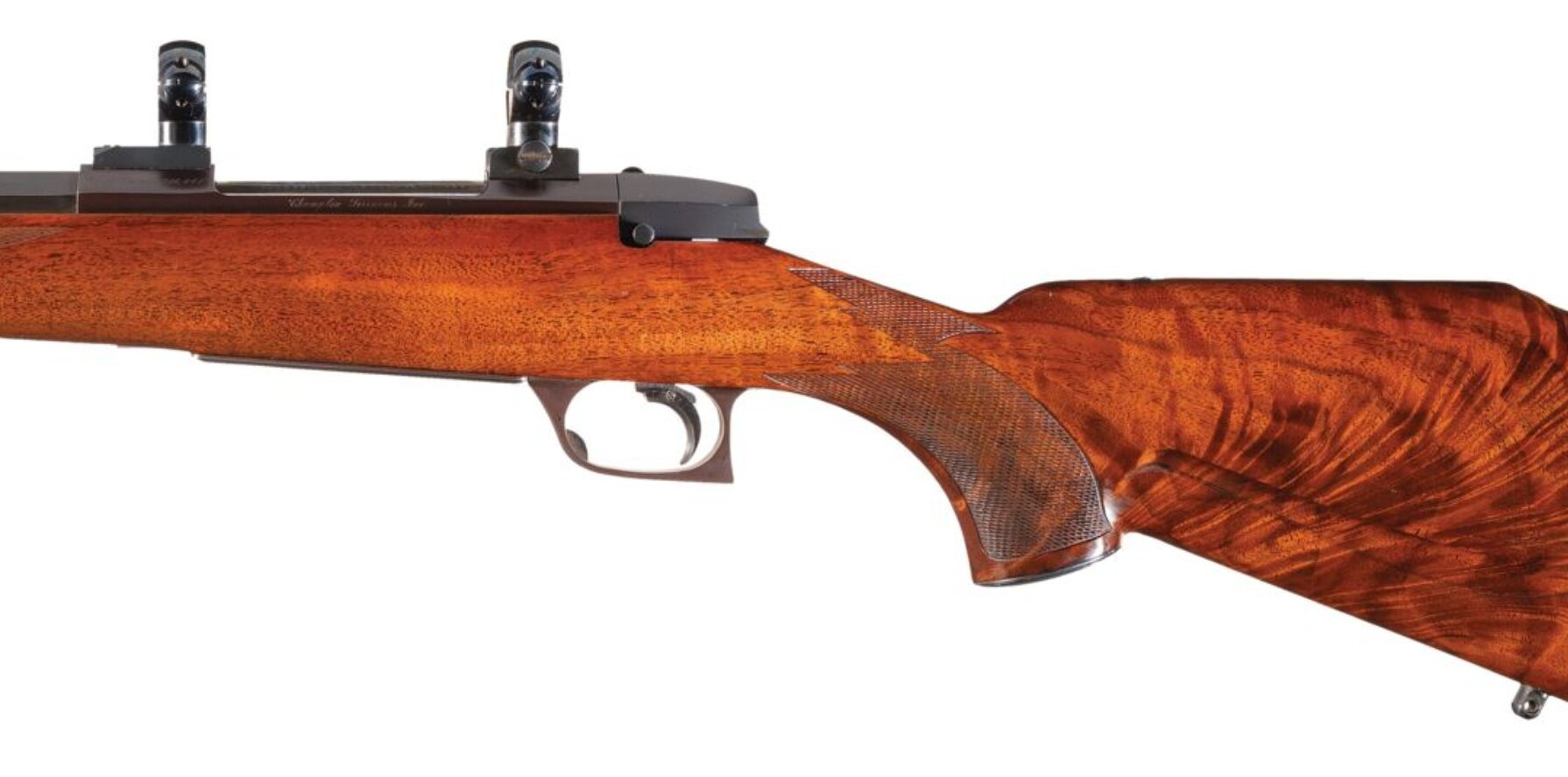
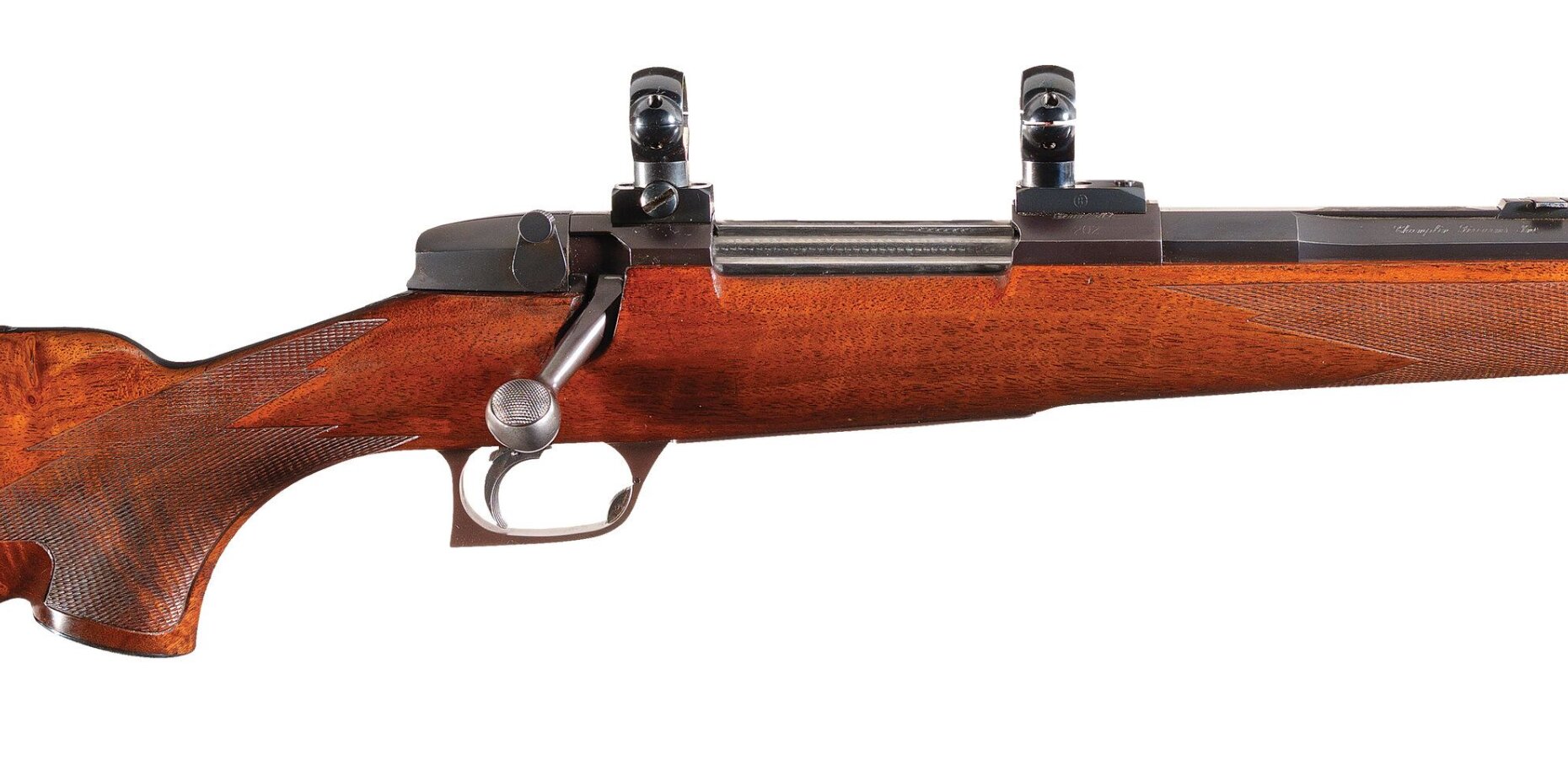
Jordan’s Champlin rifle is set in a beautiful walnut stock that just exudes character. The rifle has a quarter rib on which is set a flip up rear sight, and it has a blade with bead ramped foresight.
The 23 inch ported octagon barrel has an integral sling swivel eye and there is a sling swivel under the buttstock also. Given the recoil that the 338-378 KT generates the ported barrel is a sensible feature to help keep muzzle flip to an acceptable level – bearing in mind that follow up shots, if needed, are often needed quickly.
This rifle was stocked by Master Stockmaker Maurice Ottmar and features a checkered blued grip cap, raised shadowline cheekpiece, rear sling stud, and a Supreme recoil pad.
The condition of this rifle is described by Rock Island Auction as follows:-
“Very good, retaining 90% original blue finish and some wear from use in the hands of the legendary Bill Jordan mainly on the floorplate and high edges. There are some cracks around the wrist; otherwise, the wood is very good with a few small chips around the floorplate inlet and crisp checkering. Mechanically excellent.“
Picture Credits: All pictures of the sale Bill Jordan Champlin rifle courtesy Rock Island Auction. All other pictures as individually credited.
Note: This post contains affiliate links to relevant books on which we get a sales commission.
Jon Branch is the founder and senior editor of Revivaler and has written a significant number of articles for various publications including official Buying Guides for eBay, classic car articles for Hagerty, magazine articles for both the Australian Shooters Journal and the Australian Shooter, and he’s a long time contributor to Silodrome.
Jon has done radio, television, magazine and newspaper interviews on various issues, and has traveled extensively, having lived in Britain, Australia, China and Hong Kong. His travels have taken him to Indonesia, Israel, Italy, Japan and a number of other countries. He has studied the Japanese sword arts and has a long history of involvement in the shooting sports, which has included authoring submissions to government on various firearms related issues and assisting in the design and establishment of shooting ranges.