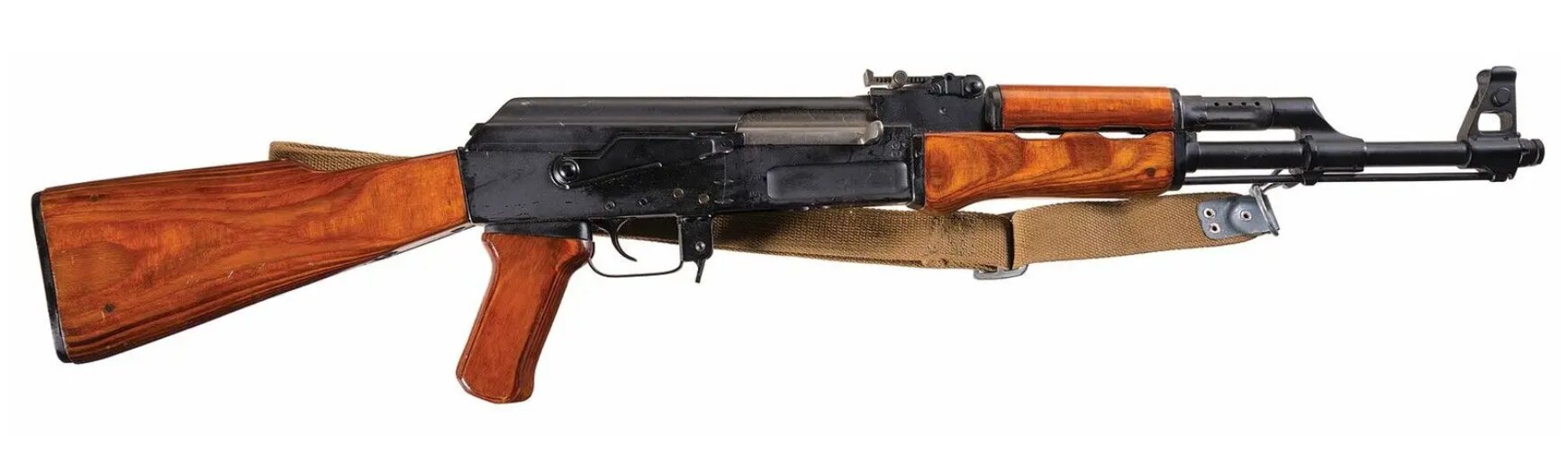
Mikhail Kalashnikov’s name is known throughout the world because of the military rifle that bears his name. The AK-47 and its variants have stood the test of time and proved to be one of the most durable and reliable military small arms the world has ever seen.
Fast Facts
- Mikhail Timofeyevich Kalashnikov’s name is associated with the most famous “assault rifle” ever created.
- The “Kalashnikov” was born out of the ashes of the Second World War and became the rifle of choice for the Communist nations and activist groups in the post-war decades up to the present time.
- Mikhail Kalashnikov’s AK-47 was the parent design of a number of variants including the four sub-types of the AK rifle and the AK-74 of 1974.
- The Kalashnikov AK also became the inspiration for a number of other rifles, notably the Israeli Galil.
Mikhail Kalashnikov was born in Kurya, Russia, on the 10th November 1919: just after the main events of the Bolshevik Revolution which had taken over Russia and established a communist totalitarian government over her people.
He was born the seventeenth of nineteen children, his father being Timofey Aleksandrovich Kalashnikov and his mother Aleksandra Frolovna Kalashnikova (née Kaverina). The Kalashnikovs were a peasant family but they owned property and as the communists progressively did the things that communists do the family were placed into extreme hardship. Communists like to confiscate property as a way to ensure that everyone gets an equally miserable outcome in life, and by 1930 that is what was done to the Kalashnikov family who were dispossessed and his father forced to work on a collective.
The family were forced to relocate to Nizhnyaya Mokhovaya, Tomsk Oblast, which was further north, where Mikhail and his siblings faced disease and hardship, and of all his siblings only eight lived to enter adulthood.
Out on the Russian Steppe conditions were harsh, and young Mikhail learned to hunt using his father’s rifle and developed not only the marksmanship skills necessary but also field craft, and machine maintenance.
Mikhail completed his education at seventh grade and got a job as a mechanic at a tractor workshop. This had required him to travel back to Kurya, a journey of about 1,000km.
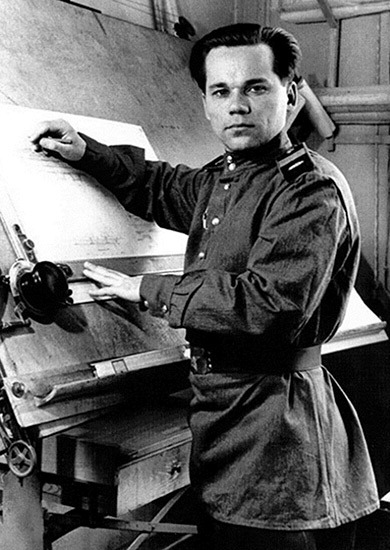
In his work at the tractor workshop his skills and knowledge came to the attention of a communist official who directed that he be sent to a local weapons design bureau where he worked, initially testing and evaluating rifle stocks.
When 1938 came Mikhail was conscripted into the Soviet Red Army and his agricultural machinery knowledge and skills earned him a job as a tank mechanic. It was during this window of opportunity that he was allowed to begin working on weapon designs, and some of his design work was sufficiently impressive that he came to the attention of the deputy commander in chief of the Soviet military, Georgy Konstantinovich Zhukov, who presented the young Kalashnikov with a wristwatch in recognition of his work.
Kalashnikov saw active service as a tank commander on T-34 tanks of the 24th Tank Regiment, 12th Tank Division and was wounded in action in the Battle of Bryansk in October 1941.
He was in hospital until April of 1942 and during that time in conversations with other soldiers he heard a number complaining about the firearms they had been using in action – reliability problems, and other issues related to the design of these battlefield arms.
On his release from hospital Kalashnikov was given the opportunity to work on weapon designs and was appointed to the Central Scientific-developmental Firing Range for Rifle Firearms of the Chief Artillery Directorate of the Red Army.
The Nazi German invasion of the Soviet Union was well underway and the Battle of Stalingrad began in July 1942.
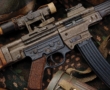
At this time the Germans were conducting a limited trial of a new concept in battle rifles on the Eastern Front. These rifles were the MKb 42(H), which was a “machine carbine” of 1942 designed and made by Haenel, and primarily designed by Hugo Schmeisser. These rifles were capable of semi-automatic and burst fire, and they used a new concept rifle cartridge which was based on a significantly shortened 7.92x57mm cartridge case – this new cartridge being the 7.92x33mm.

With 7,957 of these rifles deployed on the Eastern Front the soldiers of the Red Army are certain to have encountered these rifles and no doubt were able to capture examples and send them to their weapons design facilities for evaluation.
With the Russian Communists fighting a war for their very survival there would have been limited opportunity to create a new rifle and ammunition like the German MKb 42(H), but work was begun on creating a home grown Russian rifle of similar concept.
The Technical Council of the People’s Commissariat for Armaments approved development of a new intermediate rifle cartridge of similar concept to the German 7.92x33mm and commissioned the development of a range of new weapons for it.
There were a number of designers who developed prototype rifles for testing and evaluation. Notable among these were Kalashnikov and Simonov.
In 1945 the war was brought to an end as an Allied Victory with the Americans, British and their allies fighting on the Western Front and the Soviet Union on the Eastern Front.
As a result of this the Soviet Red Army obtained control over the German gunmaking town of Suhl and were able to procure some of the skilled personnel who had been involved in the design and creation of Germany’s weapons, including Hugo Schmeisser, and a great deal of technical data.

In Suhl the Soviets found sufficient parts to construct fifty StG44 rifles, and no less than 10,785 technical design sheets. Additionally they were able to force Hugo Schmeisser, the man who had designed the StG44 and its predecessor the MKb 42(H), to go with them to the Soviet Union where they hoped to utilize his technical expertise.
Whether or not Hugo Schmeisser was involved in the design and development work that happened from that time onwards is subject to conjecture – he may have been a very reluctant technical expert – but the design drawings and the fifty StG44 rifles provided a wealth of resources for the Soviets to learn from.
The actual development process that Mikhail Kalashnikov undertook in order to create his “AK” (Автомат Калашникова – translates to “Automatic Kalashnikov”) is veiled in some mystery. Communist propaganda agencies are known for “not letting the facts get in the way of the approved narrative”, and the narrative has been that the AK was an original Kalashnikov design.
Mikhail Kalashnikov himself said “A lot of Russian Army soldiers ask me how one can become a constructor, and how new weaponry is designed. These are very difficult questions. Each designer seems to have his own paths, his own successes and failures. But one thing is clear: before attempting to create something new, it is vital to have a good appreciation of everything that already exists in this field. I myself have had many experiences confirming this to be so.”
So we can, I think, assume that Kalashnikov did his research homework on such rifles as the M1 Garand and the StG44 and then created his AK rifle using the understandings he had gained from his study of those and other rifles.
There is an old Bible saying “There is nothing new under the sun” (Ecclesiastes 1:9).
Kalashnikov created a rifle prototype in 1944 his design based around the new Soviet 7.62x39mm cartridge. This gas operated carbine had a fixed magazine and its action operation bore similarities to the design of the American Garand. This prototype was not accepted by the Soviet military however, they favored the SKS by Simonov.
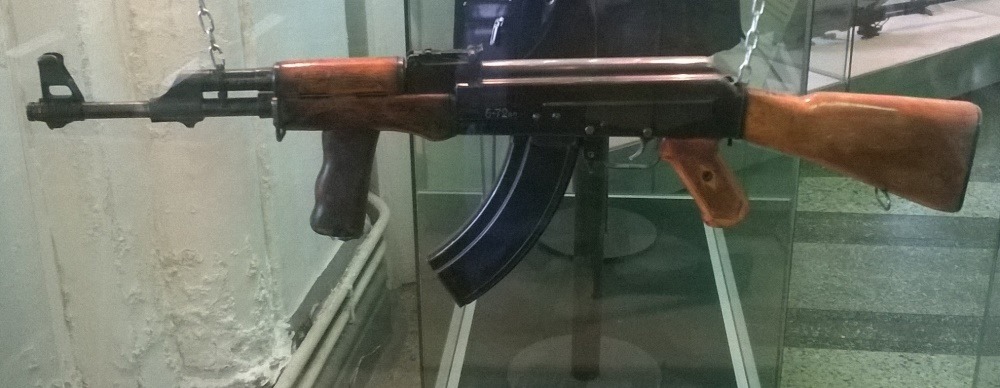
But this gas operated carbine was to be a basis on which Kalashnikov created his next carbine – and this one was made as an “assault rifle” in the same genre as the German StG44 and its forebears.
Kalashnikov’s new design featured a short stroke gas piston mounted above the barrel which acted on a rotating bolt mechanism. The magazine was a curved detachable box unit – the curve being dictated by the profile of the 7.62x39mm cartridge. In production models that box magazine was made in 20, 30, and 50 round versions.
It was at this stage during 1946 that one of Kalashnikov’s assistants, Aleksandr Zaitsev, made some suggestions to improve the rifle. Kalashnikov was persuaded to incorporate Zaitsev’s ideas. This resulted in the change from short stroke to long stroke piston for the gas operation, and combining the upper and lower receiver parts into a single unit.
The safety and selector were combined into a single lever on the right side of the receiver, and also functioned the dust cover. The bolt handle was attached to the bolt carrier.
This revised prototype was completed in November 1947 and was designated the AK-47.
While Kalashnikov’s original idea had been to make the receiver of pressed steel, as the StG44 had been, this proved to be too difficult for those charged with manufacturing the rifles. This resulted in the early production rifle’s having a milled steel receiver which the existing manufacturing facilities were already competent in having a background in making the milled steel receivers for the bolt-action Mosin-Nagant service rifles. The AK rifles made with the milled receiver were designated the AK-49 and full scale production began in 1951. These rifles are nowadays often referred to as “Type 2 AK-47”
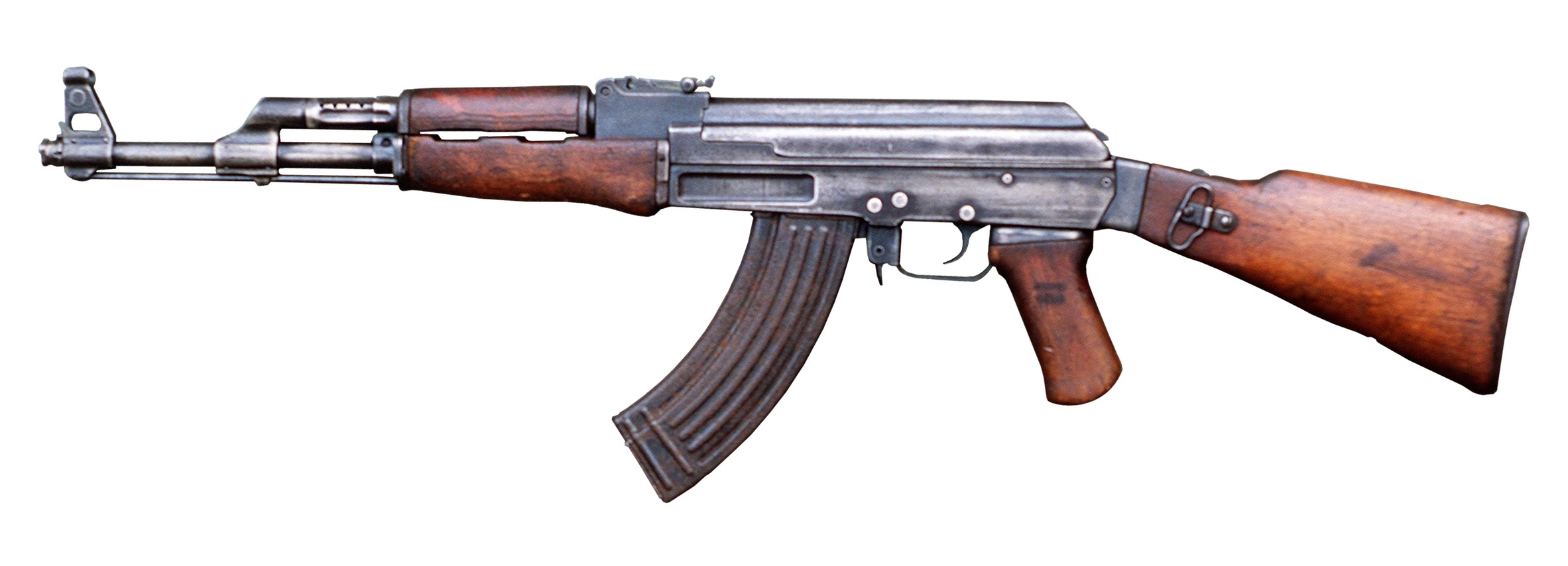
During the period of transition to the new AK-47 Soviet troops were equipped with the Simonov’s SKS: the transition to the AK-49 being mostly completed by 1956.
Work continued on perfecting the manufacture of the pressed steel receiver version of the AK-47 and this work was completed in 1959 with the new pressed steel receiver rifle being designated the AKM: the “M” standing for “Modernized”. This rifle was significantly cheaper to mass produce, and was significantly lighter.
In summary, there were four variants of the original AK rifle as follows:-
- Type 1A and 1B: In 1948 the early model was made with a stamped steel receiver. The Type 1A featured a fixed stock while the Type 1B was adapted to having an under-folding stock and the necessary receiver modifications to accommodate it.
- Type 2A and 2B: The Type 2 rifles feature a forged and milled receiver. It has a socketed metal boot that connects the butt stock to the receiver and has a milled lightening cut on the sides which run parallel to the barrel. This version was in production from 1951-1957.
- Type 3A and 3B: This model features a receiver milled from bar stock. In this model the lightning cuts run at an angle to the barrel line. This version was in production from 1953-1954.
- Type 4A and 4B: This was the AKM version and it featured a stamped sheet steel receiver made from 1.0mm thick steel. Component parts were pinned or riveted to the receiver body, which obviated the need for welding. This version entered production in 1959.
Small arms development did not stand still, as we would expect. While the Soviet Union armed its forces primarily with the Type 4A and 4B type AKM rifles using the 7.62x39mm standard service cartridge their opposition, NATO, initially continued to want a full power cartridge and semi-automatic rifles to fire it. The cartridge chosen was the 7.62x51mm NATO which was based on the 308 Winchester sporting rifle cartridge. The different nations of NATO adopted a variety of military rifles for that cartridge: the United Kingdom and her Commonwealth partners for example adopted the FN FAL.
But the United States had different ideas both on the subject of cartridges and rifles and they moved to adopt the 5.56x45mm, which was based on the 223 Remington cartridge – a new intermediate cartridge that sat between the 222 Remington and the 222 Remington Magnum.
The United States adopted the M16 rifle, which was based on the Armalite AR-15, chambered for this cartridge.
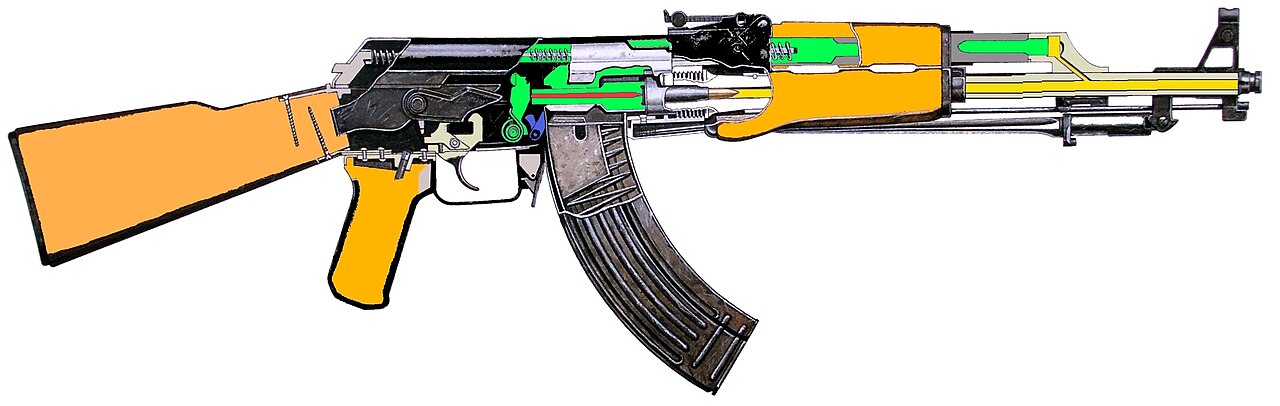
This development caused the Soviet military to realize the advantages of the new American cartridge which provided much lighter ammunition so a soldier could carry more of it, and cheaper to mass produce in part because it required less materials. This cartridge also produced much less recoil so it was much easier for a soldier to master, even if used in full automatic fire.
The Soviet military decided to develop its own small caliber cartridge and in the interest of requiring the minimal changes necessary to get both cartridge and rifles in service quickly they designed the 5.45x39mm cartridge, which was basically the existing 7.62x39mm necked down to accept 5.45mm projectiles.
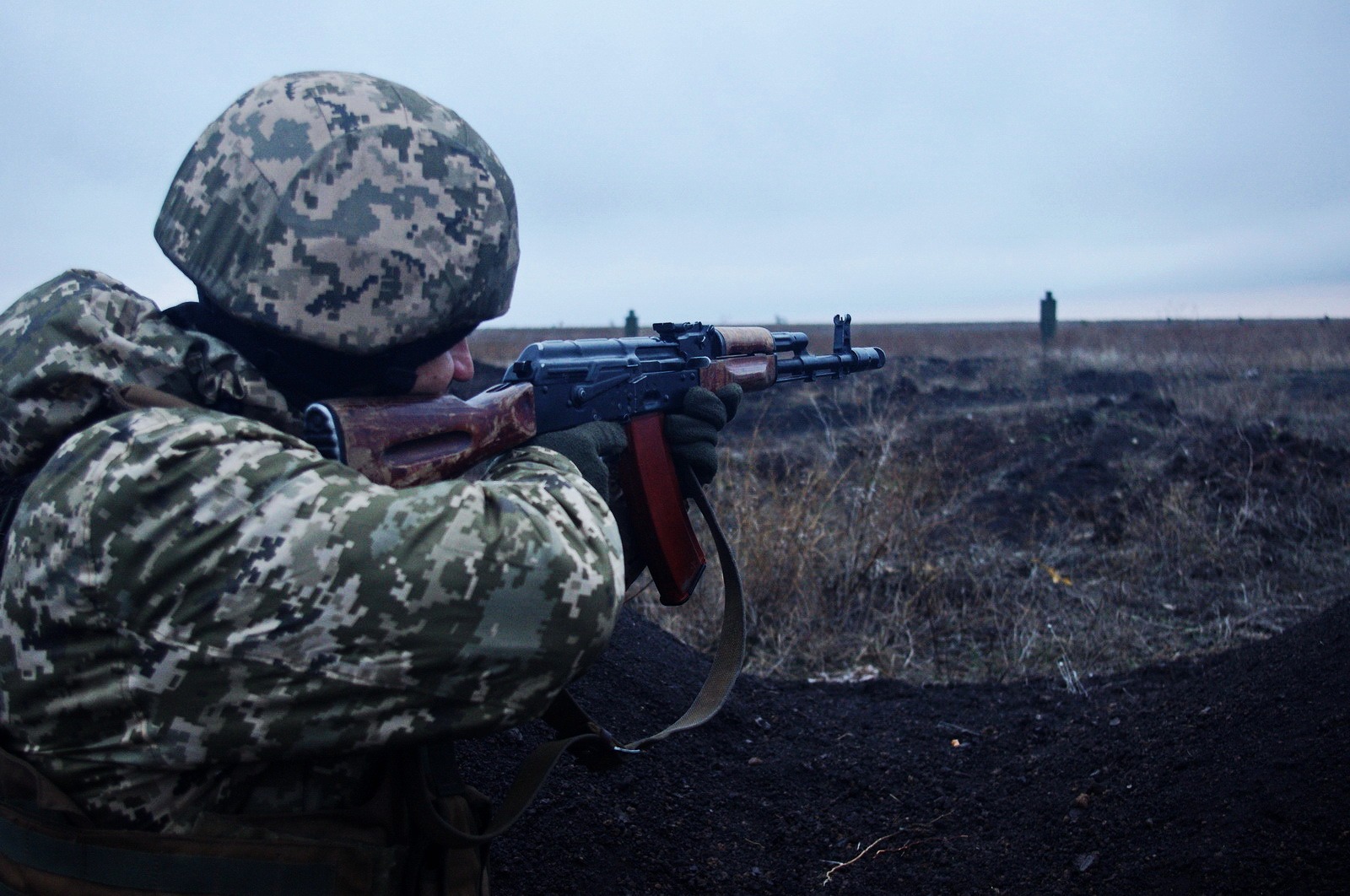
The Kalashnikov AKM was easily adapted to this new cartridge and the new rifle variant was designated the AK-74, and entered service in 1974.
The AKM (AK-47) would go on to become the small arm of most of the nations of the Communist Bloc. This included such nations as East Germany, Poland, Czechoslovakia, and Yugoslavia in Europe, Communist nations in Africa such as Mozambique who feature the AK-47 rifle on their national flag, and Asian countries including the People’s Republic of China, North Vietnam, and “Kampuchea” under the barbaric rule of the Khmer Rouge.
The AK-47 was designed by Mikhail Kalashnikov as a rifle to equip the Soviet Union’s Red Army with which to defend the motherland against her foes. But the rifle became a tool of communist governments and clandestine activist groups in a range of political actions in Asia, Africa, the Americas and the Middle East.
These arms were inexpensive to make in quantity and amazingly reliable. For example, during the civil war in Lebanon an AK-47 could be purchased for as little as US$15.00. Clandestine political activists were often equipped with them and used them for terrorist attacks, the 2015 Attack on the staff of the Charlie Hebdo magazine in Paris being an example.
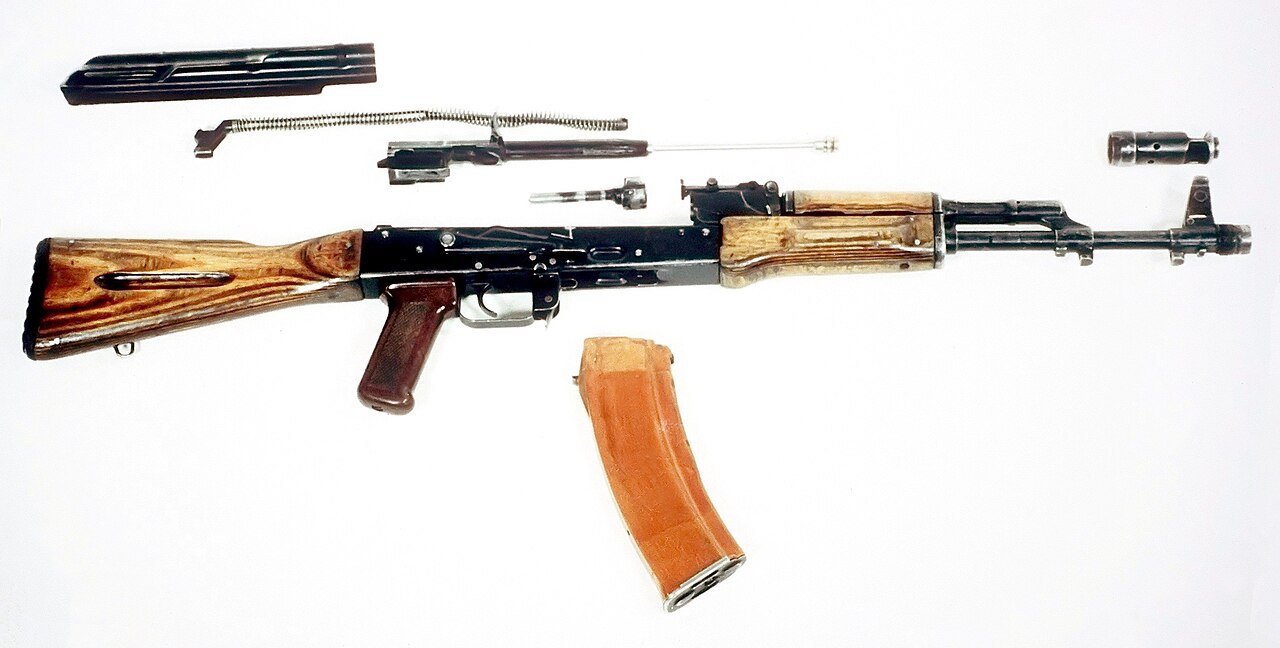
The use of AK-47’s by terrorists and communist guerillas such as the Khmer Rouge has led to the rifle being associated with terrorism and murder: and as a consequence some chose to attack Mikhail Kalashnikov under the rather naive claim that if he hadn’t created such a reliable and efficient rifle then these terrorists wouldn’t have been able to commit the evils they have. This is, of course, a ridiculous accusation and Mikhail Kalashnikov said that he created the rifle for the military – he had no control on how it would be deployed or used: and we can add to that the obvious truth that if the Kalashnikov had not been invented then another similar rifle would have been.
In conclusion I think it fair to say that the AK-47 and its variants have proved to be among the best military “assault rifles” ever created. The formed the design basis for a number of other excellent military rifles such as the Israeli Galil.
Mikhail Kalashnikov and his team got the design and engineering right. No doubt he deserved the accolades his country bestowed upon him. He passed away on 23rd December 2013, at the age of 94.
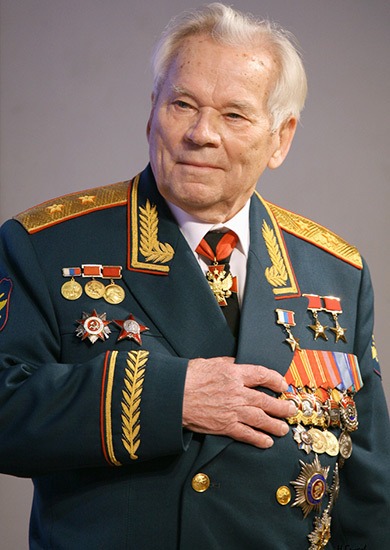
Picture Credits: Feature image at the head of this post courtesy Rock Island Auction. All others as individually credited.
Jon Branch is the founder and senior editor of Revivaler and has written a significant number of articles for various publications including official Buying Guides for eBay, classic car articles for Hagerty, magazine articles for both the Australian Shooters Journal and the Australian Shooter, and he’s a long time contributor to Silodrome.
Jon has done radio, television, magazine and newspaper interviews on various issues, and has traveled extensively, having lived in Britain, Australia, China and Hong Kong. His travels have taken him to Indonesia, Israel, Italy, Japan and a number of other countries. He has studied the Japanese sword arts and has a long history of involvement in the shooting sports, which has included authoring submissions to government on various firearms related issues and assisting in the design and establishment of shooting ranges.